
Have you ever wondered what makes certain jewelry feel modern and expensive? The fashion industry in 2026 has given an unexpected answer — saying goodbye to soft and delicate gold, the cold and hard luster of stainless steel is rising strongly, becoming the first choice for Gen Z and millennial collectors, and even gracing the world's most famous runways. Behind this is the rise of "permanent luxury" as the core trend of the year, and 316L stainless steel is the key protagonist of this trend revolution.
Once upon a time, the problem of cheap alloy jewelry turning skin green and oxidizing easily plagued countless people. The emergence of 316L stainless steel has completely solved this pain point. As a hypoallergenic material, it is not only friendly to sensitive skin, but also redefines the core of jewelry "luxury" with industrial-grade strength and diverse surface treatments — it is no longer exclusive to precious metals, but a "permanent fashion" that combines durability, texture and environmental protection. Today, we will deeply dissect all the trends of stainless steel jewelry in 2026 to help you accurately grasp this industrial-style sophistication.
1. 2026 Style Core: Why Has Stainless Steel Become a Budget-Friendly Mainstream Choice?
Jewelry styles in 2026 have long jumped out of the framework of traditional delicacy and turned to bold and neat visual expression. The reason why stainless steel stands out lies in its material advantages: its extremely hard nature allows designers to create sharp geometric shapes that gold cannot withstand, thus shaping a "tech luxury" aesthetic that defines the contemporary era — cold and hard metal texture, paired with neat lines, exuding a sense of futurism and sophistication.
What's more, the blue-white luster of stainless steel perfectly matches the cool-toned outfits popular in high-end fashion in 2026, easily integrating into both minimalist and street-style looks. Today, many influencers are keen on layering heavy stainless steel handcuff jewelry with luxury watches to create a layered look. More importantly, its non-oxidizing and wear-resistant properties allow you to wear it without hesitation whether you are sweating in the gym or strolling on the beach, making it an indispensable basic item in a modern wardrobe. According to industry trend forecasts, stainless steel jewelry will maintain steady growth in the next 3-5 years, becoming the core pillar of the mid-range fashion jewelry market.
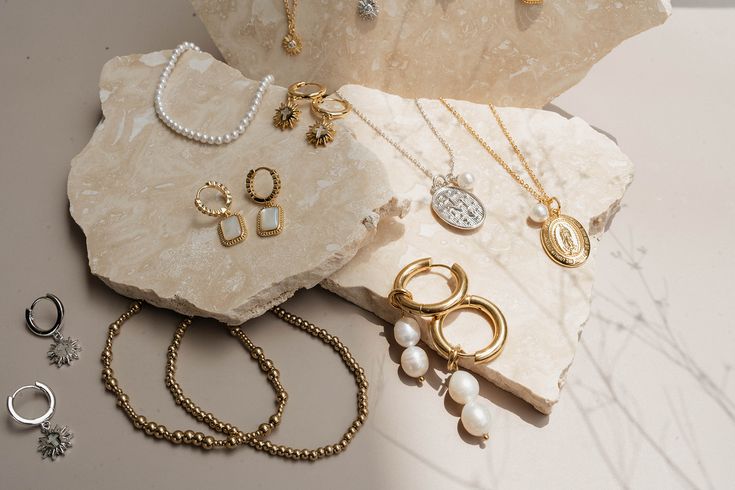
2. PVD Gold Plating vs. High-Polish Silver Tone: Which Luster Is More Worth Choosing?
Many people love the luxury of gold but do not want to bear the high cost of precious metals, so special coatings have become the first choice for designers. However, traditional electroplating processes often face problems of peeling and chipping, making it difficult to achieve permanent luster. The application of Physical Vapor Deposition (PVD) technology has completely solved this problem.
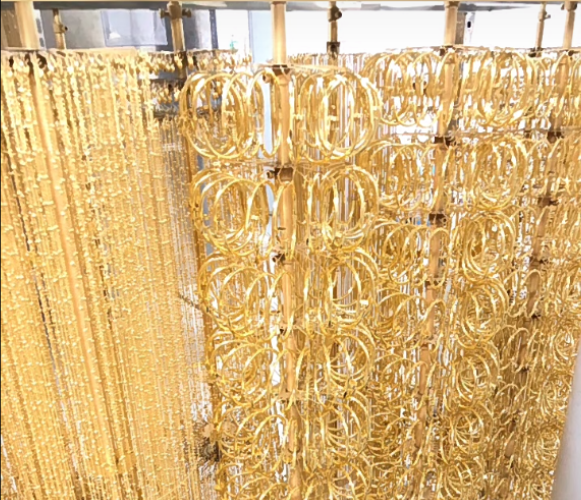
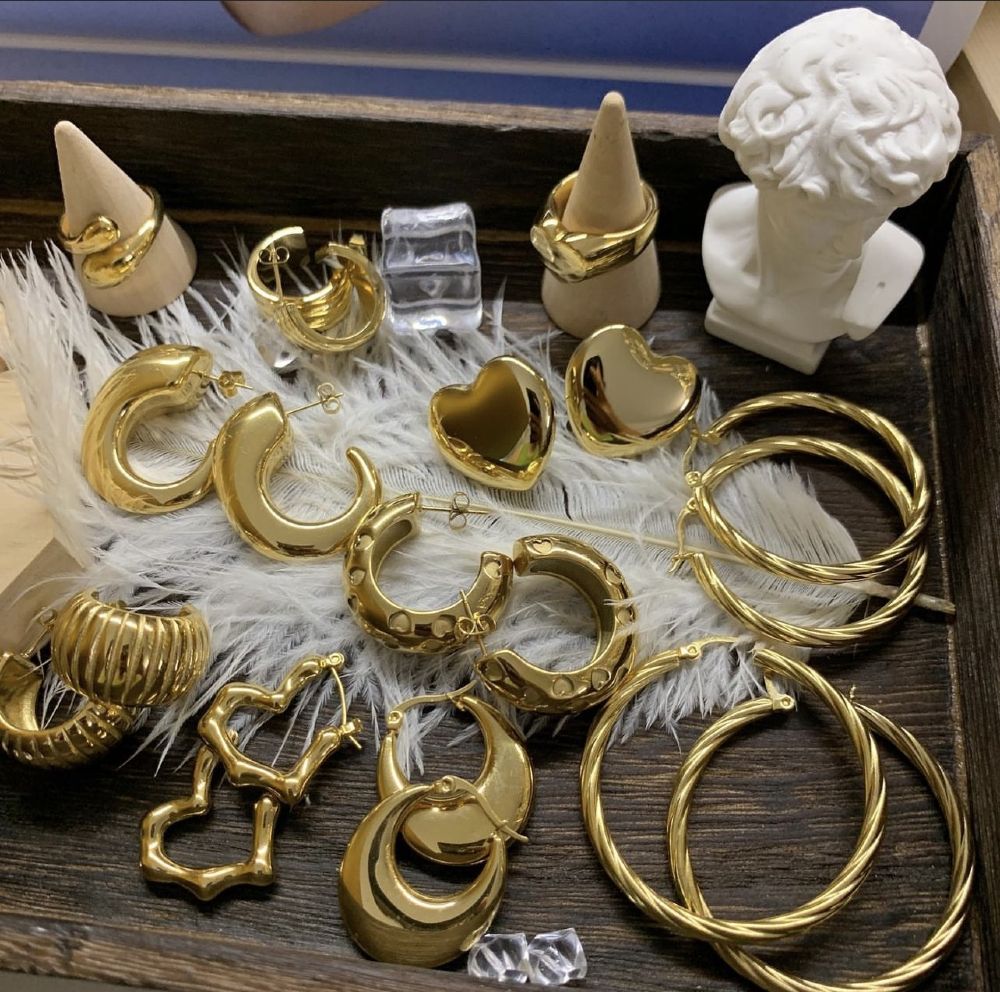
The PVD process is carried out in a high-pressure vacuum chamber, where gold atoms directly penetrate the surface of 316L stainless steel, making gold part of the metal itself rather than a thin surface coating, resulting in stronger adhesion and durability. The underlying luster of 316L steel itself enhances the texture of the PVD gold plating — the mirror-polished base reflects light through the gold coating, making the gold more transparent and layered.
At the same time, the original high-polish silver tone has also gained a large number of fans with its unique aesthetics. Without any coating, this "raw silver" appearance is indestructible, and its luster is permanently retained. More amazingly, if you scratch a raw silver stainless steel jewelry, the metal will "heal" itself, while PVD gold plating cannot self-repair — deep scratches will reveal the white steel underneath, which is the core difference between the two. Compared with traditional water electroplating, the PVD process is not only more durable but also emits no chemical waste liquid, making it more environmentally friendly.
3. Choose the Right Surface Finish: Make Stainless Steel Jewelry More Suitable for Your Style
The texture of stainless steel jewelry depends largely on the surface finish — different treatment methods present completely different visual effects and are suitable for different scenarios due to different roughness values. The versatility of 316L stainless steel allows it to have a variety of surface finish options from matte to high-gloss, meeting the needs of different groups of people.
Surface Finish | Visual Effect | Best Use |
Mirror Polish | Highly reflective, dazzling luster, can clearly reflect contours | Pendants, necklaces and other jewelry that do not often come into contact with hard objects |
Satin Finish | Soft luster, warm texture, not ostentatious | Rings, bracelets and other jewelry worn daily |
Brushed Finish | Linear grain, delicate texture, with a sense of sophistication | Watches, cuffs and other jewelry that need to balance texture and practicality |
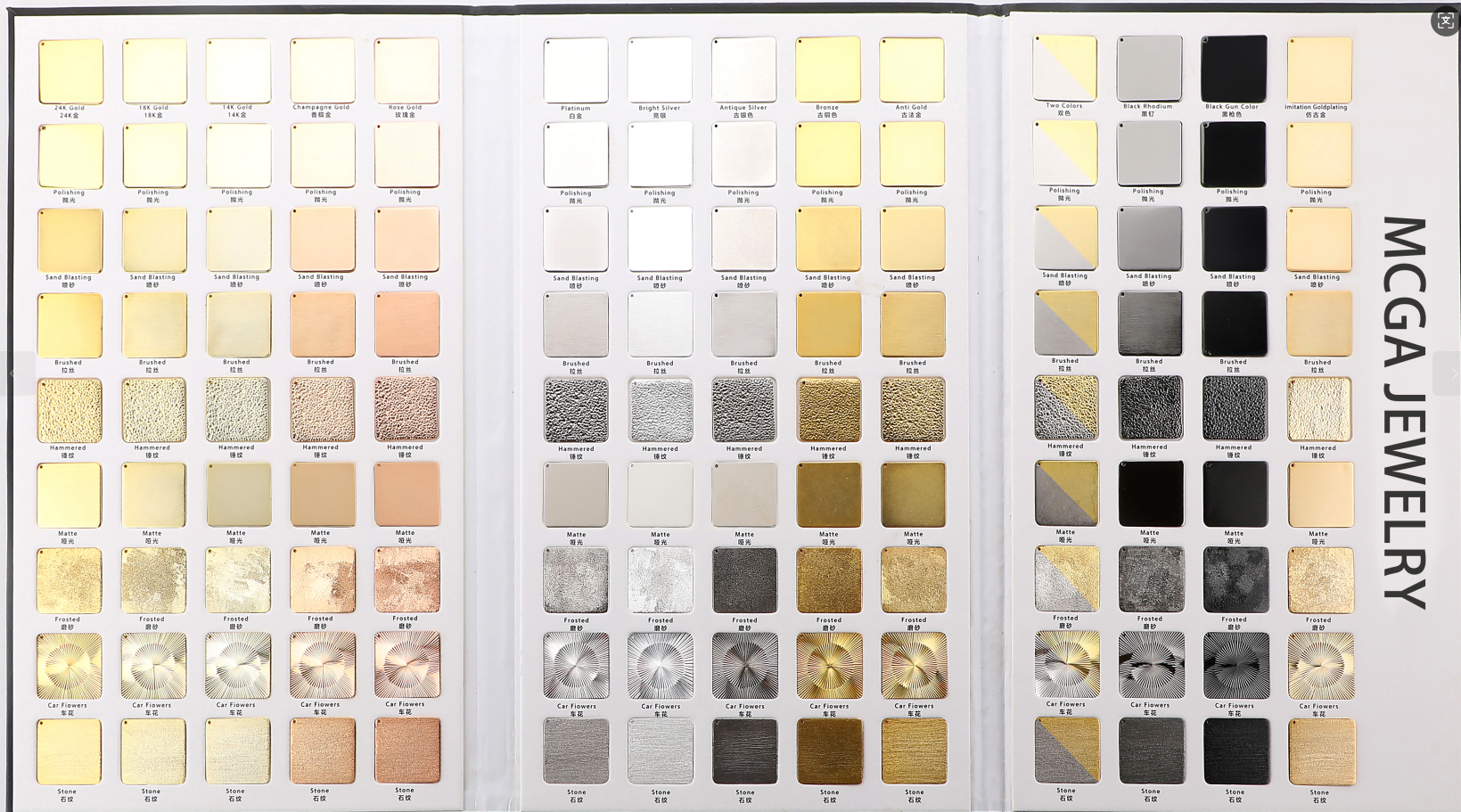
Here's a practical tip: the brushed coating has small grooves on the surface that can scatter light, hiding fingerprints better than the mirror coating and being more scratch-resistant, making it very suitable for rings that often hit hard surfaces. While the mirror polish is dazzling, its surface is flat, and even slight scratches will be very obvious, so it is more suitable for necklaces that fit the skin and do not often come into contact with hard objects. The hardness of 316L stainless steel can reach 200HV, more than three times that of ordinary silver jewelry. In addition, the oxide film formed by chromium can effectively resist the erosion of sweat and seawater, allowing the jewelry to maintain its luster for a long time.
4. Styling Secrets: Mixing Mirror and Satin Finishes to Unlock 2026 Trends
For beginners, choosing between mirror and satin finishes often falls into a dilemma — they like the dazzle of the mirror but worry about maintenance; they prefer the low-key of the satin but are afraid it is not photogenic. In fact, the two are not mutually exclusive. The popular trend in 2026 is the mixed matching of the two, balancing style and function to create a more layered look.
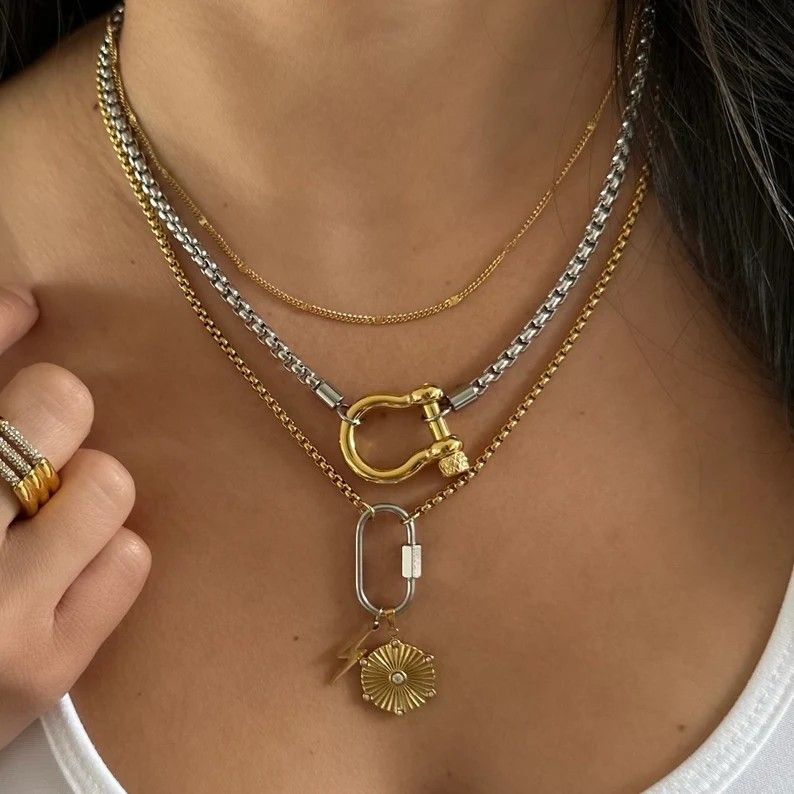
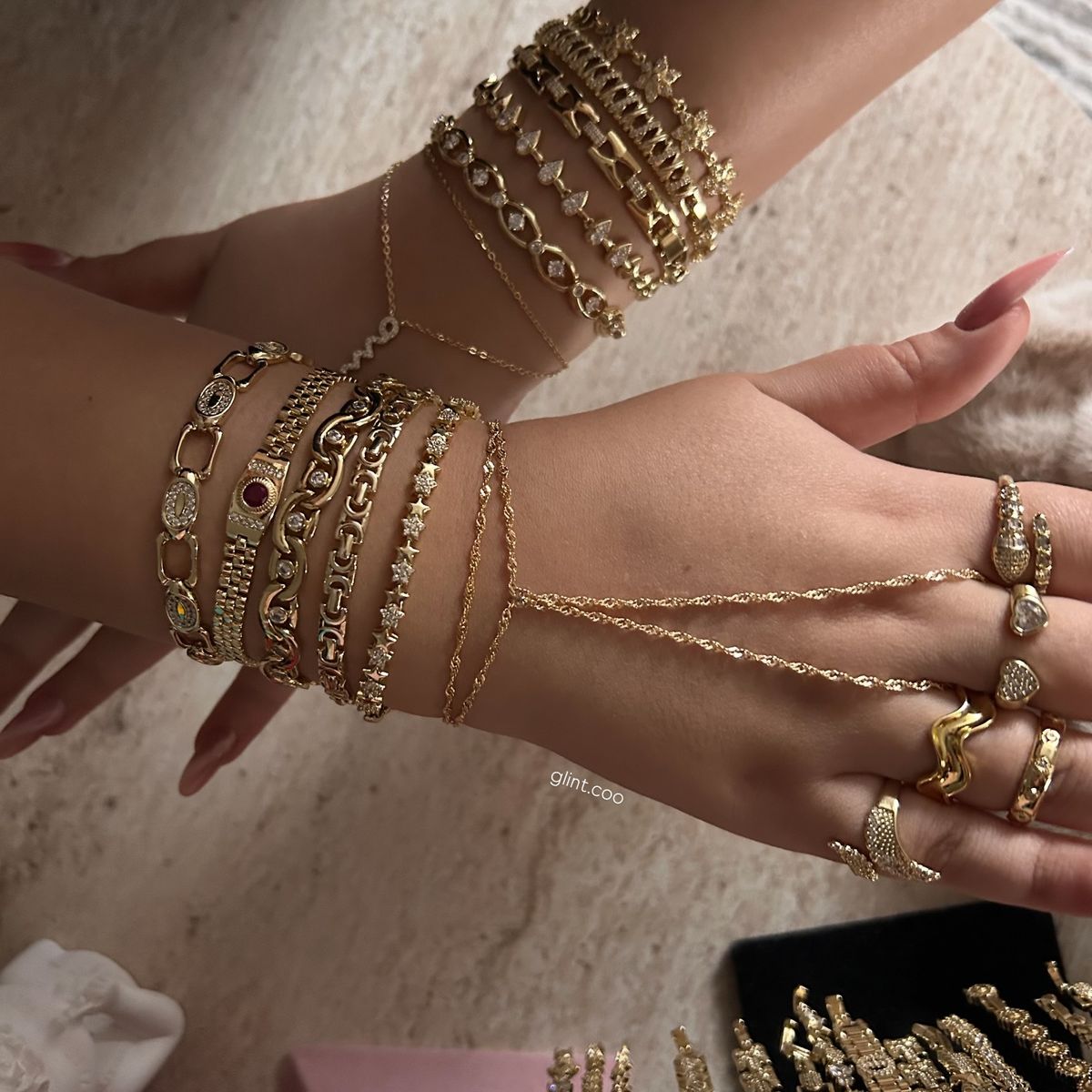
For example, choosing a ring with a satin center and polished edges has both the low-key texture of satin and the shiny embellishment of polishing, instantly enhancing the visual layering. Or when wearing a polished watch, match it with a brushed cuff — the cold industrial luster collides with each other, exuding a sense of modernity. It is worth noting that the mirror surface is easy to absorb oil, so it is more suitable for jewelry that is not often touched, while the satin finish is dirt-resistant and easy to maintain, making it the "mainstay" for daily wear. In addition, the 2026 spring and summer seasons also popularize the layering of different surface treatment processes, such as a hand combination of 1 high-gloss plain ring + 1 textured ring + 1 three-dimensional beaded string, or a "fake two-piece" integrated multi-layer necklace, solving the problems of difficult matching and tangling.
5. Sustainable Shine: The "Green" Future of Stainless Steel, More Than Just Good-Looking
In 2026, environmental protection has become a core issue in the fashion industry, and the "green attributes" of stainless steel jewelry are another major advantage that makes it stand out. Stainless steel is 100% recyclable, making it an excellent practitioner of the circular economy. Today, most new stainless steel jewelry on the market contains at least 60% recycled components — a stainless steel pendant you wear today may have been an auto part or construction steel in its previous life, reborn to shine after recycling. The commissioning of China's first regenerated steel spectral intelligent sorting production line has also made the refined and high-value recycling of stainless steel possible, further promoting the environmental upgrading of the industry.
In addition to being recyclable, the production process of stainless steel jewelry is also more environmentally friendly. As "green passivation" becomes the new industry standard, manufacturers no longer use toxic nitric acid, but instead use biodegradable citric acid to enhance the metal oxide layer, which not only ensures the durability of the jewelry but also is more friendly to the earth. In addition, PVD coating and mechanical polishing are "dry" processes that do not produce harmful waste, which is an important reason why more and more luxury brands are turning to stainless steel to achieve sustainable fashion goals. Compared with the destructiveness of traditional gold mining, the energy required for recycling steel is greatly reduced, truly realizing "shining without harming the earth".
6. Mixed Media Trend: Stainless Steel + Diverse Materials to Create Rugged Luxury
In the high-end jewelry market in 2026, the "mixed media" style is becoming a new favorite. The perfect matching of stainless steel with leather, wood, carbon fiber and other materials can create a unique "rugged luxury" feeling — steel provides cold luster, and inlaid materials provide delicate texture. The contrast between hard and soft, shiny and rough is strong, with a strong visual impact.
For example, a stainless steel ring inlaid with carbon fiber is more personalized than an ordinary silver ring; a stainless steel necklace with a leather pendant has both the neatness of industrial style and the warmth of leather, adapting to more dressing scenarios. It is worth mentioning that a high-quality 316L stainless steel ring is as durable as twenty cheap alloy rings, which can reduce waste and make your jewelry collection shine for a long time. Here is a shopping tip for you: the quality of stainless steel jewelry on the market varies. You must choose 316L grade stainless steel to balance style, durability and hypoallergenicity, meeting the needs of daily wear. In addition, stainless steel is often combined with natural gemstones, enamel and other materials to create a visual effect of coexistence of toughness and softness, echoing design trends such as "healing" and "spirituality".
Frequently Asked Questions: Unlock 2026 Stainless Steel Jewelry Trends and Avoid All Pitfalls
Q1: Is stainless steel jewelry considered "fine" jewelry in 2026?
The answer is yes. With the prominent advantage of durability and the popularity of PVD gold plating, many high-end designers have begun to widely use 316L stainless steel. Today, it often appears in luxury stores together with gold and silver, and has long been rid of the label of "fashion jewelry" to become a synonym for "permanent fashion" — delicacy is no longer limited to precious metals, and durable, textured materials can also interpret high-end aesthetics. Stainless steel has successfully expanded from industrial applications to the jewelry market, becoming a material with an independent fashion status, no longer a simple substitute for precious metals.
Q2: Why is raw steel more popular than gold-plated steel?
With the peak of the "industrial style" and "minimalist style" trends, the cold silver raw stainless steel, with its indestructible and easy-to-maintain advantages, perfectly adapts to the busy lifestyle of modern young people. No need for deliberate maintenance, no need to worry about oxidation and scratches. This "real and original" metal texture is more personalized than gold plating, and more in line with the dressing attitude of young people today of "not deliberate, not perfunctory". At the same time, the permanent luster of raw stainless steel also makes it the first choice for long-term wear.
Q3: When giving gifts, should I choose a mirror or brushed finish?
The core depends on the other person's style: if the other person likes "dazzling and gorgeous" styles and prefers photogenic and eye-catching jewelry, choose mirror polish — the strong reflective effect can make the jewelry stand out at a glance. If the other person has a "low-key and pragmatic" style and their daily outfits are biased towards sports and casual, choose a brushed finish — the delicate linear grain texture is low-key and not ostentatious, and it is more scratch-resistant and easy to maintain, suitable for high-frequency daily wear. In addition, you can also choose styles with mixed materials of the two, balancing beauty and practicality, and adapting to more scenarios.
In 2026, the luxury of jewelry is no longer exclusive to precious metals. The core of "permanent luxury" is the combination of durability, texture and environmental protection. Based on 316L material, stainless steel jewelry has broken the boundaries of traditional jewelry and become a new favorite in the fashion industry with its diverse surface treatments, flexible styling matching and green production concepts. Whether you are a young person pursuing cost performance or a consumer focusing on sustainable life, you can find your own style in stainless steel jewelry.
In 2026, why not jump out of the inherent cognition of gold and silver, unlock the industrial luster of stainless steel, and let "permanent luxury" accompany you every day — neither compromising on texture nor failing to live up to your love.