
Have you ever been instantly drawn to a piece of jewelry at a counter—not for its intricate design, but for that soft, delicate glow on its surface? It feels like it’s been gently polished by time, or holds tiny fragments of starlight. Wearing it instantly brightens your complexion and softens your mood.
That seemingly effortless shine is never innate. A rough metal blank, a gemstone with rough edges—their transformation into stunning jewelry relies on one critical, most "patience-testing" step: the polishing process. It adds no extra decoration, yet doubles the jewelry’s texture. To understand polishing is to truly grasp the craftsmanship behind a fine piece.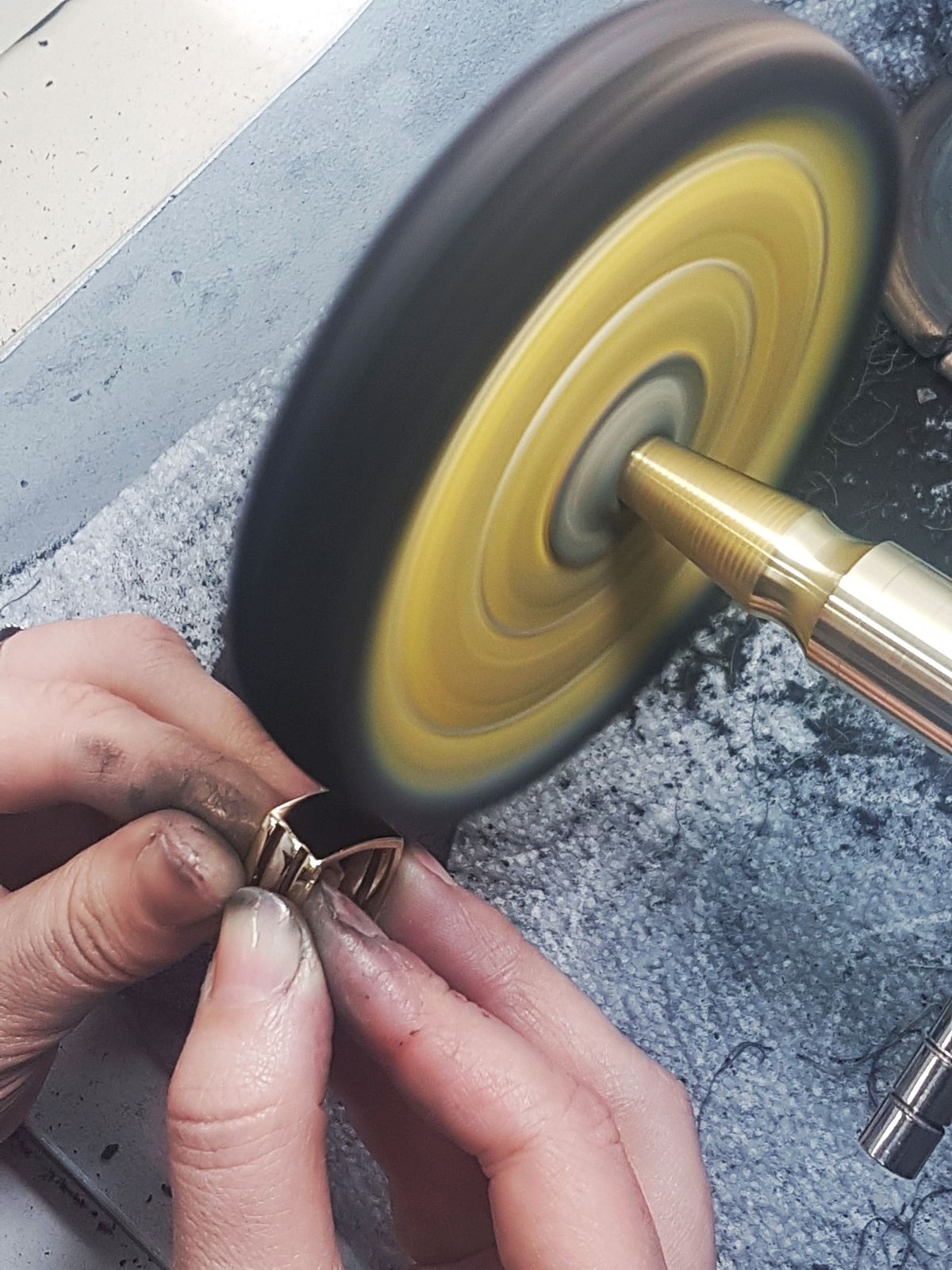
Common Polishing Methods: Handcrafted Heart Meets Modern Technology
Today’s jewelry polishing blends traditional and modern techniques, split broadly into hand polishing, machine polishing, and chemical polishing—often combined for quality and efficiency.
1. Hand Polishing: The Warmth of Slow Craft
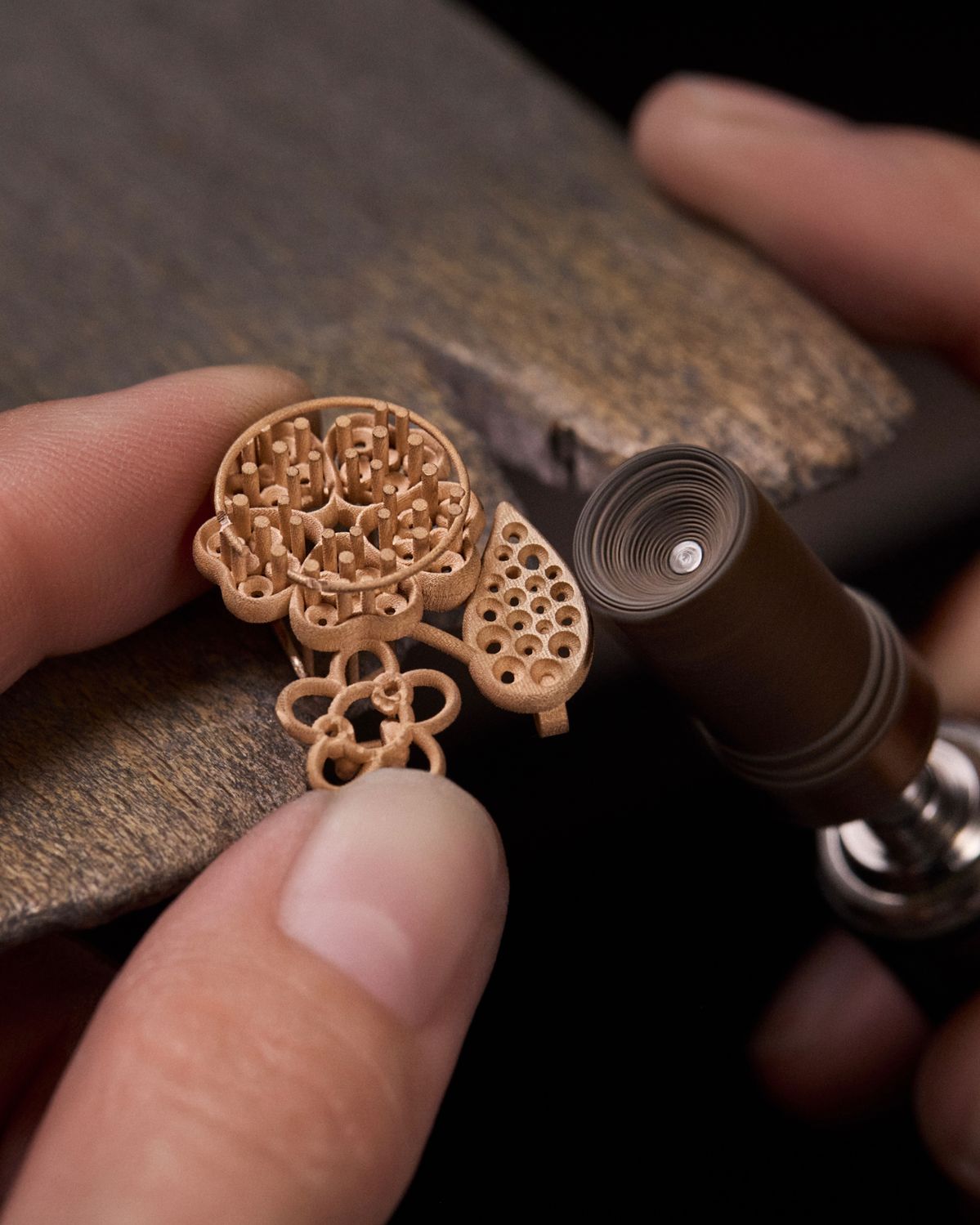
Hand polishing is the oldest, most artisanal method, still essential for high-end and custom jewelry. It relies on the polisher’s hands, experience, and graded tools (sandpaper, polishing compound, suede cloth) to refine every detail.
Typical hand polishing process:
- Coarse sandpaper removes major burrs and deep scratches.
- Fine sandpaper creates a smooth, even base.
- Polishing compound is applied and buffed to build luster.
- Suede cloth finishes the piece, removing residue for a soft, natural glow—not harsh, cold reflectivity.
Advantages: Precision, adaptability to complex carvings and tight spaces, and a unique, unreplicable warm luster. Each piece is subtly one-of-a-kind.Limitations: Extremely time-intensive (hours per simple piece) and costly, making it ideal for luxury, custom, and vintage-style jewelry.
 2.Machine Polishing: Efficient, Consistent Mass Production
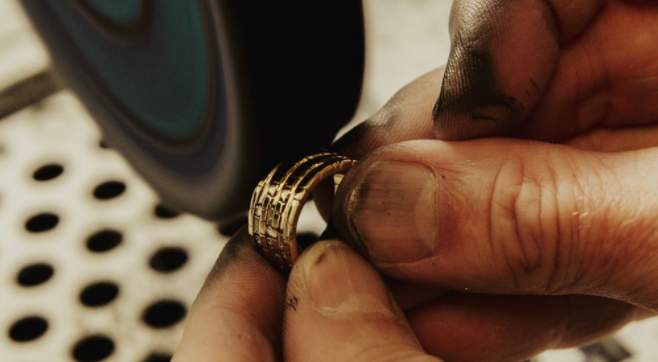
Machine polishing dominates mainstream, mass-produced jewelry. It uses powered equipment—rotary polishers, vibratory tumblers, magnetic polishers—to quickly refine surfaces in bulk.
- Rotary polishers: Great for flat, simple metal designs, delivering bright mirror finishes.
- Vibratory tumblers: Ideal for small, detailed pieces (earrings, chains), ensuring uniform polishing across hard-to-reach areas.
- Magnetic polishers: Deliver high-precision finishing without distorting delicate shapes.
Advantages: Fast, consistent, cost-effective for large batches.Limitations: Less precise on extreme detailing; shine can feel mechanical and less "lived-in."
3. Chemical Polishing: Specialized Auxiliary Technique
A niche method, chemical polishing immerses jewelry in a controlled solution to dissolve oxidation and surface flaws via chemical reaction, smoothing the material and enhancing shine.
Advantages: Fast, uniform, effective on highly complex shapes.Limitations: Strict solution control required; improper use damages materials. Shine durability is lower than physical polishing. It is mostly used as a supplementary step.
Polishing Finishes: Choose Your Shine & Style
Different polishing techniques create distinct surface effects, suited to different occasions and personal styles:
- Mirror PolishingUltra-smooth, highly reflective surface like a mirror. Bold, elegant, and eye-catching. Perfect for minimalist rings, necklaces, and formal or daily luxury wear.
- Matte PolishingSoft, non-reflective, velvety finish. Understated, modern, and forgiving of minor marks. Ideal for gentle, everyday styles (matte silver, matte pearls).
- Brushed PolishingFine linear texture with layered, soft shine. Resists fingerprints, durable, and timeless. Works beautifully for brushed silver rings, bangles, and versatile daily pieces.
- Satin / Frosted PolishingFine textured surface with warm, muted luster and vintage charm. Scratch-resistant and design-forward, perfect for retro-style gold or gemstone jewelry.
Care Tips: Preserve Your Jewelry’s Polished Shine
Even expert polishing requires gentle care to maintain its glow:
- Avoid scratches & impactsKeep polished jewelry away from keys, scissors, and rough surfaces. Store separately in a jewelry box, ideally wrapped in soft cloth.
- Stay away from corrosive environmentsRemove jewelry before showering, swimming, or hot springs. Avoid direct contact with perfume, hairspray, sweat, and seawater to prevent tarnish.
- Regular gentle cleaningWipe daily with suede or lens cloth to remove sweat and dust. For tarnished metal, use a specialized polishing cloth lightly. Do not aggressively polish gemstones or pearls—they can scratch or lose luster.
- Prevent long-term idle tarnishIf not worn regularly, clean, apply a thin protective layer, and store in an airtight container.
Final Thoughts: Shine That Speaks of Patience & Craft
A jewelry’s beauty lies not only in design but in meticulous craftsmanship. Polishing is simple in concept but demands immense patience: transforming ordinary material into something luminous, textural, and full of warmth.
When we wear a finely polished piece, we wear not just beauty, but the hands that made it, the integrity of the material, and the quiet grace of careful refinement. Much like life itself: the slow, steady polishing of days makes us softer, brighter, and truly radiant.
Next time you choose a piece of jewelry, take a moment to notice its shine. That is the soul given by polishing—and its most tender, unforgettable charm.