
If you’re a jewelry lover, you’ve probably faced this frustrating scenario: You splurge on a shiny gold-plated ring, wear it proudly for three weeks, and suddenly—disaster. The gold fades, your finger turns an unsightly green or black, and your new favorite accessory is rendered unwearable. It’s a common letdown, and it all boils down to one thing: most cheap fashion jewelry uses brass or copper bases, metals that react with sweat and air to tarnish quickly. But lately, there’s a trend that’s solving this problem for good: stainless steel jewelry. So why is stainless steel jewelry trendy right now? The answer lies in what modern shoppers really want—pieces that are beautiful, long-lasting, and aligned with their lifestyle.
The Secret Behind Its Longevity: 316L Stainless Steel
The magic of stainless steel jewelry isn’t just hype—it’s rooted in the technical properties of 316L stainless steel, the specific grade used by quality brands. This metal is incredibly dense, making it the perfect canvas for PVD (Physical Vapor Deposition) finishes. Unlike traditional plating, which sits loosely on top of the metal, PVD is applied in a high-pressure vacuum, creating an ultra-strong bond that fuses the color to the surface. The result? You get the luxe, rich look of 18K gold without the exorbitant price tag—plus a finish that stands up to daily wear and tear, no fading required.
More Than Durable: It Fits Modern Aesthetics
Stainless steel’s rise isn’t just about durability—it’s also a perfect match for today’s fashion trends. We’re seeing a shift toward minimalism, industrial chic, and the ever-popular “Quiet Luxury” vibe that dominates social media. Steel’s hard, sturdy nature lets designers create sharp, architectural lines that feel fresh and bold—something softer metals like silver or gold struggle to achieve.
Another big driver? The gender-neutral movement. Stainless steel’s sleek, metallic look transcends traditional “men’s” and “women’s” labels, making it easy for couples (or anyone) to share styles—think chunky Cuban chains, minimalist bands, or geometric pendants that look just as good on any wearer. It’s a far cry from the delicate, heirloom-style jewelry of the past; instead, it’s a sleek, urban aesthetic that feels modern and versatile.
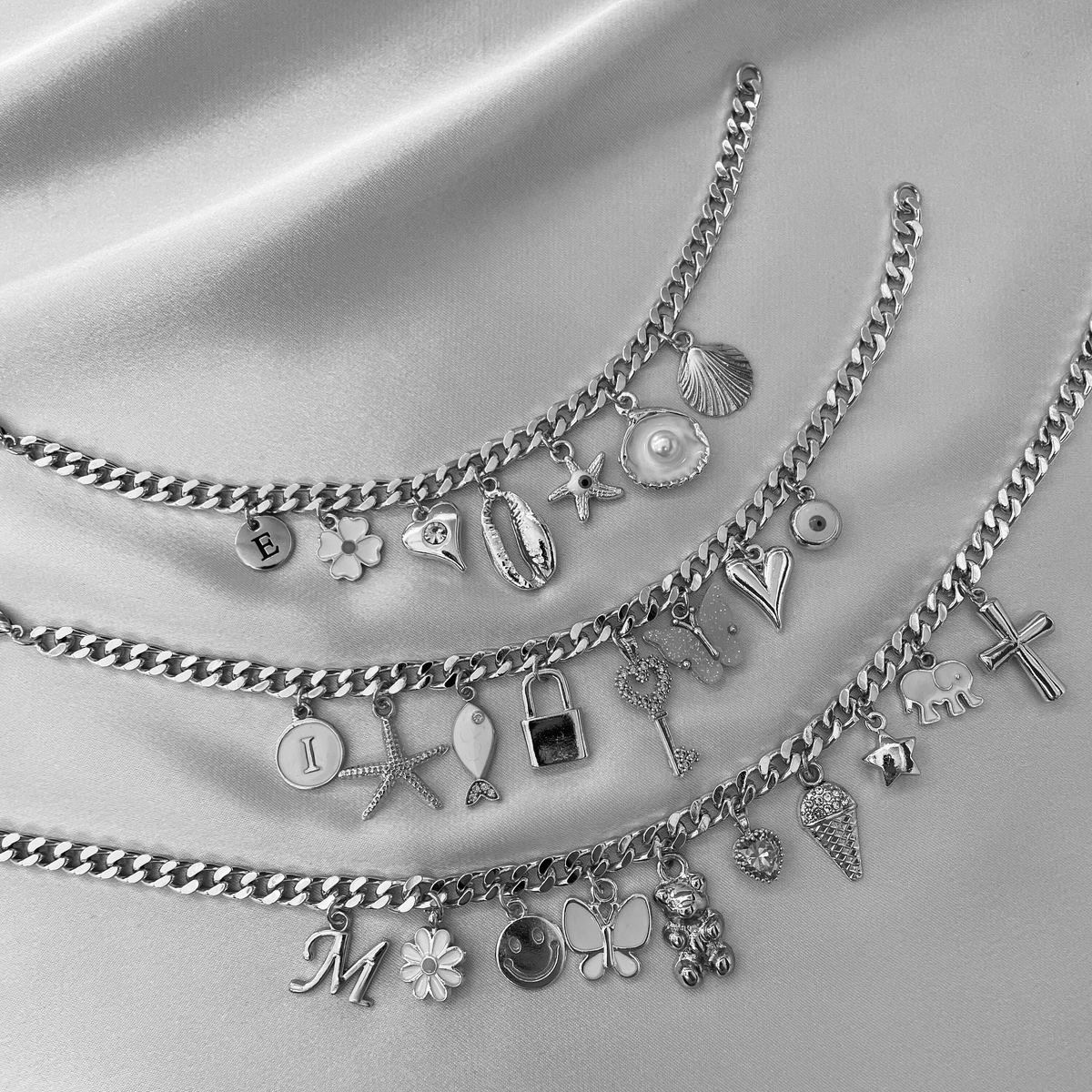
Unmatched Durability for Active Lifestyles
Let’s be real: most of us lead busy, active lives. We hit the gym, swim in the pool, rush through morning showers, and don’t have time to take off (and keep track of) our jewelry every time. Traditional metals can’t handle this routine—but stainless steel can. Thanks to its high chromium content, it forms an invisible protective shield that prevents oxidation, meaning it never rusts. You can dive into the ocean, sweat through a workout, or shower with your necklace or ring on, and it will stay as shiny as the day you bought it.
Steel is also much harder than silver (which scratches easily) or gold (prone to dents). It resists scratches, maintains its luster for years, and requires almost no polishing. This is exactly why the “gym-to-shower” jewelry trend exists—steel keeps up with you, no fuss required. To put it in perspective, here’s a quick comparison with 925 silver:
Feature | 316L Steel | Silver (925) |
|---|---|---|
Waterproof | ✅ | ❌ |
Scratch Resistance | 💎💎💎 | 💎 |
Anti-Tarnish | ✅ | ❌ |
Maintenance | Low | High |
Fun fact: Stainless steel was originally developed for bridges and skyscrapers—so it’s no surprise it’s tough enough for your daily adventures. Its strength isn’t just a technical feature; it’s a fashion statement, letting you wear your jewelry with confidence, knowing it won’t break, bend, or fade.
Hypoallergenic: A Game-Changer for Sensitive Skin
If you have sensitive skin, you know the struggle: many fashion jewelry pieces cause itchy ears, red rashes, or irritation, often due to nickel leaching from the metal. But surgical-grade 316L stainless steel is a game-changer. It’s biocompatible—so safe that doctors use it for medical implants—and the nickel in its molecular structure is tightly bound, meaning it never leaches onto your skin.
The “L” in 316L stands for “Low Carbon,” which boosts its corrosion resistance and stability, making it even gentler on skin. You can wear steel earrings 24/7, stack rings on sensitive fingers, or layer necklaces without any discomfort. It’s why professional piercers often recommend stainless steel for new piercings—it lets your skin heal without fighting off irritants. Finally, sensitive skin wearers can build a jewelry collection that loves them back.
Affordable Luxury: Build a Collection Without Breaking the Bank
One of the biggest barriers to building a diverse jewelry collection is the cost of traditional precious metals. 18K gold and sterling silver come with heavy price tags, limiting you to just a few pieces. But stainless steel changes the game by offering “affordable luxury”—the look and feel of high-end jewelry at a fraction of the cost.
Why is it so affordable? Unlike gold, which requires expensive mining, steel is made from abundant iron and chromium, and 316L surgical steel is produced efficiently, keeping raw material costs low. With PVD plating, it mimics the look of solid gold or silver, and its dense texture feels just as premium in your hand. This means you can buy a full set of stacking rings, experiment with bold designs, or refresh your look every season—without saving for months.
A word of caution: Not all “stainless steel” jewelry is created equal. Many cheap brands use brass or other “mystery metals” and label them as steel, so always verify that the product is genuine 316L grade to get the durability and quality you’re paying for.
Eco-Friendly & Ethical: A Greener Choice
Modern shoppers care about the ethical impact of their purchases, and traditional jewelry production often falls short—gold and silver mining destroys ecosystems and uses toxic chemicals like cyanide. Stainless steel, however, is a champion of sustainability: it’s 100% recyclable without losing any of its quality. A steel ring you buy today could contain metal from an old bridge or skyscraper, and recycling steel uses far less energy than extracting raw ore.
Because steel lasts a lifetime, it also fights the “fast fashion” cycle of disposable jewelry. Instead of buying cheap, plated pieces that tarnish and end up in landfills, you can choose steel pieces that stay beautiful for years. Plus, it doesn’t require harsh chemical cleaners to maintain its shine, making it even better for the planet. Look for brands that highlight recycled 316L steel to ensure your jewelry is as ethical as it is stylish.
Versatility: Perfect for Every Outfit & Occasion
Modern fashionistas need jewelry that adapts to their busy lives—from a minimalist suit for work to streetwear for weekends to a dressy outfit for dinner. Stainless steel’s versatility makes it the perfect choice: its tensile strength lets designers create everything from thin, delicate wires to thick, industrial chains. It comes in a range of colors via PVD plating (black, rose gold, silver, and more), so you can mix and match tones without clashing.
It’s the only metal that truly fits the “all-day wear” lifestyle—waterproof, scratch-resistant, and versatile enough to go from the gym to a dinner date. A quick tip: Different finishes require different care. Use a soft microfiber cloth for high-polish steel to avoid scratches, and a mild soap wipe for matte finishes to remove trapped oils. And since steel is heavy, choose link sizes based on your comfort level—though many people love the premium weight it adds.
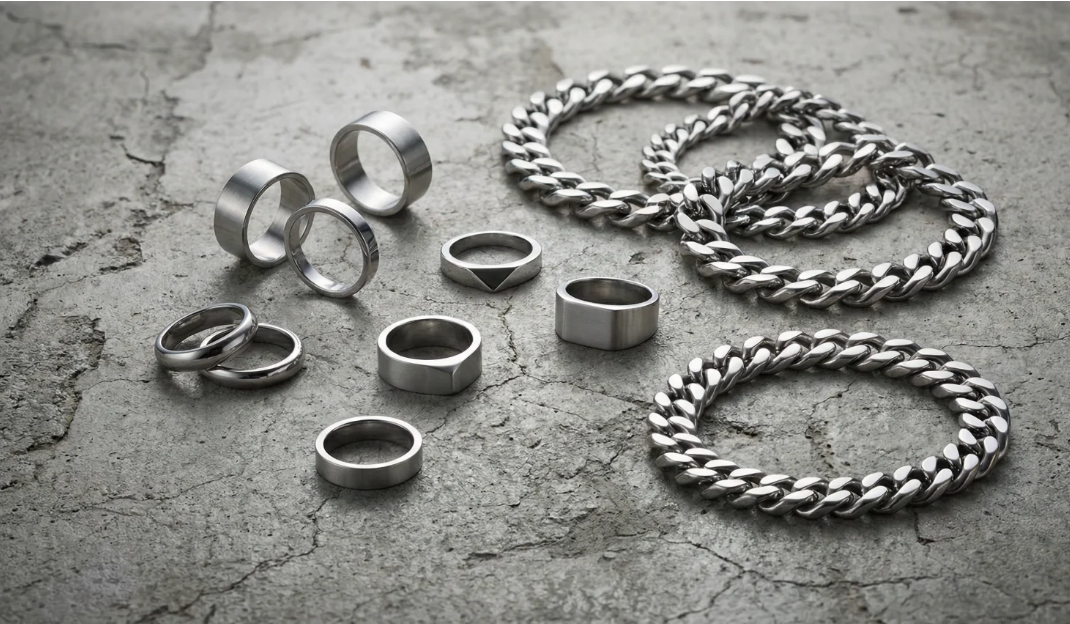
The Future of Stainless Steel Jewelry
Stainless steel’s trend isn’t slowing down anytime soon—in fact, its future looks brighter than ever. Here are three trends to watch for:
Tech-Integrated Designs: Manufacturers are now adding smart chips to steel rings, letting them track heart rate, steps, or other health metrics. Unlike bulky plastic trackers, these pieces are sleek and stylish, leveraging steel’s durability to protect internal electronics.
3D Printing: 3D printing with powdered steel lets designers create complex, interlocking geometries that traditional casting can’t achieve—with less waste. This means small independent studios can compete with big factories, offering unique, custom-made pieces.
Gender-Neutral Expansion: As the gender-neutral movement grows, brands are creating more unisex collections that focus on bold, industrial designs—perfect for anyone, regardless of style or identity.
Easy Care & Maintenance: Keep Your Steel Jewelry Shining
One of the best things about stainless steel jewelry is how low-maintenance it is. You don’t need expensive chemicals or professional cleaning—just basic household items. Here’s a quick guide:
Method | Best For | Effort | Result |
|---|---|---|---|
Soap & Water | Daily Grime | Low | ⭐⭐⭐ |
Baking Soda | Deep Stains | Medium | ⭐⭐⭐⭐ |
Ultrasonic | Filigree | High | ⭐⭐⭐⭐⭐ |
Microfiber | Fingerprints | Minimal | ⭐⭐ |
A few extra tips: Use a soft-bristled toothbrush to clean crevices (scrub in the direction of the metal’s grain), avoid harsh bleach or chlorine (which can damage the protective layer), and store steel jewelry in separate pouches to prevent scratching softer metals. Check clasps and jump rings every few months and add a tiny drop of mineral oil if needed—but the main body of your jewelry will barely need any attention.
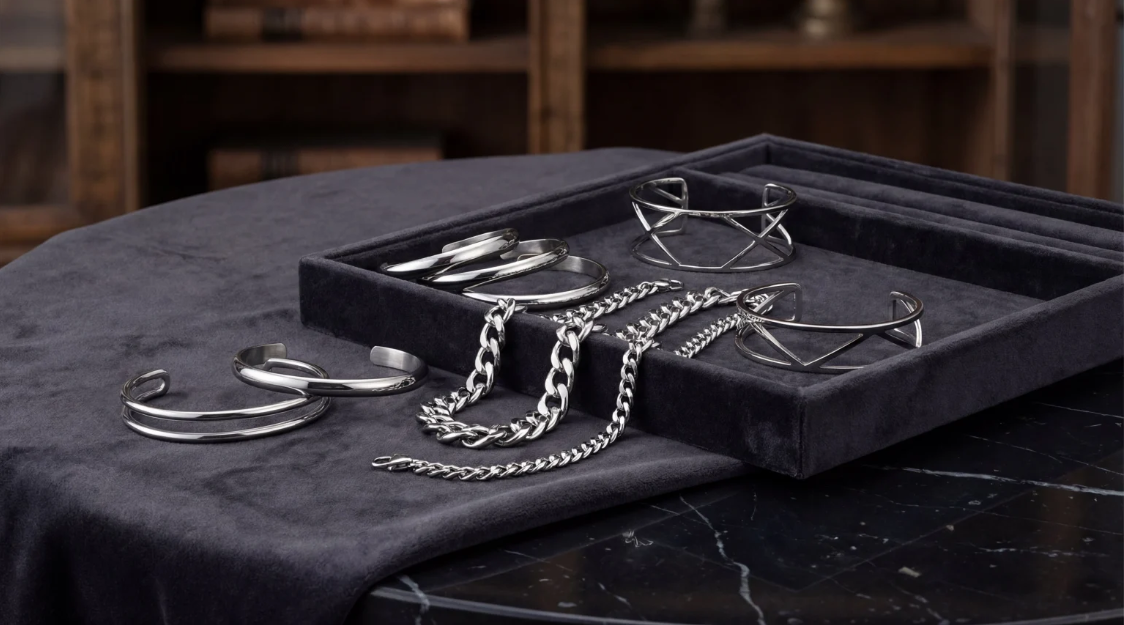
Common Questions About Stainless Steel Jewelry
Can I wear stainless steel jewelry in the shower?
Yes! Thanks to its chromium content, it’s waterproof and rust-resistant. Just rinse off soap or shampoo residue to keep it shiny.
Does stainless steel jewelry tarnish?
No, it doesn’t tarnish like silver. It maintains its metallic finish for years, even in humid climates, without constant polishing.
Is it safe for sensitive skin?
Absolutely. High-grade 316L stainless steel is hypoallergenic—its nickel is tightly bound and won’t leach onto your skin. Always check the grade before buying!
How does it compare to sterling silver?
Steel is harder, more durable, and much more affordable. It’s a better value for daily wear, while silver is better for more delicate, occasional pieces.
Can a jeweler resize my stainless steel ring?
Resizing steel is very difficult (it has a high melting point), so measure your finger carefully before ordering—most brands offer size guides to help.
Is stainless steel jewelry eco-friendly?
Yes! It’s 100% recyclable, has a long lifespan, and requires no harsh cleaners—making it one of the most sustainable jewelry materials.
Final Thoughts: Why Stainless Steel Is Here to Stay
Stainless steel jewelry’s rise isn’t just a passing trend—it’s a response to what modern shoppers truly want: durability, style, affordability, and ethics. It solves the frustration of disposable fashion jewelry, fits seamlessly into active lifestyles, and lets you build a versatile collection without breaking the bank. Whether you’re into minimalist bands, bold chains, or tech-integrated pieces, steel has something for everyone.
Ready to upgrade your jewelry collection? Explore our full range of high-quality 316L stainless steel pieces here—and say goodbye to tarnished, irritating jewelry for good.