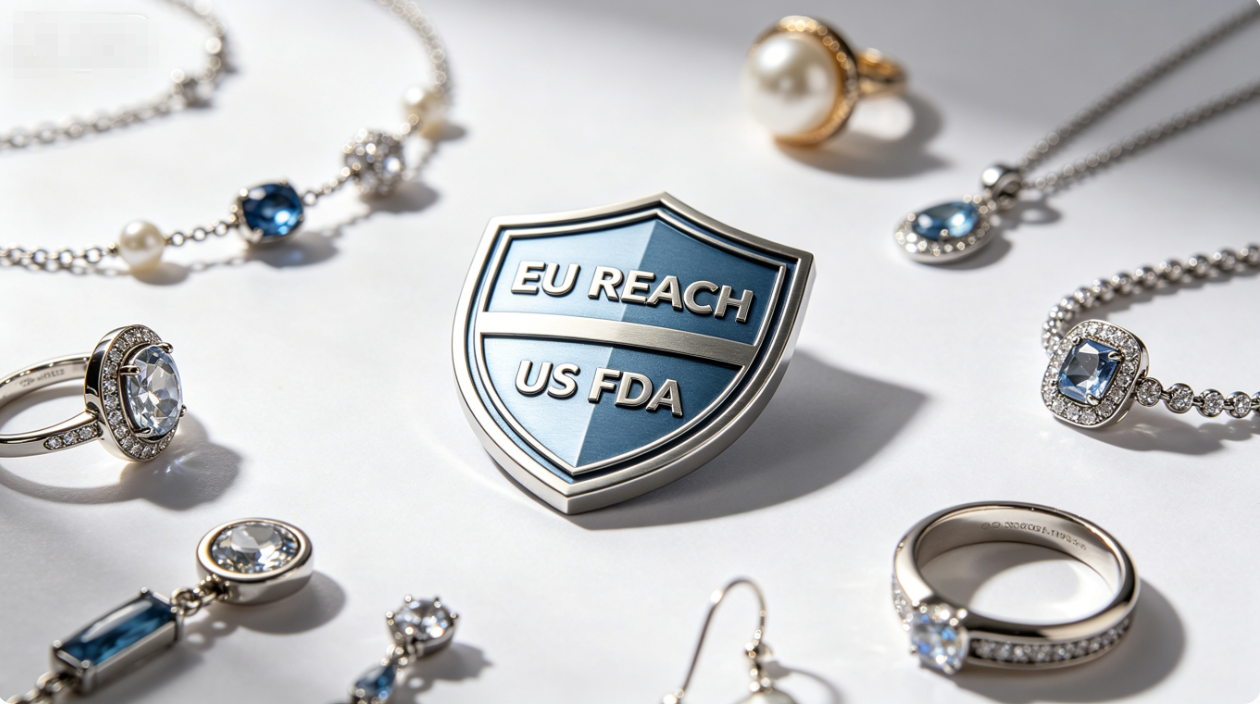
For jewelry brands importing products into Europe and the United States, beautiful designs and competitive pricing are only part of the equation. Regulatory compliance has become one of the most important factors affecting whether products can successfully enter a market.
Every year, thousands of shipments are delayed, detained, or rejected because they fail to meet safety standards related to heavy metals and restricted substances. Even products that appear visually identical can have dramatically different compliance outcomes depending on their material composition and manufacturing process.
For importers, failing a compliance inspection can result in:
Customs detention or seizure
Product recalls
Marketplace listing removal
Retailer rejection
Financial penalties
Damage to brand reputation
Understanding EU REACH compliance, California Proposition 65, and other US safety requirements can help jewelry brands avoid costly mistakes and protect long-term business growth.
At MCGA Jewelry we manufacture high-quality stainless steel jewelry and brass jewelry using carefully selected materials. We also support SGS third-party testing and can provide compliance documentation to help customers navigate international import requirements with confidence.

Why Compliance Matters More Than Ever
Consumers today are more aware of product safety than ever before.
Major retailers, online marketplaces, and customs authorities increasingly require documentation proving that jewelry products meet regulatory standards.
Platforms such as Amazon, Walmart, Etsy, and many department stores often request compliance reports before allowing products to be sold.
As regulations continue to tighten, working with a knowledgeable jewelry manufacturer has become a competitive advantage rather than just a sourcing decision.
Understanding EU REACH Compliance
REACH stands for:
Registration, Evaluation, Authorisation and Restriction of Chemicals
It is one of the world's strictest chemical safety regulations and applies to products sold throughout the European Union.
The regulation restricts hazardous substances commonly found in low-quality jewelry materials, coatings, and components.
Its primary goal is to protect consumers from exposure to potentially harmful chemicals during everyday use.
For jewelry importers, REACH compliance is often one of the first requirements checked by customs authorities and retail buyers.
Understanding Actual Compliance Limits: How Much Is Too Much?
Many jewelry buyers hear terms such as "lead-free jewelry", "nickel-safe jewelry", or "REACH compliant jewelry." However, compliance is not determined simply by whether a substance exists in a product.
The real question is whether its concentration exceeds legal limits.
Even trace amounts may be acceptable, while exceeding a threshold by only a few parts per million (ppm) can result in customs rejection.

EU REACH Heavy Metal Limits for Jewelry
| Restricted Substance | EU REACH Limit | Equivalent |
|---|---|---|
| Lead (Pb) | ≤ 0.05% by weight | ≤ 500 ppm |
| Cadmium (Cd) | ≤ 0.01% by weight | ≤ 100 ppm |
| Nickel Release (Pierced Jewelry) | ≤ 0.2 μg/cm²/week | Migration Limit |
| Nickel Release (Skin Contact Jewelry) | ≤ 0.5 μg/cm²/week | Migration Limit |
| SVHC Substances | ≤ 0.1% by weight | ≤ 1000 ppm |
These restrictions are among the strictest jewelry safety standards in the world.
Lead (Pb): The Most Frequently Tested Heavy Metal
Lead has historically been used in low-cost alloys because it improves casting performance and lowers manufacturing costs.
However, excessive lead exposure has been linked to:
Neurological damage
Kidney dysfunction
Developmental disorders
Reproductive health concerns
EU Requirement
Lead content must not exceed 0.05% (500 ppm).
Compliance Example
| Lead Content | Result |
| 120 ppm | Pass |
| 350 ppm | Pass |
| 499 ppm | Pass |
| 501 ppm | Fail |
| 1000 ppm | Fail |
A difference of just 2 ppm can determine whether a shipment passes or fails laboratory testing.
Many low-cost zinc alloy accessories sourced from unverified factories fail this requirement.
Cadmium (Cd): Small Amounts, Big Risks
Cadmium is one of the most heavily regulated heavy metals in jewelry manufacturing.
Long-term exposure has been associated with:
Kidney damage
Bone deterioration
Respiratory issues
Increased cancer risk
EU Requirement
Cadmium content must not exceed 0.01% (100 ppm).
Compliance Example
| Cadmium Content | Result |
| 20 ppm | Pass |
| 50 ppm | Pass |
| 99 ppm | Pass |
| 101 ppm | Fail |
| 500 ppm | Fail |
Because the allowable threshold is extremely low, careful raw material sourcing is critical.
Nickel (Ni): The Leading Cause of Jewelry Allergies
Nickel allergy is one of the most common contact allergies worldwide.
Studies estimate that approximately 10–20% of consumers, especially women, may experience allergic reactions caused by excessive nickel release from jewelry.
Unlike lead and cadmium regulations, REACH focuses on nickel release rather than total nickel content.
Nickel Release Limits
Pierced Jewelry
Examples:
Earrings
Nose rings
Body piercing jewelry
Maximum allowable release:
≤ 0.2 μg/cm²/week
Jewelry in Long-Term Skin Contact
Examples:
Rings
Bracelets
Necklaces
Watches
Maximum allowable release:
≤ 0.5 μg/cm²/week
Products exceeding these migration limits fail REACH compliance testing.
SVHC Substances: A Hidden Compliance Risk
SVHC stands for Substances of Very High Concern.
These substances may be present in:
Coatings
Adhesives
Plastics
Decorative elements
Packaging materials
Compliance Requirement
If any SVHC substance exceeds:
0.1% (1000 ppm)
additional reporting obligations may apply, and some retailers may reject the product.
Many professional buyers now request SVHC screening reports before placing orders.
Why 316L Stainless Steel Performs Better
Many brands are transitioning to stainless steel jewelry manufacturing because of its durability, corrosion resistance, and compliance advantages.
Typical Composition of 316L Stainless Steel
| Element | Typical Percentage |
| Iron (Fe) | 62–68% |
| Chromium (Cr) | 16–18% |
| Nickel (Ni) | 10–14% |
| Molybdenum (Mo) | 2–3% |
| Carbon (C) | ≤ 0.03% |
Although 316L stainless steel contains nickel, its stable metallurgical structure significantly reduces nickel release compared with many low-grade alloys.
This makes it a preferred material for:
Hypoallergenic jewelry
Waterproof jewelry
Daily-wear jewelry
Premium fashion jewelry
Additional Benefits of 316L Stainless Steel
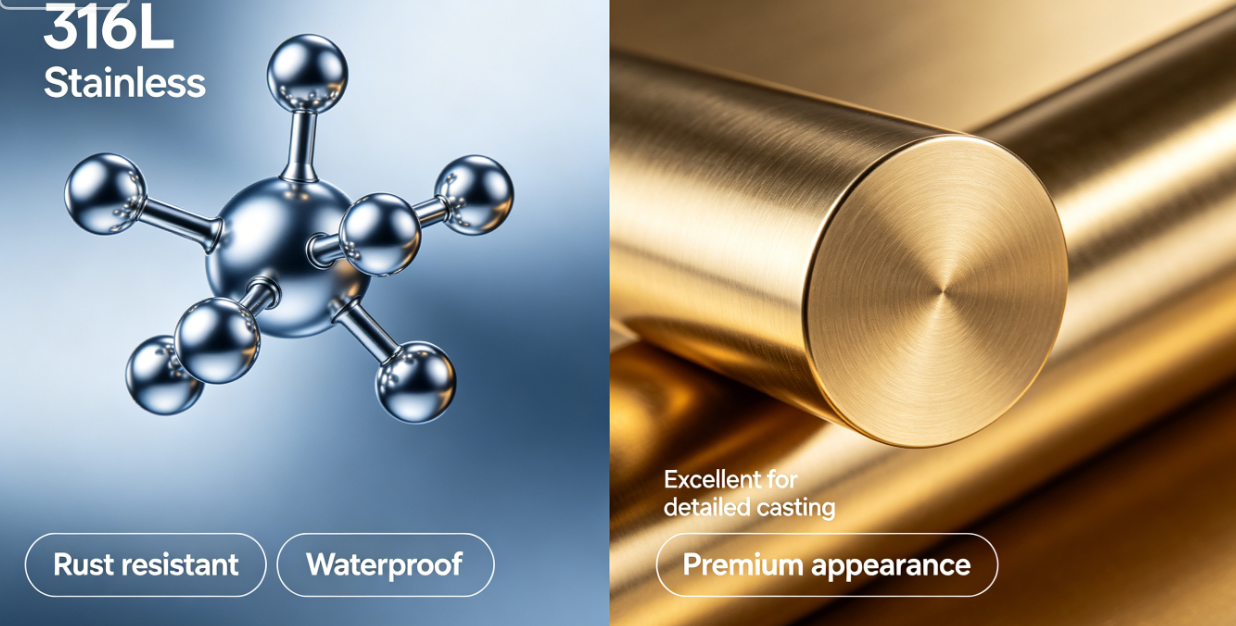
✓ Rust resistant
✓ Corrosion resistant
✓ Waterproof
✓ Long-lasting shine
✓ Highly durable
✓ Suitable for sensitive skin
✓ Excellent compliance performance
Why Brass Requires Reliable Material Control
Brass remains one of the most popular materials in fashion jewelry manufacturing because of its excellent casting characteristics and luxurious appearance.
Typical Jewelry-Grade Brass Composition
| Element | Typical Percentage |
| Copper (Cu) | 60–70% |
| Zinc (Zn) | 30–40% |
| Lead (Pb) | <0.05% in compliant grades |
The challenge with brass is not the material itself but inconsistent sourcing.
Factories using recycled scrap metals without proper testing may introduce:
Excessive lead
Cadmium contamination
Other restricted substances
This is why experienced brass jewelry manufacturers conduct strict material inspections before production begins.
Benefits of Brass Jewelry
✓ Excellent for detailed casting
✓ Premium appearance
✓ Cost-effective alternative to sterling silver
✓ Ideal for gold plating
✓ Better profit margins for jewelry brands
✓ Suitable for OEM and ODM projects
US Compliance Requirements: More Than Just FDA
Many importers refer to US compliance as "FDA compliance," but jewelry products are often governed by multiple regulations and retailer requirements.
These may include:
California Proposition 65
Requires warnings for products containing certain chemicals above defined thresholds.
CPSIA
Consumer Product Safety Improvement Act requirements may apply to children's products.
Retailer Compliance Programs
Major retailers frequently require third-party laboratory testing before approving suppliers.
Failure to comply may result in:
Product recalls
Marketplace suspension
Retailer rejection
Legal liability
Customs delays
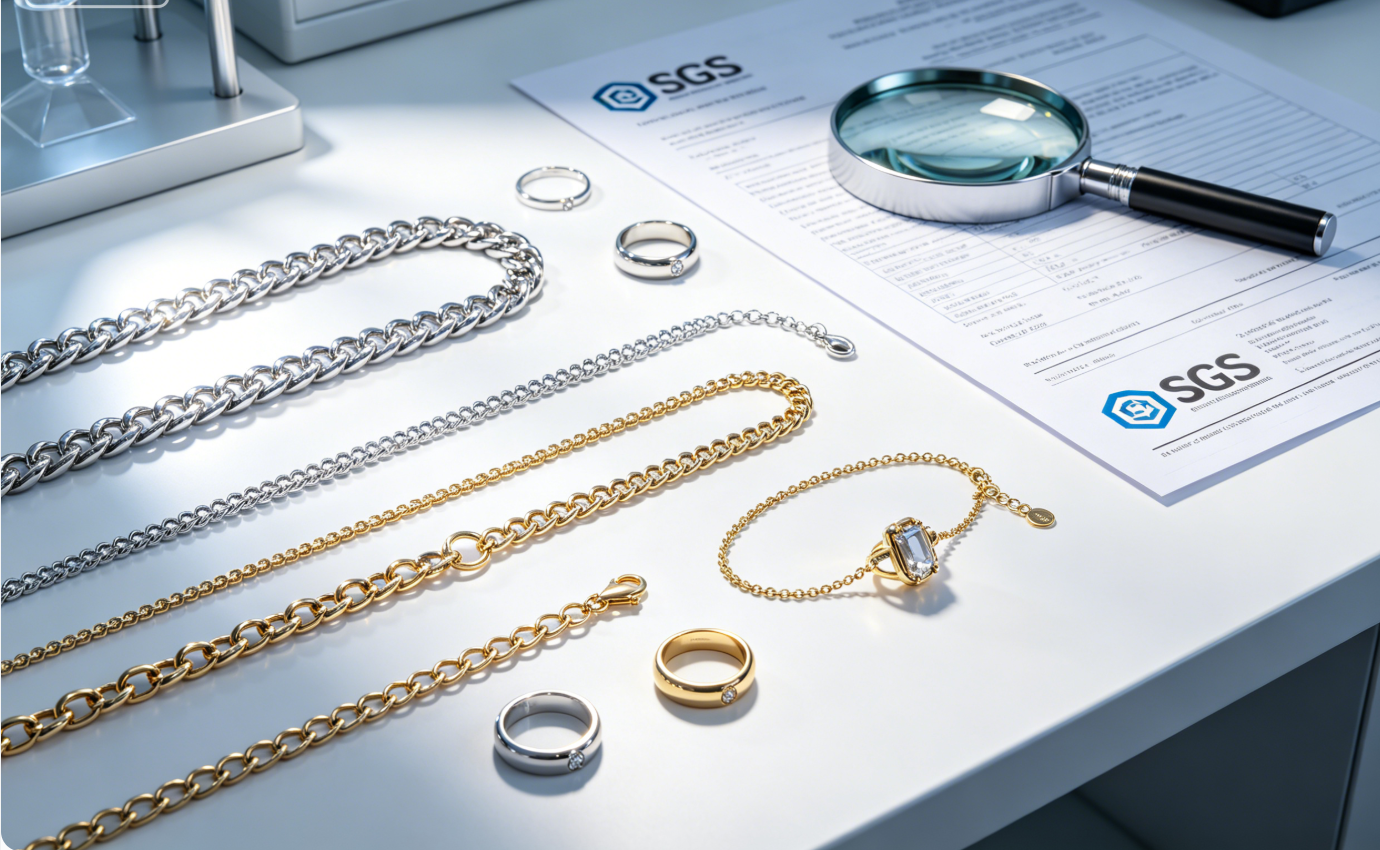
What SGS Laboratory Reports Typically Verify
SGS is one of the most recognized testing organizations in the world.
Professional SGS testing can include:
✓ Lead (Pb) Content Analysis
✓ Cadmium (Cd) Content Analysis
✓ Nickel Release Testing
✓ Chromium VI Screening
✓ REACH SVHC Screening
✓ Material Composition Verification
✓ Coating & Plating Evaluation
✓ California Proposition 65 Testing
✓ CPSIA Testing (when applicable)
These reports provide objective evidence that products comply with EU and US regulations and significantly reduce import risks.
Common Reasons Jewelry Shipments Fail Compliance
Many import issues originate long before products reach customs.
Common causes include:
Low-Quality Raw Materials
Cheap alloys often contain excessive heavy metals.
Inconsistent Plating Suppliers
Poor plating quality can increase nickel release rates.
Missing Documentation
Even compliant products may be delayed without proper reports.
Lack of Production Control
Some suppliers test samples but fail to maintain standards during mass production.
How MCGA Jewelry Helps Customers Stay Compliant
At MCGA Jewelry, compliance begins before manufacturing starts.
We support customers through:
Material Selection
316L Stainless Steel
High-quality brass
Qualified raw material suppliers
Quality Control
Strict inspections throughout production.
SGS Testing Support
Third-party laboratory testing available upon request.
Documentation Assistance
Support for customs clearance and retailer requirements.
Consistent Manufacturing Standards
Quality control procedures maintained from sampling through mass production.