We’ve all been there: you take off your favorite ring after a long day or intense workout, only to find an unsightly green stain wrapped around your finger. When browsing affordable jewelry options, “stainless steel” feels everywhere — but can you really trust it?
We’re here to demystify the science behind jewelry-related skin discoloration. We consider 316L surgical-grade stainless steel the ultimate solution for anyone tired of green-stained fingers, irritated skin, and fast-fading accessories.
In this complete guide, we’ll break down the chemistry of metal reactions, show you how to identify high-quality alloys, and share exactly how to keep your jewelry looking clean and pristine for years.
The Chemistry Behind the Green Stain
That stubborn green mark isn’t just a cosmetic annoyance — it’s a chemical reaction.
Most affordable fashion jewelry uses copper as a base metal. When your sweat (which contains moisture, salt, and natural acids) interacts with copper, it triggers oxidation. The result is a greenish film known as verdigris patina, which transfers from the jewelry onto your skin.
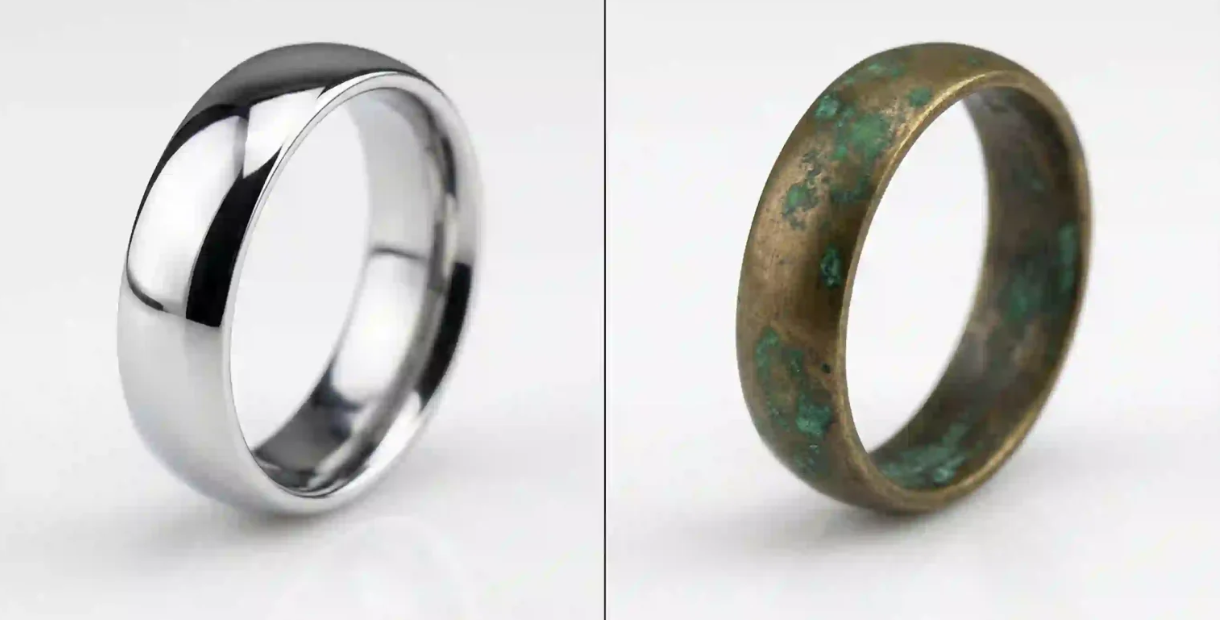
This isn’t a permanent stain; it’s a temporary byproduct of metal reacting to your body chemistry. Some people are more prone to it than others, thanks to differences in skin pH and sweat composition. This galvanic reaction speeds up when metals like brass, low-grade silver, or zinc alloys are involved.
The simple solution? Avoid copper entirely.
316L stainless steel contains zero copper, which means it will never produce that dreaded green discoloration.
| Metal Type | Copper Content | Sweat Reaction | Green Skin? |
|---|---|---|---|
| Brass | High | Fast | ❌ Always |
| Sterling Silver | 7.5% | Medium | ⚠️ Sometimes |
| 316L Steel | None | None | ✅ Never |
| Zinc Alloy | Varies | Fast | ⚠️ Often |
If you want to keep your skin clean, skip jewelry with brass or copper bases. Even sterling silver can leave marks due to its 7.5% copper content. For truly worry-free wear, choose non-reactive metals like 316L stainless steel.
What Makes 316L Stainless Steel So Special?
Not all stainless steel is created equal.
What sets 316L apart is its protective chromium oxide layer. With at least 10.5% chromium, this metal forms an invisible, self-healing barrier that shields against corrosion, rust, and tarnish. Even if scratched, the layer instantly reforms when exposed to oxygen.
What makes 316L even stronger is the addition of molybdenum, making it “marine grade” and far more resistant to salt, sweat, and harsh environments than standard 304 steel.
This biocompatibility is why doctors use 316L for surgical implants and new piercings. It’s non-reactive, hypoallergenic, and safe for even sensitive skin.
You can wear this jewelry to the gym, the shower, and everywhere in between — without bending, breaking, or irritation.
Stainless Steel vs. Traditional Jewelry Metals
If you’re tired of silver that tarnishes, brass that stains, and plated jewelry that flakes, 316L stainless steel is the game-changing alternative.
Sterling silver is soft, scratches easily, and darkens from air and moisture. Gold-plated brass quickly wears thin, exposing the reactive metal underneath. Both require constant polishing and care.
High-quality 316L stainless steel is dense, durable, and naturally tarnish-resistant. It holds its shine through daily use and requires almost no maintenance.
| Metal Property | Sterling Silver | Gold-Plated Brass | 316L Stainless Steel |
|---|---|---|---|
| Tarnish Risk | High | Extreme | ✅ None |
| Durability | Low | Low | ✅ High |
| Skin Reaction | Medium | High | ✅ None |
| Safe in Water? | No | No | ✅ Yes |
Unlike traditional metals, 316L is inert — it simply does not react with your sweat, skin, or everyday environment.
How to Identify Real Quality 316L Stainless Steel
Online shopping can be tricky, as low-quality alloys are often disguised as “stainless steel.” Here’s how to shop smart:
Check for the 316L hallmark This stamp confirms genuine low-carbon, surgical-grade stainless steel. Without it, you may be getting lower-grade 304 steel or an inexpensive alloy blend.
Test the weight Real 316L has a solid, premium heft. Lightweight, flimsy pieces are often hollow zinc alloy, which corrodes and stains skin.
Use a magnet True 316L austenitic steel has almost no magnetic pull. Strong magnetism means low-grade, rust-prone steel.
Inspect the finish High-quality steel has a smooth, even polish. Pitting, bubbles, or rough spots signal cheap casting.
Look for verified 316L pieces engineered to never turn your skin green.
Environmental Triggers to Avoid
While 316L is highly durable, it still performs best with a little care. Chlorine, saltwater, and harsh chemicals can affect its surface over time.
| Exposure Type | Risk Level | Primary Effect | Recommended Action |
|---|---|---|---|
| Chlorine | High | Pitting | ❌ Remove |
| Ocean Salt | Medium | Dulling | ✅ Rinse |
| Acidic Sweat | Low | Residue | ✅ Wipe |
| Bleach | Very High | Surface Damage | ❌ Avoid |
Always apply perfume, hairspray, and lotion before putting on your jewelry, and rinse pieces with clean water after exposure to sweat or saltwater.
What Looks Like Tarnish — But Isn’t
Genuine 316L stainless steel does not tarnish.
If your jewelry appears dull or dark, it’s almost always a buildup of lotion, body oils, dust, or salt deposits — not actual metal oxidation. The chromium layer remains fully intact.
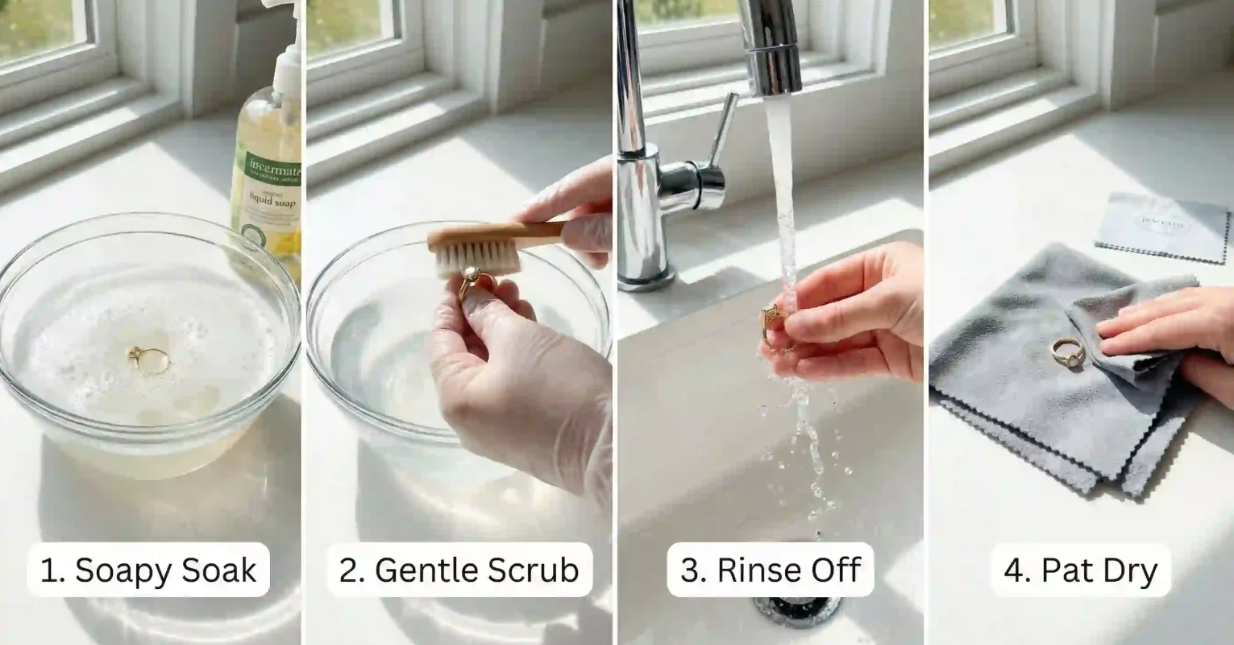
Cleaning it is simple:
Soak in warm water with mild soap
Gently scrub with a soft brush
Rinse thoroughly
Dry immediately with a microfiber cloth
Your jewelry will shine like new again.
Why PVD Coating Matters for Long-Lasting Color
If you love gold-toned jewelry but fear green skin, cheap electroplating is the real culprit. Traditional plating sits on the surface and wears off quickly.
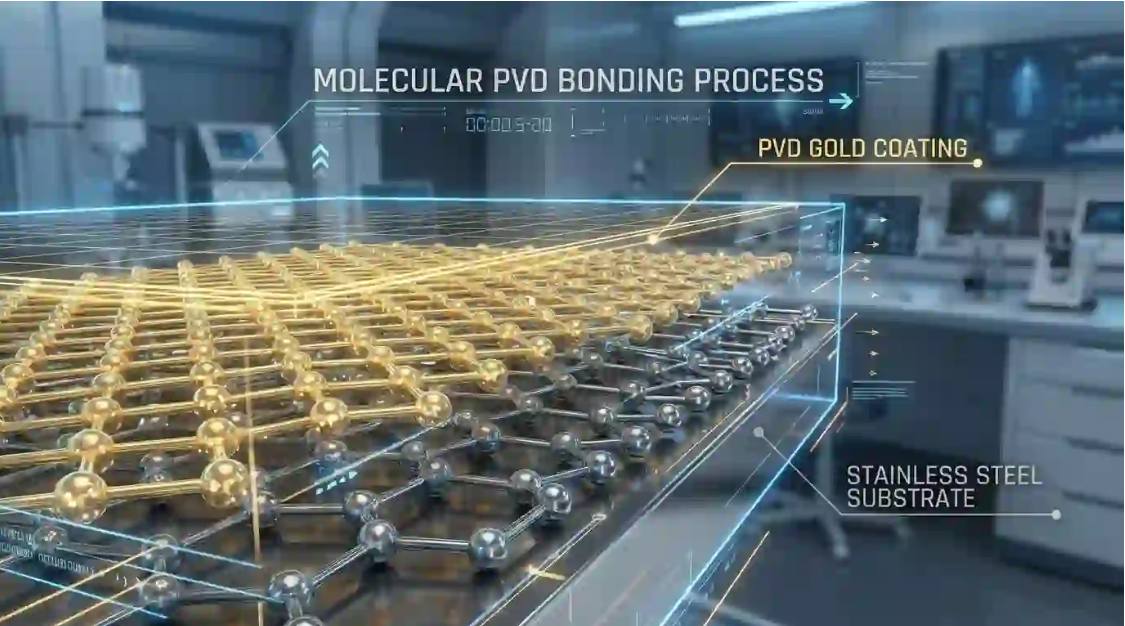
Professional PVD (Physical Vapor Deposition) coating is an advanced vacuum process that bonds color at the molecular level. This isn’t just a layer; it becomes part of the steel itself.
| Feature | Standard Plating | PVD Coating |
|---|---|---|
| Bond Type | Surface-level | ✅ Molecular |
| Longevity | 3–6 Months | ✅ 3–10 Years |
| Wear Resistance | Low | ✅ High |
| Skin Safety | ⚠️ Risky | ✅ Safe |
Since PVD-coated 316L has no copper base, it will never turn your finger green.
The Ultimate Jewelry Care & Prevention Strategy
To keep your jewelry looking flawless for decades:
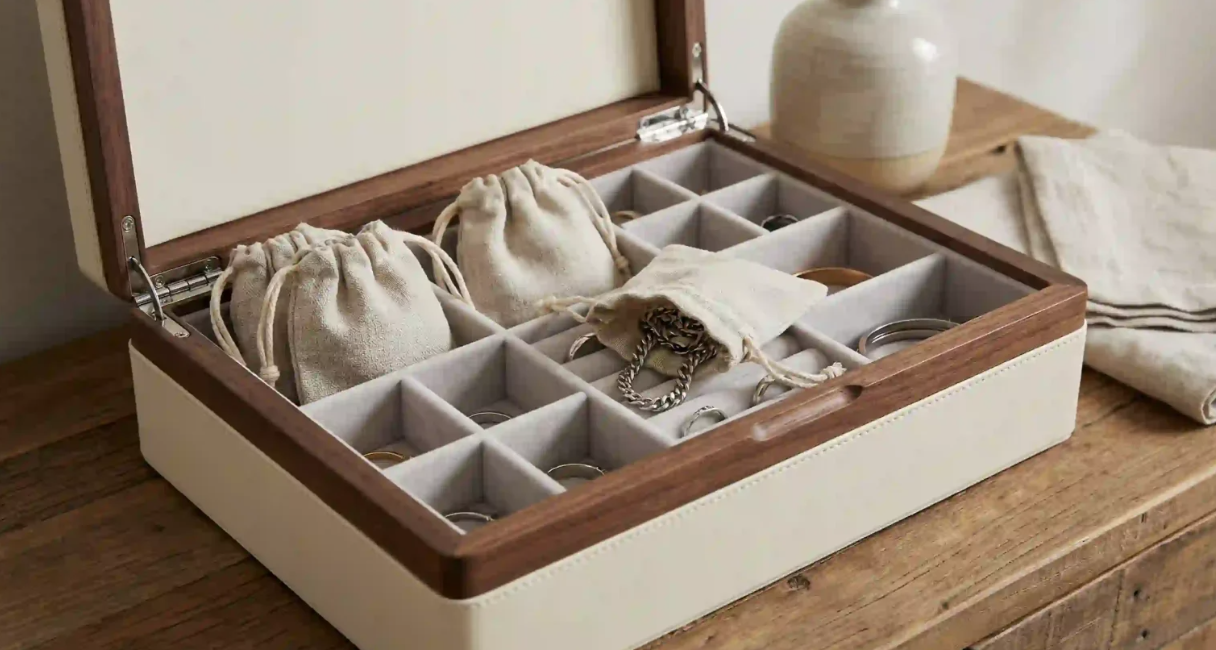
Store pieces in a fabric-lined jewelry box, away from humidity and direct sunlight
Use individual soft pouches to prevent scratching
Place silica gel packets inside to absorb moisture
Most importantly: always choose verified 316L stainless steel with PVD coating over cheap fashion steel or plated brass. Quality steel feels heavier, cooler, and far more durable.