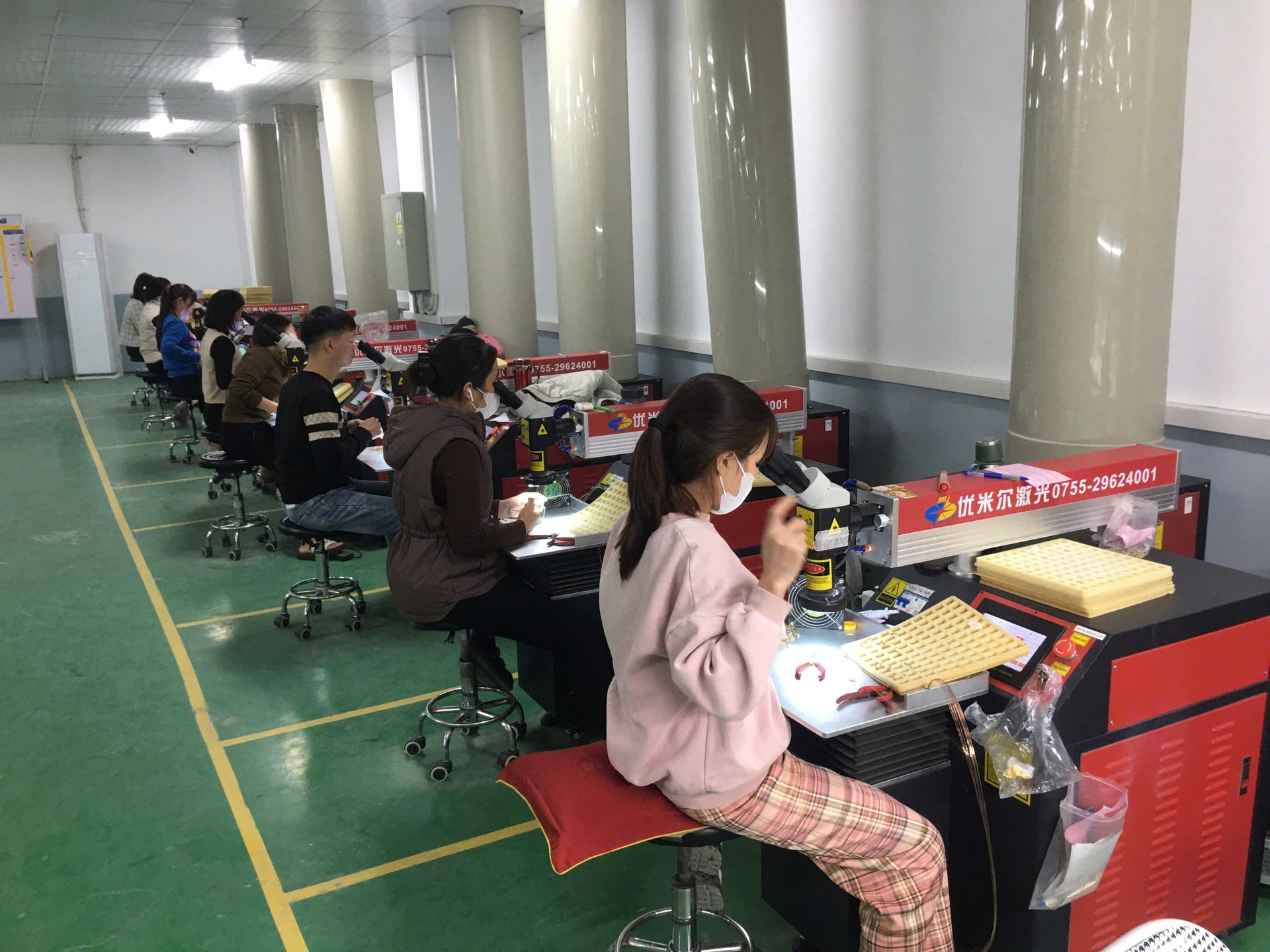
Engraving is an effective way to make jewelry more distinctive, personal, and recognizable. From a small brand logo inside a ring to a personalized message on a pendant, engraving can turn a simple jewelry piece into a product with a unique identity.
For jewelry brands, retailers, wholesalers, and designers, custom jewelry engraving is also an important part of private-label manufacturing. It helps businesses build brand recognition, develop exclusive collections, and create personalized products for their customers.
However, different engraving methods produce different results. Laser engraving, hand engraving, and machine engraving each offer specific advantages depending on the material, design complexity, production quantity, and desired appearance.
Choosing the right method early in the product development process can help reduce manufacturing risks, improve consistency, and achieve the intended finish.
As a Vietnam-based jewelry manufacturer, MCGA Jewelry supports B2B customers with OEM/ODM jewelry development, custom branding, material selection, sample development, and manufacturing coordination.
In this guide, we explain the main jewelry engraving methods, compare their advantages and limitations, and show how jewelry brands can prepare their designs for reliable production.
1. What Is Jewelry Engraving?
Jewelry engraving is the process of marking, cutting, or creating patterns on a jewelry surface. Depending on the method, engraving can produce fine text, logos, numbers, decorative lines, and personalized messages.
Common applications include:
Brand logos and private-label markings
Names, initials, and personal messages
Dates and commemorative details
Serial numbers and product identification
Decorative patterns and custom symbols
Engraving can be used on rings, pendants, bracelets, bangles, necklace tags, and selected earring components.
For custom jewelry manufacturing, the most suitable method depends on the jewelry material, surface shape, available engraving area, design details, production volume, and required finish.
2. Laser Engraving
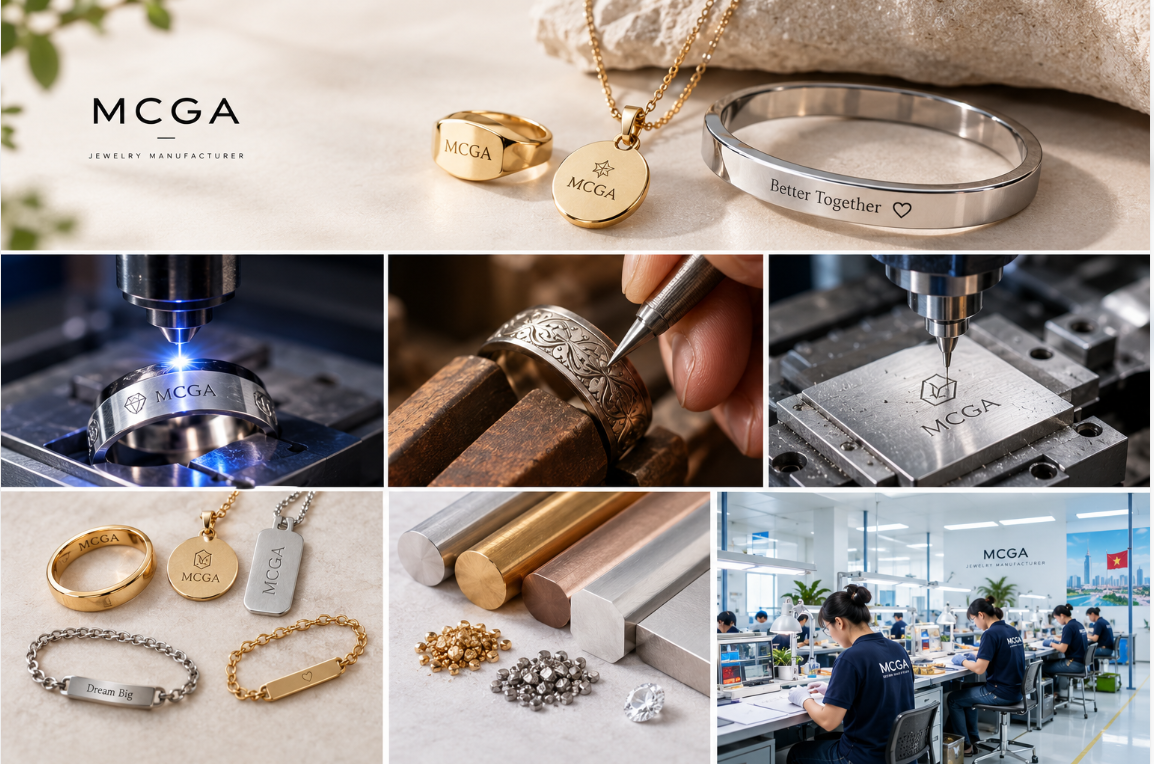
Laser engraving uses a focused laser beam to mark or remove material from a surface. It is widely used in modern jewelry production because digital artwork can be reproduced across multiple pieces.
Advantages
High precision: Suitable for many small logos, text, symbols, and detailed designs.
Repeatable results: Digital files help maintain consistent artwork across production batches.
Design flexibility: Supports many logo styles, lettering designs, and decorative patterns.
Production efficiency: Can be efficient for repeated designs once the artwork and machine settings are established.
Limitations
The final result depends on the material, surface finish, equipment, and laser settings. Very small text may be difficult to read, while curved or uneven surfaces can require special positioning or additional testing.
For private label jewelry, brands should approve a physical sample before mass production to confirm logo clarity, placement, and overall appearance.
3. Hand Engraving
Hand engraving is a traditional technique in which a skilled craftsperson uses specialized tools to cut designs directly into a metal surface.
Advantages
Artistic craftsmanship: Suitable for intricate, handcrafted patterns.
Distinctive details: Engravers can create variations in line depth and width.
Premium presentation: Can be appropriate for luxury collections, limited editions, and artistic jewelry designs.
Limitations
Hand engraving is labor-intensive and can require more production time. Costs may be higher than automated alternatives, and slight variations between individual pieces are natural.
For large-scale wholesale jewelry manufacturing, hand engraving may be less practical when every piece must reproduce the same small logo or marking.
4. Machine Engraving
Machine engraving uses mechanical cutting tools to create marks or grooves on a jewelry surface. Depending on the equipment, the process can be manually guided or computer-controlled.
Common applications include letters, numbers, simple patterns, and selected decorative details.
Advantages
Can provide consistent results for suitable designs.
Works well for certain repeated text and straightforward patterns.
Offers controlled cutting depth when the equipment and settings are appropriate.
Limitations
The cutting tool needs physical access to the engraving area. Small, curved, or complex surfaces may be difficult to process, and the tool size limits the level of detail that can be achieved.
For custom jewelry manufacturing, machine engraving is most suitable when the design and product geometry match the equipment's capabilities.
5. Laser vs. Hand vs. Machine Engraving
The best jewelry engraving method depends on the product design, material, production volume, and visual requirements.
| Comparison Factor | Laser Engraving | Hand Engraving | Machine Engraving |
|---|---|---|---|
| Main technique | Focused laser beam | Manual cutting tools | Mechanical cutting tools |
| Logo precision | Suitable for many fine logos | Depends on craftsmanship and design | Depends on tool size and setup |
| Artistic details | Effective for digital patterns | Excellent for handcrafted details | Suitable for selected patterns |
| Repeatability | Generally high with controlled settings | Natural variation may occur | Generally consistent with proper setup |
| Production efficiency | Often efficient for repeated designs | Usually slower | Depends on setup and design |
| Typical applications | Logos, text, symbols, serial numbers | Artistic patterns and premium details | Text and straightforward patterns |
| Key consideration | Material response and laser settings | Labor, skill, and production time | Tool access and surface geometry |
MCGA's recommendation: For brands that need repeatable logos across a wholesale collection, laser engraving is worth evaluating first. Hand engraving may be preferable for artistic work, while machine engraving can suit simpler designs. The final choice should be confirmed through sample testing.
6. Which Jewelry Materials Can Be Engraved?
Engraving compatibility depends on the material's composition, hardness, surface condition, and finishing process.
Common materials used in custom jewelry manufacturing include:
316L stainless steel: Used for rings, pendants, bracelets, and branded accessories.
Brass: Suitable for many fashion jewelry designs and custom logo applications.
925 sterling silver: Commonly used for personalized jewelry and premium collections.
Gold and gold alloys: Used for fine jewelry, depending on the product specification.
Other metals and alloys: Compatibility must be assessed for each application.
Different materials respond differently to engraving. The same settings may not produce identical results on stainless steel, brass, and sterling silver.
For OEM/ODM jewelry production, the engraving process should be evaluated using the actual material and surface finish wherever practical.
7. Engraving on Rings
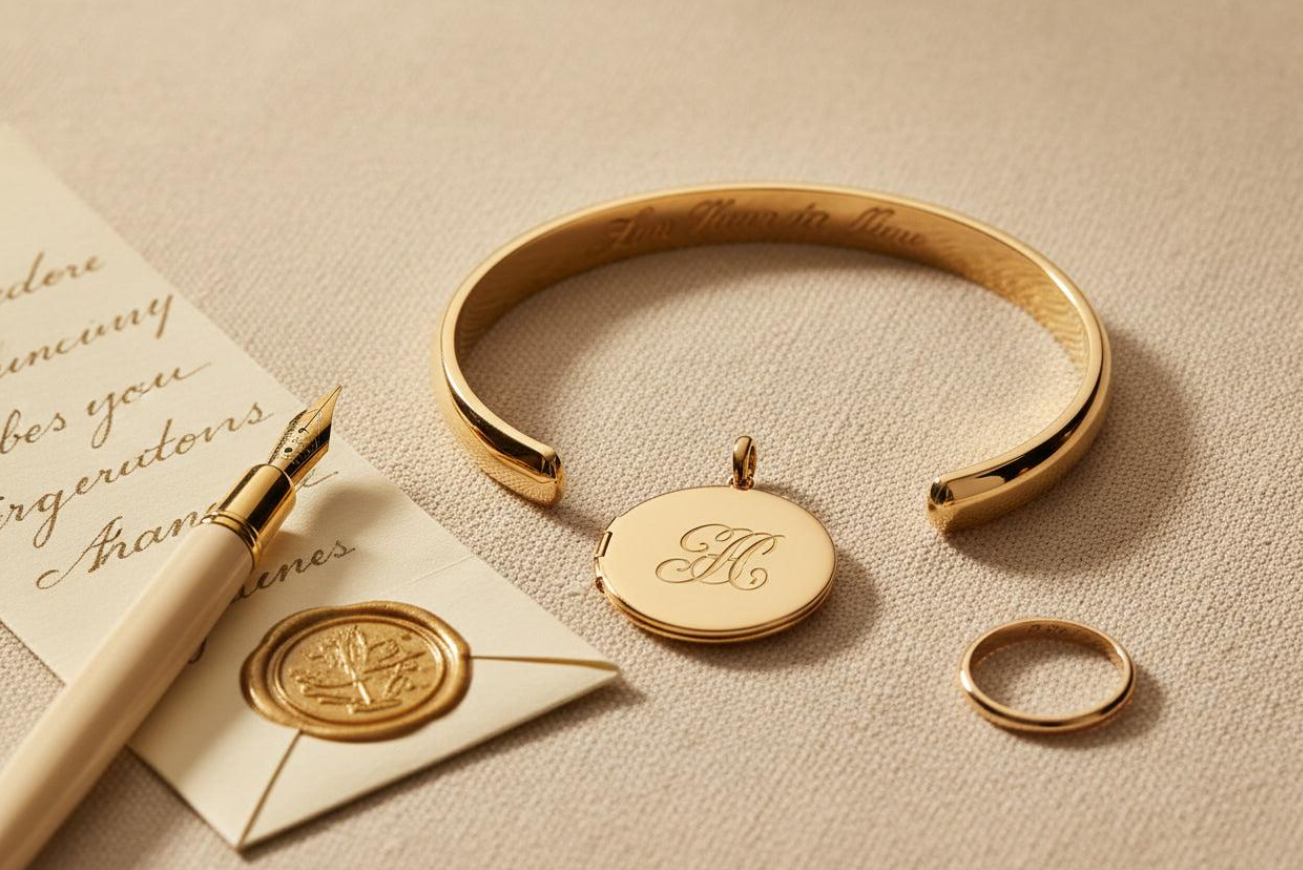
Ring engraving is widely used for personalization and brand identification.
Common locations include:
Inside the ring band
Outside the ring band
Signet ring surfaces
Decorative side areas
Inside-band engraving is often used for brand names, initials, wedding dates, and short messages.
However, the available space depends on the ring size, band width, thickness, and curvature. Narrow bands may not accommodate complex logos or long text.
When developing custom engraved rings, brands should confirm the actual engraving dimensions and readability during sample development.
8. Engraving on Pendants
Pendants offer flexible opportunities for personalization and branding. Depending on the design, engraving may be placed on the front, back, or a dedicated metal surface.
Popular applications include:
Initial necklaces and name pendants
Branded logo pendants
Personalized gifts
Symbolic designs and commemorative jewelry
Custom messages and identification details
For pendants with gemstones, the engraving location should not interfere with stone settings, structural strength, or important decorative elements.
A well-planned custom pendant design balances visual appearance, engraving space, and manufacturing practicality.
9. Engraving on Bracelets and Bangles
Bracelets and bangles can incorporate engraved logos, names, dates, and short messages.
For example, a solid bangle may feature a message on the inside, while a bracelet with a metal plate can provide space for a brand logo.
During custom bracelet manufacturing, the engraving position should be evaluated around clasps, hinges, thin sections, and moving components.
The selected area must provide enough space for the intended design without affecting the product's function or structural integrity.
10. Why Engraving Depth Matters
Engraving depth affects the appearance, readability, and durability of a mark.
Shallow engraving can create a subtle appearance, while deeper engraving may produce more visible definition. However, excessive material removal can weaken thin sections or affect the surrounding finish.
The appropriate depth depends on:
Material and product thickness
Logo or text design
Engraving method
Available surface area
Desired visual effect
For custom jewelry manufacturing, the required appearance and acceptable depth should be defined during product development and confirmed on a physical sample.
11. Choosing the Right Font and Logo Size
Not every font is suitable for engraving on a small jewelry surface. Decorative lettering may look attractive in a digital design but become difficult to read when reduced to fit inside a narrow ring.
Before approving jewelry logo engraving, check:
Letter height and stroke thickness
Spacing between letters
Readability at actual size
Available surface area
Logo orientation and alignment
Simple fonts are often easier to reproduce on small surfaces. Complex logos may need a simplified version for small components.
Providing clear artwork, preferably in a suitable vector format, helps the manufacturer evaluate whether the design can be reproduced accurately.
12. Logo Engraving for Private-Label Jewelry
For jewelry brands, private label jewelry engraving is an important way to establish product identity.
Common logo locations include ring interiors, pendant backs, bracelet tags, necklace end tags, and selected earring components.
To achieve a consistent result, brands should provide approved artwork and specify the required size, position, orientation, and appearance.
At MCGA Jewelry, custom branding requirements can be discussed as part of the OEM/ODM jewelry manufacturing process. Feasibility should be confirmed according to the product design, material, production requirements, and selected finishing method.
13. Should Engraving Be Done Before or After Plating?
For plated jewelry, engraving and surface finishing should be planned together because the production sequence can affect the final appearance.
Engraving before plating may allow the subsequent coating to cover or soften some engraved details.
Engraving after plating may expose the underlying material where the surface coating is removed or altered.
Neither sequence is universally correct. The appropriate approach depends on the material, coating system, engraving method, and desired visual result.
For custom plated jewelry, brands should discuss the sequence with the manufacturer and evaluate a finished sample before approving bulk production.
MCGA Jewelry supports manufacturing coordination across product development, surface finishing, quality inspection, and packaging to help align these requirements.
14. Common Jewelry Engraving Problems
Several issues can occur when engraving specifications are incomplete or unsuitable for the product.
Text is too small: Fine lettering may become difficult to read.
Incorrect positioning: A logo may sit too close to an edge, clasp, or stone setting.
Inconsistent appearance: Engraving depth, alignment, or contrast may vary between pieces.
Incorrect artwork: An outdated logo, wrong font, or unapproved design may be used.
Surface damage: Unsuitable settings or tool contact may affect the surrounding finish.
Most of these risks can be reduced through clear specifications, sample approval, and defined quality inspection criteria.
For jewelry quality control, the approved sample should serve as the reference for checking the finished product.
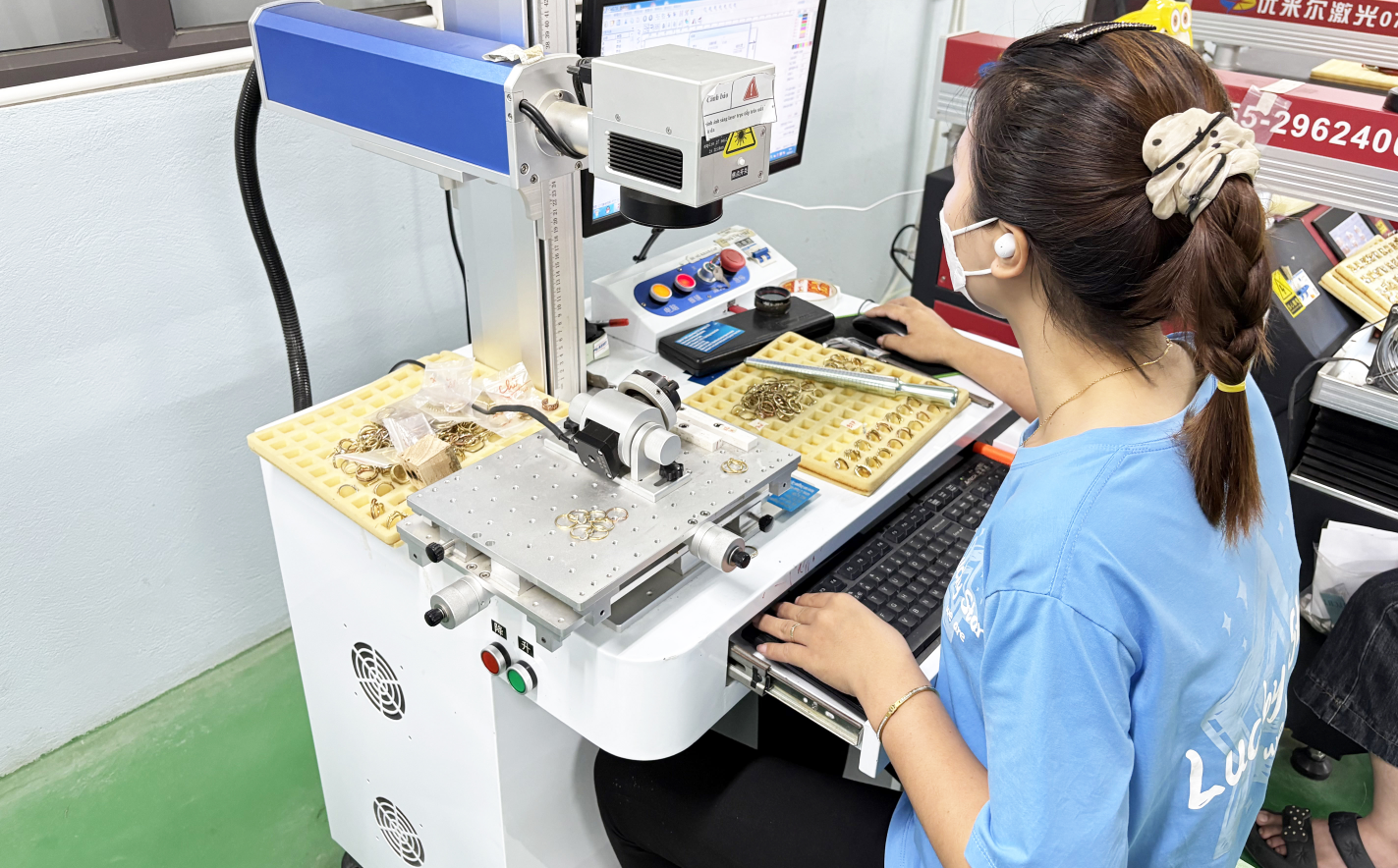
15. How to Prepare Engraving Files for Manufacturing
Before placing a custom jewelry manufacturing order, prepare the following information:
Artwork: Provide the final logo, text, or pattern.
File format: Supply a suitable vector file when available.
Dimensions: Specify the required engraving size.
Location: Identify the exact position on the jewelry piece.
Font: Confirm the approved typeface and lettering style.
Method: Specify laser, hand, or machine engraving if required.
Appearance: Describe the desired depth, contrast, and finish.
Reference sample: Provide a visual reference or approved physical sample when available.
Clear instructions help the manufacturer evaluate feasibility, prepare samples, and reduce unnecessary revisions.
16. Why Sample Approval Matters
A digital preview cannot fully represent how engraving will look on a finished metal surface.
Physical samples allow brands to evaluate:
Text readability and logo clarity
Engraving size and placement
Depth and visual contrast
Surface finish
Overall product appearance
If adjustments are needed, they should be completed before bulk production.
For OEM/ODM jewelry projects, sample approval is especially important when the same logo or message must be reproduced across a large order.
17. Maintaining Consistency in Bulk Production
When producing hundreds or thousands of jewelry pieces, consistent engraving becomes an important part of manufacturing quality.
Production specifications should identify the approved artwork, engraving location, dimensions, orientation, method, and appearance requirements.
Quality inspection can then compare finished products against the approved reference and identify unwanted variations.
For brands sourcing from a jewelry manufacturer in Vietnam, clear documentation and sample approval help establish a shared understanding of product requirements before production begins.
Custom Jewelry Engraving with MCGA Jewelry
MCGA Jewelry is a Vietnam-based B2B jewelry manufacturer supporting brands, wholesalers, retailers, and designers with custom jewelry development and OEM/ODM manufacturing.
Our manufacturing capabilities cover multiple materials and production requirements, including:
316L stainless steel jewelry
Brass jewelry
925 sterling silver jewelry
Custom designs and product development
Logo and branding requirement coordination
CAD development and sample production
Casting, CNC machining, polishing, and surface finishing
PVD and water plating capabilities
Quality inspection and packaging
Manufacturing support for international B2B customers
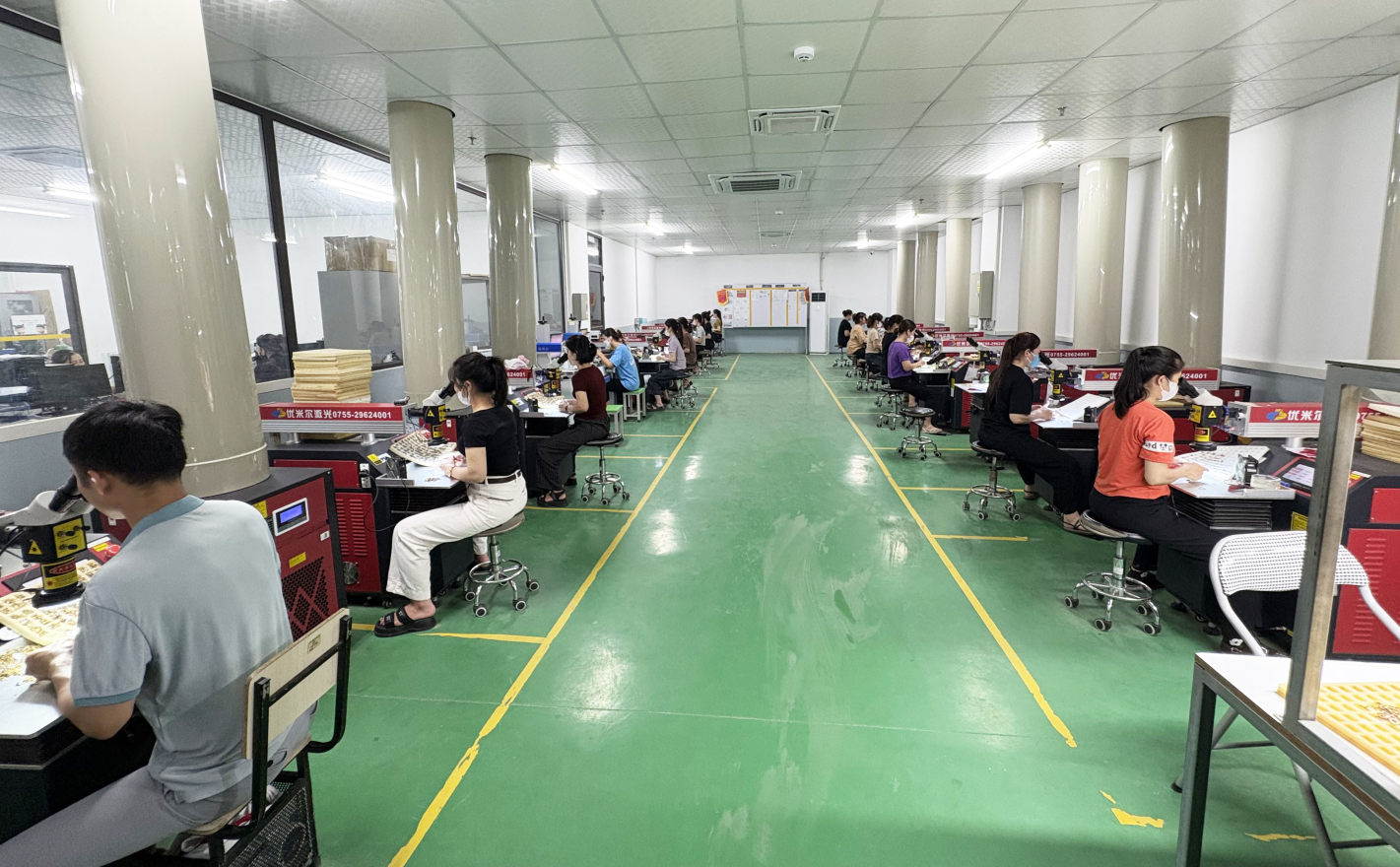
Our Vietnam factory officially began production in 2024, building on 20 years of jewelry industry experience in China. With an integrated manufacturing approach, MCGA supports customers from product development and sampling through manufacturing, finishing, quality inspection, and packaging.
Whether you are developing a new private-label collection or expanding an existing product line, we can discuss your material, logo, engraving, finishing, and production requirements.
Contact MCGA Jewelry to discuss your custom jewelry project and explore suitable manufacturing solutions.
Conclusion
Choosing the right jewelry engraving method is essential for product appearance, brand identity, and manufacturing consistency.
Laser engraving is often suitable for repeatable logos and detailed digital artwork. Hand engraving offers traditional craftsmanship, while machine engraving can be practical for selected text and patterns.
The right choice depends on the material, product geometry, design complexity, production quantity, and finishing requirements.
For jewelry brands, clear artwork, suitable engraving specifications, and physical sample approval are essential steps before bulk production.
By working with an experienced custom jewelry manufacturer, brands can better coordinate engraving, materials, finishing, and quality control to develop distinctive products for their collections.
Develop Your Custom Jewelry Collection with MCGA Jewelry
Looking for a reliable jewelry manufacturer in Vietnam for private-label jewelry, custom logos, or OEM/ODM production?
Share your design, material requirements, logo artwork, and estimated order quantity with MCGA Jewelry.
Our team can help you evaluate manufacturing feasibility and discuss the next steps for your project.
Contact MCGA Jewelry for a Custom Manufacturing Inquiry.