
Before buying or producing gold jewelry, it is important to understand what you are actually offering.
Gold Filled, Gold Plated, and Gold Vermeil may look similar at first glance, but they are completely different in terms of structure, durability, and value.
In this guide , we break down the key differences to help you make informed decisions for product development, brand positioning, and customer satisfaction.
What is Gold Plated Jewelry?
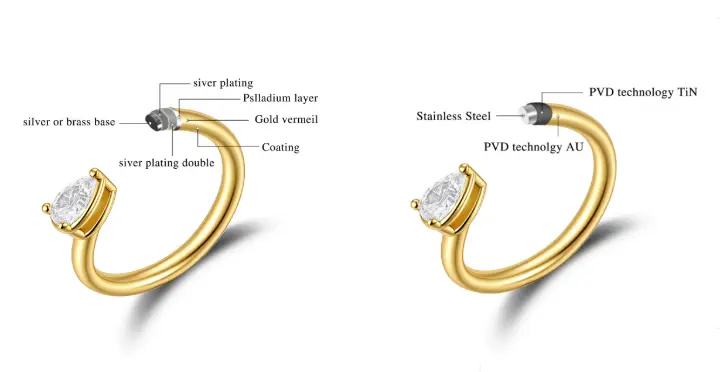
Gold Plated Jewelry is made by applying a very thin layer of gold (around 0.05 microns) onto a base metal such as brass, copper, or stainless steel.
Common methods: Electroplating or PVD coating
Most affordable gold jewelry option
Suitable for fashion and trend-based designs
👉 However, thin plating means it may wear off over time.
What is Gold Vermeil Jewelry?
Gold Vermeil is a higher-quality form of gold plating.
Base metal: Sterling Silver (925)
Gold layer: at least 2.5 microns
Method: Electroplating
Because of its thicker gold layer and silver base, Gold Vermeil offers better durability and is more suitable for sensitive skin.

What is Gold Filled Jewelry?
Gold Filled Jewelry contains a thick layer of real gold mechanically or chemically bonded to a base metal.
Gold content: at least 5% of total weight
Base metal: Brass or Silver
Highly durable and long-lasting
It is the closest alternative to solid gold in appearance and performance.
Comparison Table
| Feature | ✨ Gold Plated | 💎 Gold Vermeil | 🏆 Gold Filled |
|---|---|---|---|
| Gold Layer Thickness | ~0.05 microns ⚡ | ≥2.5 microns ✨ | ~5% of total weight 💰 |
| Base Metal | Brass / Copper / Stainless Steel ⚙️ | Sterling Silver (925) 🥈 | Brass / Silver ⚙️ |
| Manufacturing Method | Electroplating ⚡ / PVD coating 🛠️ | Electroplating ⚡ | Mechanical + Heat bonding 🔗 |
| Durability | Low–Medium ⏳ (PVD higher 💪) | Medium–High 👍 | High 🔥 |
| Cost | 💰 Low | 💰💰 Medium–High | 💰💰 Mid-range |
| Skin Friendliness | ⚠️ Depends on base metal | 👍 Good for sensitive skin | 🌿 Very skin-friendly |
Key Differences
1. Thickness & Base Metal
Gold Plated: extremely thin gold layer (~0.05 microns)
Gold Vermeil: thick layer (≥2.5 microns) over sterling silver
Gold Filled: gold makes up ~5% of total weight
2. Manufacturing Methods
Gold Plated: Electroplating or PVD coating
Gold Vermeil: Electroplating only
Gold Filled: Heat + pressure bonding or electroplating bonding
3. Durability & Wearability
Gold Plated: wears faster (months–1 year depending on quality)
Gold Vermeil: lasts around 1–2 years
Gold Filled: lasts 3–5 years
4. Skin Sensitivity
Gold Plated: depends on base metal (may cause reaction)
Gold Vermeil: generally safe (sterling silver base)
Gold Filled: highly skin-friendly

Cost Comparison
Gold Filled > Gold Vermeil > Gold Plated
Gold Plated → budget-friendly fashion jewelry
Gold Vermeil → demi-fine jewelry segment
Gold Filled → premium alternative to solid gold
Similarities
Although different, they share key similarities:
All contain real gold
Each type uses genuine gold, giving a natural gold appearance and shine.
Similar visual appearance
When new, they look almost identical to the naked eye, especially in polished finishes.
Which One Should You Choose?
Gold Plated – Fast Fashion
Best for:
Trend-based collections
Entry-level pricing
Short-term wear products
Gold Vermeil – Demi-Fine Jewelry
Best for:
Mid-range brands
Sensitive skin users
Better durability requirement
Gold Filled – Fine Jewelry Alternative
Best for:
Premium collections
Long-term wear
Higher brand positioning
How to Identify Them
Gold Plated: GP / GEP / HGE stamps (or no stamp)
Gold Vermeil: 925 / Sterling / 925 Vermeil
Gold Filled: GF / 1/20 14K GF / 12K GF