Starting a jewelry brand takes more than creative ideas and attractive designs. Small businesses must also manage product development, manufacturing costs, quality control, inventory, and supply chain reliability.
Without the right production support, these challenges can slow down growth and make it difficult to compete in the jewelry market.
Working with a professional jewelry manufacturer gives small brands access to manufacturing expertise, technical resources, and scalable production capabilities without the investment required to build their own factory.
From custom jewelry design and sample development to bulk production and quality inspection, an experienced manufacturing partner can help brands turn ideas into market-ready products while managing business risks.
At MCGA Jewelry, we support brands, retailers, wholesalers, designers, and startups with OEM/ODM jewelry manufacturing in Vietnam. Our manufacturing capabilities cover 316L stainless steel, brass, and 925 sterling silver, helping businesses develop collections that match their brand identity and target market.
In this guide, we explore how the right jewelry manufacturing partner can help small brands build a stronger foundation and grow with confidence.
In-House Production vs. Working with a Jewelry Manufacturer
| Business Factor | In-House Production | Professional Jewelry Manufacturer |
|---|---|---|
| Initial Investment | High equipment and facility costs | Lower upfront manufacturing investment |
| Product Development | Requires an internal technical team | Access to design support, CAD, and sampling |
| Production Capacity | Limited by internal resources | Can scale according to production needs |
| Minimum Order Quantity | Depends on internal production efficiency | Flexible MOQ options may be available |
| Quality Control | Requires an internal inspection system | Established production QC processes |
| Material Sourcing | Must build supplier relationships | Access to established material supply chains |
| Product Customization | Depends on internal capabilities | OEM/ODM and private label solutions |
| Business Growth | Requires additional internal investment | Production can expand as demand grows |
The right solution depends on your business model, budget, and long-term goals. For many small brands, partnering with an experienced jewelry manufacturer is a practical way to access professional production capabilities while keeping operations more flexible.
1. Turning Creative Ideas into Market-Ready Jewelry
A strong jewelry brand begins with a clear design concept. However, transforming an idea into a manufacturable product requires technical knowledge, material selection, and production planning.
An experienced custom jewelry manufacturer can support the development process through:
Design consultation and technical recommendations
CAD modeling and 3D design development
Material and surface finish selection
Sample development and design refinement
Production planning and manufacturing preparation
These services help small brands evaluate their designs before committing to bulk production.
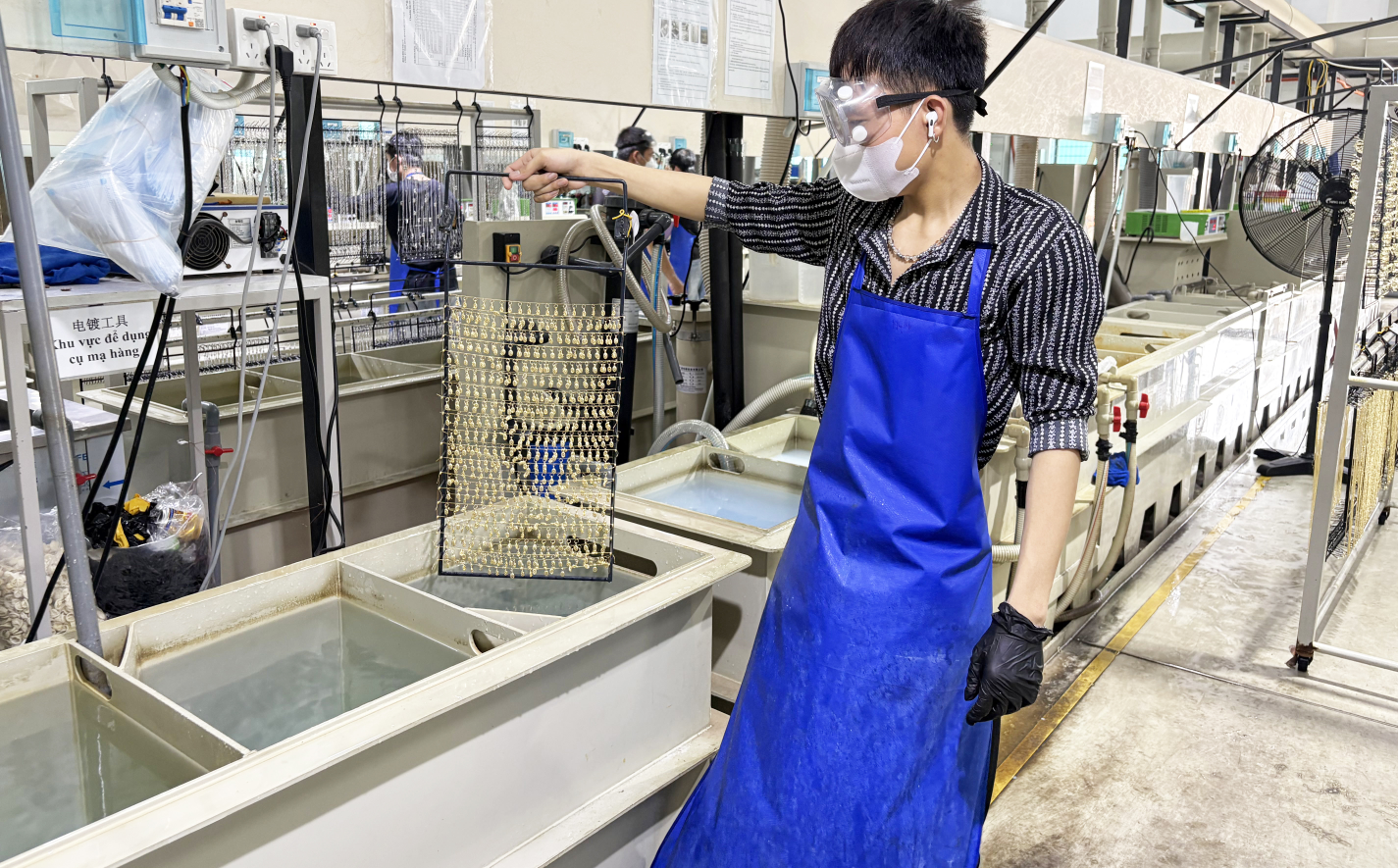
At MCGA Jewelry, we support product development across stainless steel, brass, and sterling silver jewelry. Depending on the design, our manufacturing processes can include casting, CNC machining, welding, polishing, plating, PVD coating, gemstone setting, and finishing.
This integrated approach helps brands move from an initial concept to a production-ready collection more efficiently.
2. Reducing the Cost of Starting a Jewelry Brand
Building an independent jewelry production facility requires significant investment in equipment, factory space, skilled workers, and quality management.
For a startup or small brand, these expenses can limit the budget available for product development, marketing, and customer acquisition.
Working with a factory-direct jewelry manufacturer allows businesses to access professional production resources without managing their own manufacturing infrastructure.
Potential benefits include:
Lower initial investment in production facilities
Access to established manufacturing processes
More efficient material sourcing and production planning
Reduced need for an in-house technical team
More resources available for branding and marketing
The total cost of a jewelry project still depends on design complexity, materials, tooling, finishing, order quantity, and packaging. A detailed quotation from your manufacturer can help you evaluate the actual cost per piece and plan your margins more accurately.
3. Scaling with Flexible MOQ and Small-Batch Production
One of the biggest challenges for a new jewelry brand is deciding how much inventory to purchase.
Ordering too much before understanding customer demand can tie up working capital. Ordering too little may make it difficult to maintain stock or meet demand after a successful launch.
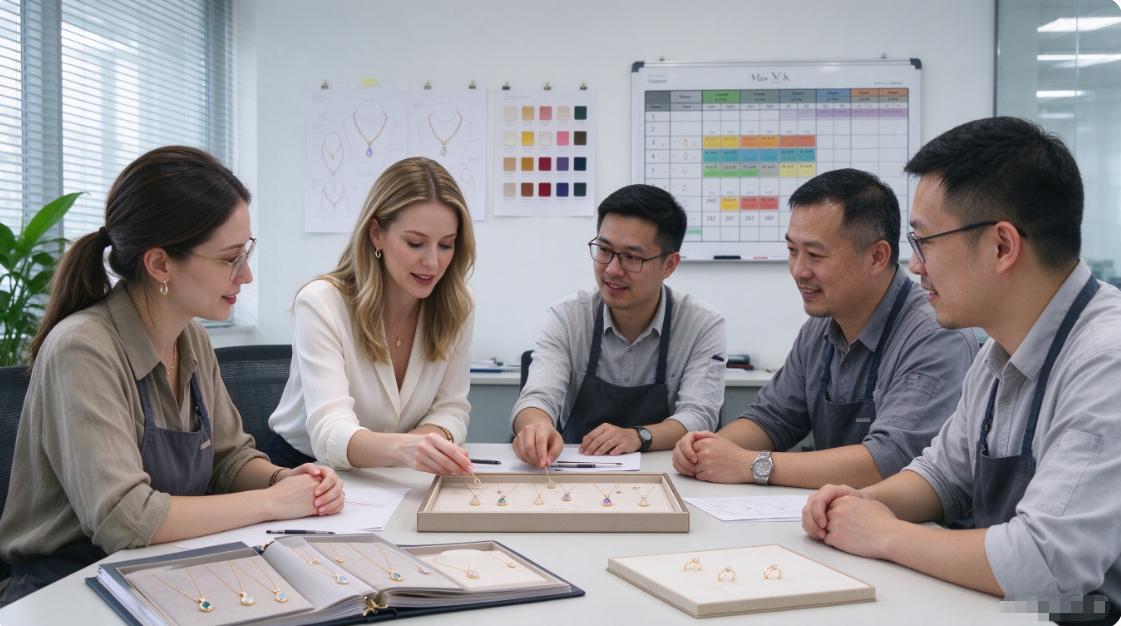
A manufacturer offering flexible MOQ (Minimum Order Quantity) options can help businesses approach production more strategically.
Flexible production may allow brands to:
Test new designs before expanding a collection
Launch limited-edition jewelry
Evaluate customer preferences
Manage inventory investment more carefully
Increase order quantities as sales grow
At MCGA Jewelry, we work with businesses at different stages of development and discuss suitable production options according to product requirements, materials, and order quantities.
MOQ varies by design and process, particularly when custom molds, special components, or complex gemstone settings are involved. Discussing these requirements early helps establish realistic production expectations.
4. Maintaining Consistent Jewelry Quality
As a jewelry brand grows, product consistency becomes increasingly important. Customers expect the same appearance, finish, fit, and durability when they reorder a favorite design.
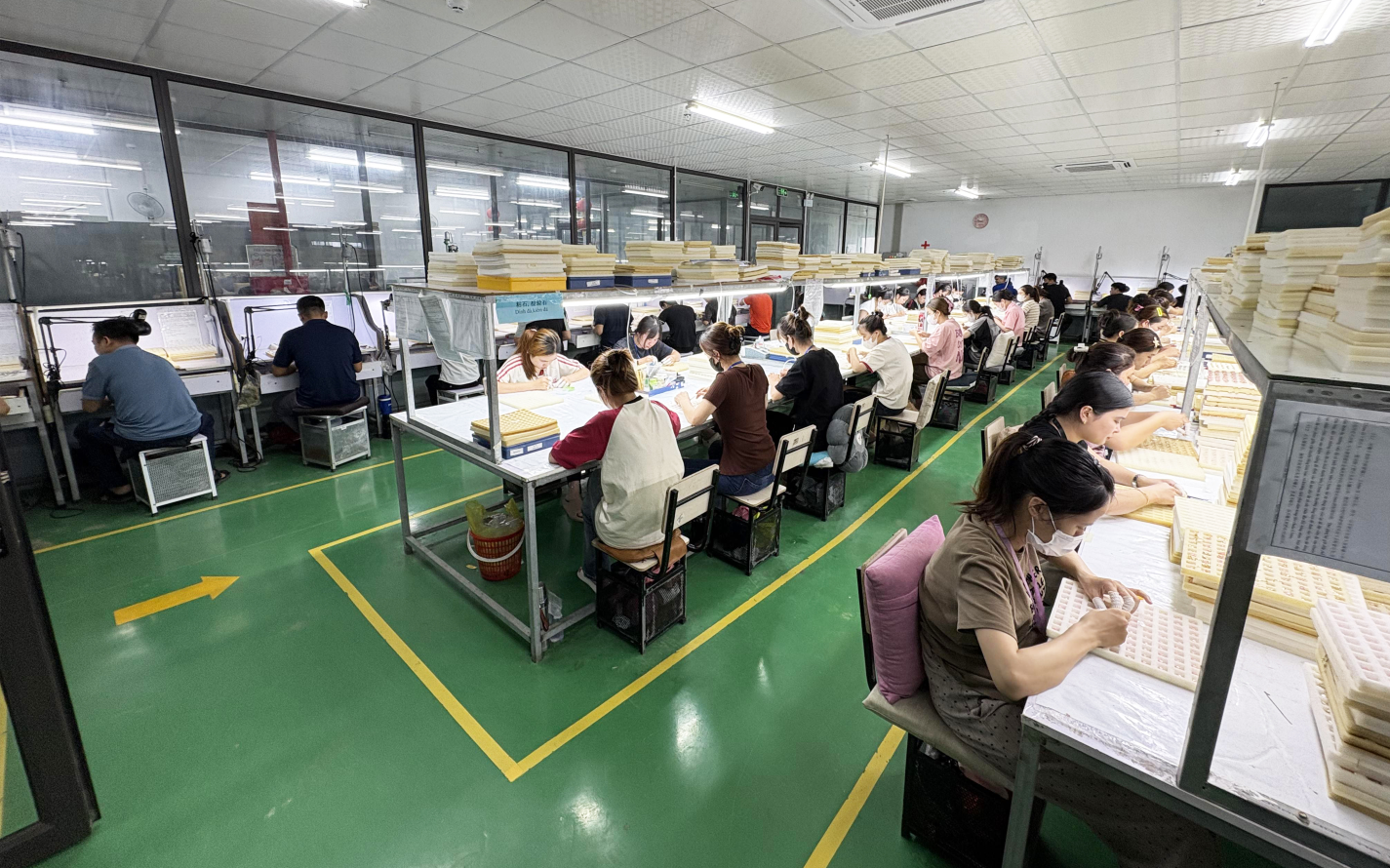
A professional jewelry manufacturer should have a structured jewelry quality control process covering key production stages.
Important inspection points include:
Material inspection: Confirming that materials meet the agreed specifications
Dimensional accuracy: Checking product measurements against approved drawings or samples
Surface finishing: Inspecting polishing, plating, PVD coating, and visible defects
Gemstone setting: Checking stone placement, alignment, and security
Functional testing: Checking clasps, hinges, links, and moving components where applicable
Final inspection: Reviewing appearance, workmanship, and order consistency before shipment
For brands developing private label collections, clear product specifications and an approved reference sample are particularly important.
At MCGA Jewelry, quality control is incorporated into our manufacturing workflow to help maintain consistency from product development through finished production. Testing and documentation can also be discussed according to the material, product, and buyer's requirements.
5. Creating Unique Collections with OEM and ODM Services
In a competitive jewelry market, distinctive designs help brands communicate their identity and build customer loyalty.
Working with an OEM/ODM jewelry manufacturer gives businesses more options for creating products that reflect their positioning and target audience.
OEM (Original Equipment Manufacturing) generally involves manufacturing products according to a buyer's design and specifications.
ODM (Original Design Manufacturing) generally involves developing products using a manufacturer's design capabilities, with customization options depending on the project.
Custom manufacturing solutions may include:
Original pendant, ring, earring, and bracelet designs
Private label jewelry collections
Custom logos and engraving
Different materials, colors, and surface finishes
Gemstone, enamel, and decorative details
Customized chains, components, and packaging
MCGA supports custom jewelry manufacturing for brands looking to develop products that align with their visual identity and commercial goals.
By discussing your target price, preferred materials, design references, and expected order volume early, you can work with your manufacturing partner to find a practical balance between creativity, quality, and production cost.
6. Building a More Reliable Supply Chain
A reliable supply chain is essential when a jewelry brand begins receiving repeat orders or expanding into new markets.
Production delays, inconsistent materials, and unclear communication can affect launch schedules and customer satisfaction.
An experienced jewelry supplier can help coordinate important parts of the manufacturing process, including:
Material and component sourcing
Product development and sampling
Production scheduling
Quality inspection
Packaging coordination
Export preparation and shipping arrangements
MCGA Jewelry manufactures in Vietnam, providing B2B jewelry production and OEM/ODM services for international customers. Our integrated manufacturing workflow connects product development, sampling, manufacturing, finishing, quality control, and packaging.
For brands evaluating a manufacturing partner, it is important to ask about production capacity, communication procedures, lead times, quality requirements, and contingency planning before placing a large order.
A transparent working relationship helps both parties manage expectations and prepare for future growth.
7. Expanding Your Product Range with Multiple Materials
As a brand develops, customers may expect a wider selection of products, finishes, and price points.
Working with a manufacturer that supports multiple jewelry materials can make collection expansion more manageable.
For example:
316L stainless steel jewelry: Suitable for contemporary designs, everyday accessories, and many fashion jewelry collections
Brass jewelry: Offers design flexibility for detailed shapes, decorative finishes, and a range of plating options
925 sterling silver jewelry: Suitable for silver collections and designs positioned at different price points
Depending on the design, brands can also explore gold-tone PVD or plating, gemstone settings, enamel details, and customized surface finishes.
At MCGA Jewelry, our capabilities across stainless steel, brass, and 925 sterling silver help buyers develop different product categories through one manufacturing partner.
This can simplify product coordination and help brands create more cohesive collections without having to manage every material category independently.
8. Choosing a Long-Term Jewelry Manufacturing Partner
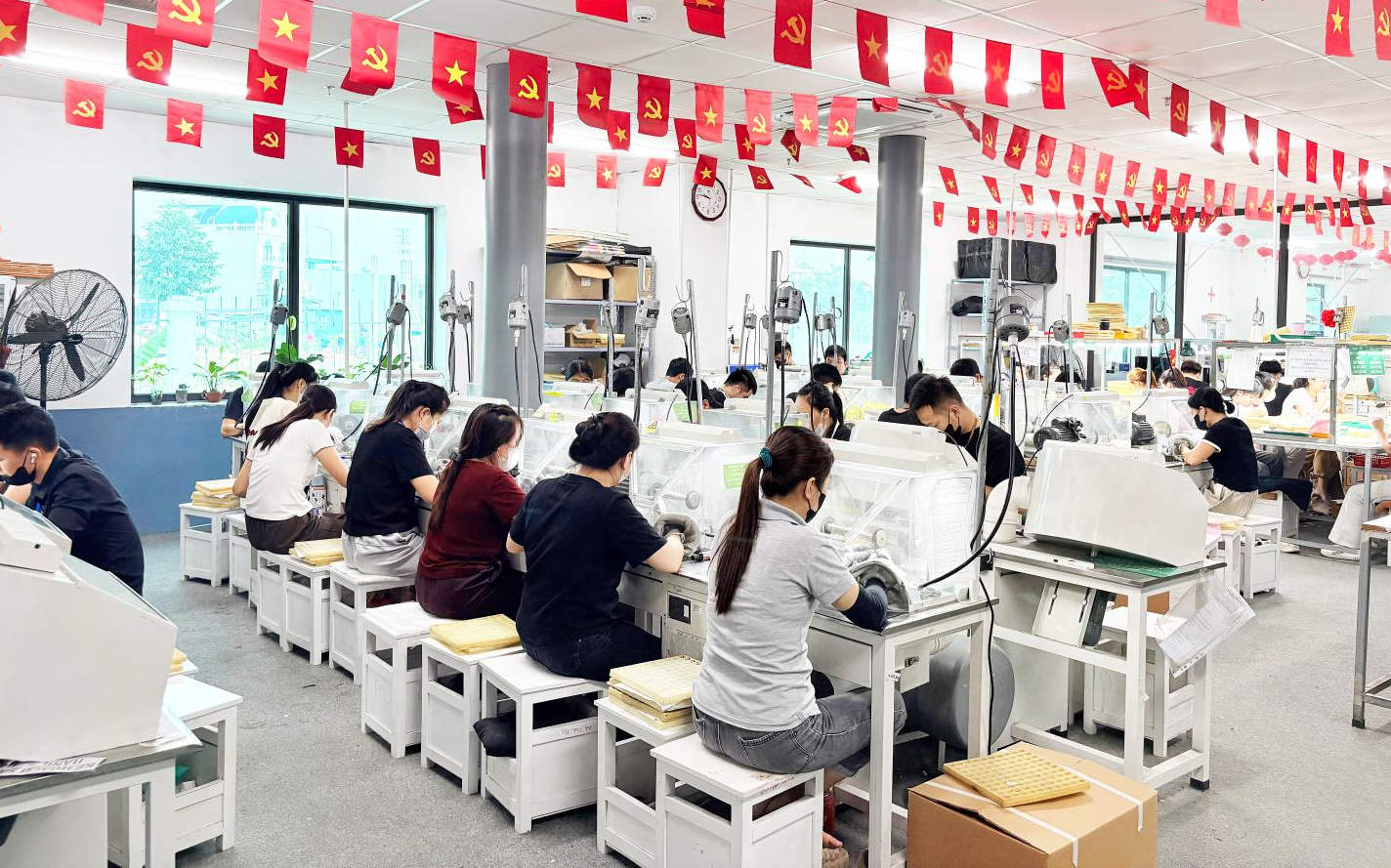
A manufacturing relationship should support more than a single order. As your business grows, you need a partner who can understand your product requirements, communicate clearly, and adapt to changing production needs.
Before choosing a jewelry manufacturer for small businesses, consider the following questions:
Does the manufacturer have relevant experience with your materials and product types?
Can the team support custom development and sample revisions?
Are MOQ requirements and pricing clearly explained?
Is there a defined quality inspection process?
Can the manufacturer accommodate increased production volumes?
Are lead times, packaging, and shipping responsibilities clear?
How are design confidentiality and intellectual property handled?
Is communication consistent throughout development and production?
The right partner should be transparent about capabilities, costs, timelines, and limitations.
For custom projects, it is also helpful to confirm confidentiality arrangements, ownership of custom designs and tooling, and restrictions on the use of your brand-specific designs in writing.
A reliable manufacturing relationship can help small brands make better production decisions, improve operational efficiency, and prepare for sustainable growth.
Why Choose MCGA Jewelry?
MCGA Jewelry is a Vietnam-based B2B jewelry manufacturer supporting brands, retailers, wholesalers, designers, and growing businesses with custom manufacturing solutions.
We help customers move from product ideas to finished jewelry through coordinated development and production services.
Our capabilities include:
Vietnam jewelry manufacturing for international B2B customers
OEM and ODM jewelry services for custom and private label collections
316L stainless steel, brass, and 925 sterling silver manufacturing
Product development, CAD support, and sample development
Casting, CNC machining, welding, polishing, and finishing
PVD coating and water plating capabilities
Gemstone setting, enamel, and customized decorative details
Quality inspection throughout the manufacturing process
Packaging coordination and export shipping support
Flexible MOQ discussions based on product and production requirements
Whether you are launching your first collection or expanding an established jewelry business, MCGA can work with you to evaluate materials, refine designs, and develop a manufacturing plan suited to your needs.
Our goal is to help brands build distinctive jewelry collections with practical production support and a long-term manufacturing perspective.