
Intro
When developing jewelry for customers with sensitive skin, choosing a material is only the first step.
The finished product also depends on the alloy, skin-contact components, surface treatment, plating or PVD coating, solder, clasps, chains, and other small components that come into contact with the wearer.
For jewelry brands, this means that terms such as hypoallergenic jewelry, nickel-free jewelry, or skin-friendly jewelry should be supported by clear material specifications and appropriate product information rather than used as simple marketing labels.
At MCGA Jewelry, we work with brands and businesses on custom jewelry manufacturing, helping them evaluate materials, finishes, components, and production requirements during product development.
Quick Answer: What Jewelry Materials Are Commonly Considered for Sensitive Skin?
There is no single material that works for every wearer.
Materials commonly considered for sensitive-skin jewelry include implant-grade titanium, niobium, platinum, high-karat gold, 925 sterling silver, and properly specified 316L stainless steel.
However, the material of the main jewelry body is only part of the product.
For example, an earring may contain a decorative body, post, back, solder, and coating. A necklace may include a chain, clasp, jump rings, extender, and pendant.
For this reason, the complete jewelry construction should be considered, especially for products designed for customers who are concerned about metal sensitivity.
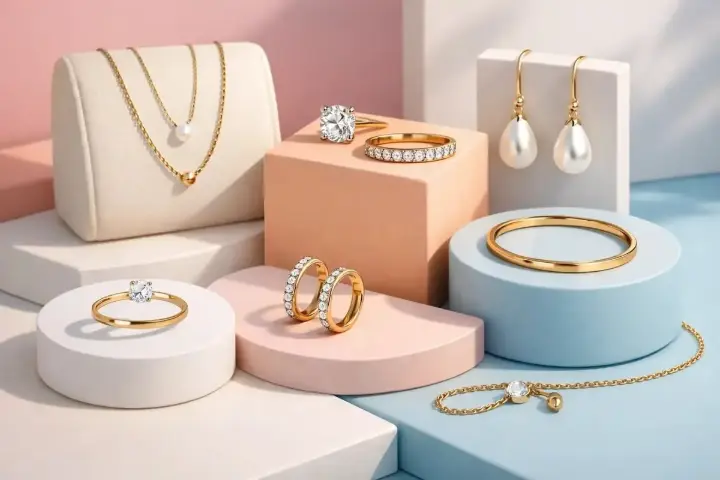
Why Does Some Jewelry Cause Skin Reactions?
Skin reactions can have different causes.
Nickel is a common trigger of allergic contact dermatitis, but irritation can also result from friction, moisture, soap residue, pressure, cosmetics, or other environmental factors.
The wearing environment also matters.
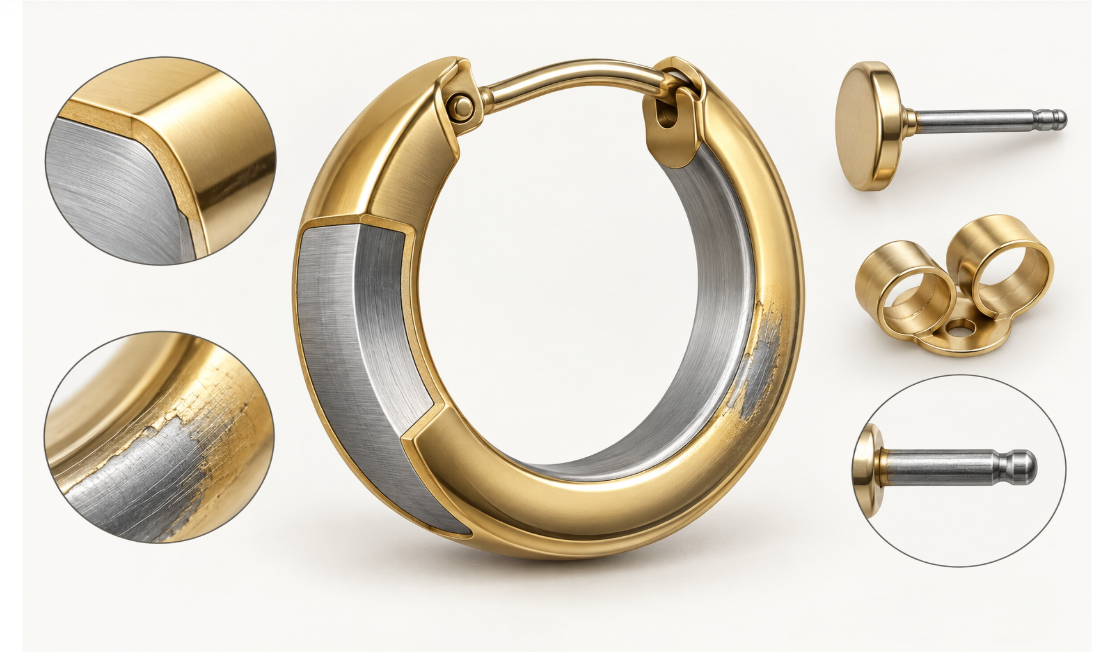
A ring may repeatedly come into contact with water and soap. Earring posts can remain against the skin for long periods. A plated surface may initially separate the skin from the base metal, but edges and high-friction areas can wear over time.
This is why jewelry material selection should consider both the material itself and how the finished product will be worn.
For products sold in the European Union, REACH includes specific requirements for nickel release from certain products that come into direct and prolonged skin contact. The applicable requirements depend on the product category and intended use.
Comparison Table: Jewelry Materials for Sensitive Skin
| Material / Construction | Potential Advantages | What Jewelry Brands Should Verify |
|---|---|---|
| Titanium | Lightweight and commonly used for body jewelry when the appropriate specification is met | Exact grade, ASTM/ISO specification, and all skin-contact components |
| Niobium | Used in body jewelry and can be anodized for different colors | Material identity, purity, finish, and component consistency |
| Platinum | Precious metal with high corrosion resistance | Alloy composition, solder, findings, weight, and cost |
| High-Karat Gold | Higher gold content can reduce the proportion of other alloying metals | Karat, alloy composition, solder, findings, and plating |
| 925 Sterling Silver | Widely used precious-metal material with established jewelry applications | Silver fineness, alloy composition, solder, tarnish expectations, and components |
| 316L Stainless Steel | Durable, corrosion-resistant, and widely used in jewelry manufacturing | Grade, surface condition, manufacturing process, components, and relevant release testing |
| PVD-Coated Stainless Steel | PVD can provide durable color and a surface barrier when properly applied | Base metal, coating system, surface preparation, coating thickness, wear points, and relevant testing |
| Unknown Alloy | May offer lower material cost | Composition and skin-contact performance may be difficult to verify |
Is 316L Stainless Steel Suitable for Sensitive Skin?
316L stainless steel is widely used in jewelry manufacturing because of its durability, corrosion resistance, and suitability for many jewelry designs.
However, it should not automatically be described as nickel-free jewelry.
316L stainless steel can contain nickel, and the performance of the finished jewelry depends on factors including:
Material grade
Surface preparation
Polishing
Plating or PVD treatment
Manufacturing process
Skin-contact components
Finished-product testing where required
For brands developing custom stainless steel jewelry, it is therefore better to specify the exact material and product requirements rather than simply writing “stainless steel.”
A useful product specification can include the material grade, finish, coating system, component list, target market, and applicable testing requirements.
Can PVD Jewelry Be Used for Sensitive Skin?
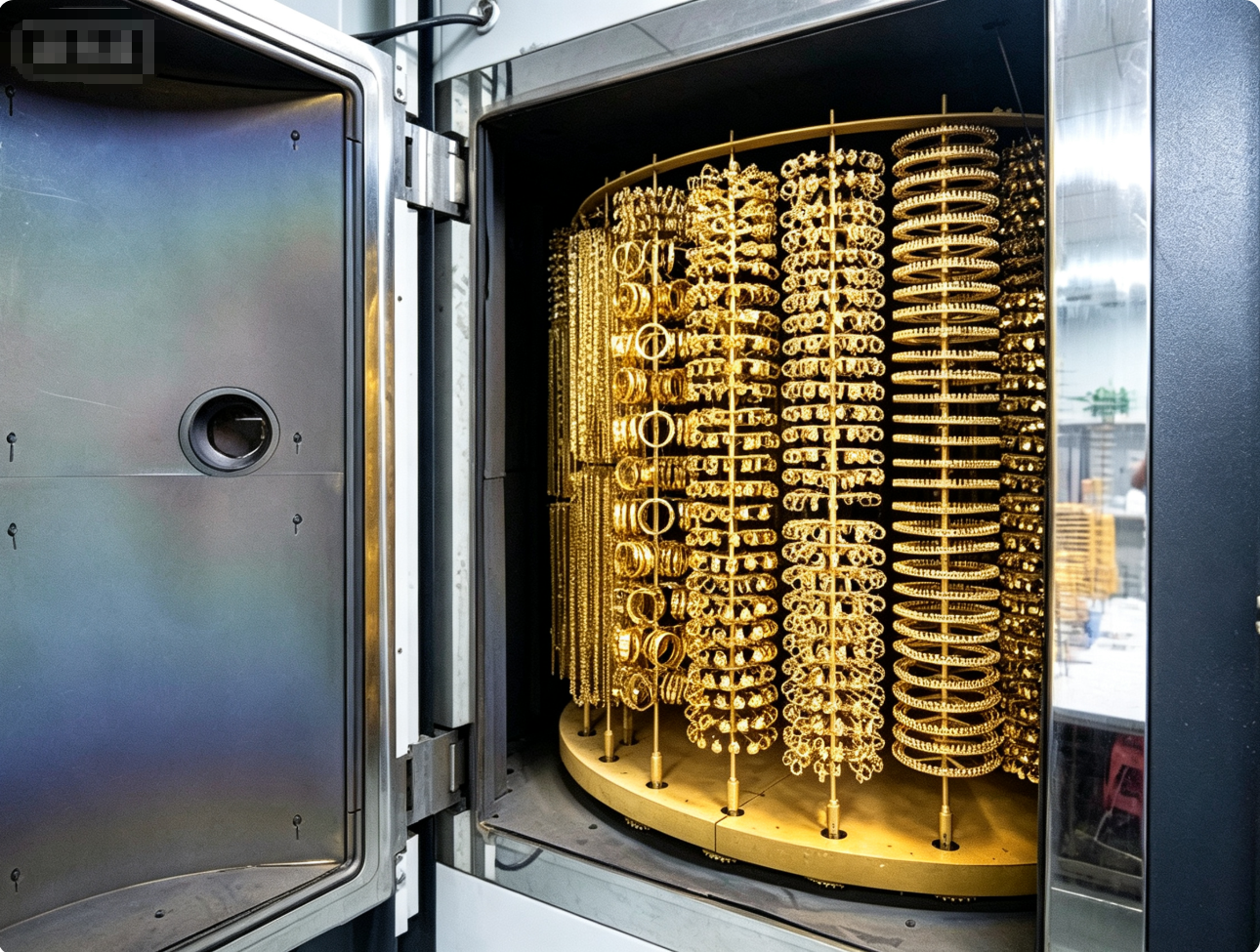
PVD coating is a surface-finishing process rather than a specific allergy or skin-safety certification.
For PVD stainless steel jewelry, the coating can provide color and act as a barrier between the base material and the skin while the coating remains intact.
However, the finished result depends on the complete coating system, including:
Base material
Surface preparation
Polishing
PVD process
Coating thickness
Edges and corners
High-friction areas
Skin-contact components
Expected wear conditions
For jewelry brands, it is important to evaluate the complete finished product rather than relying only on the term “PVD.”
What Do “Hypoallergenic” and “Nickel-Free” Really Mean?
Terms such as hypoallergenic jewelry, nickel-free jewelry, and skin-safe jewelry can be useful, but they should be supported by clear product information.
“Hypoallergenic” does not mean that no wearer can ever experience a reaction.
Likewise, “nickel-free” can have different meanings depending on the product specification, composition, or testing method.
Before using these terms in product descriptions, jewelry brands should ask:
What exact material or grade does the claim cover?
Does it include every component that touches the skin?
Is there a material declaration or test report?
What testing method was used?
When was the product tested?
Does the evidence apply to the finished product?
Does the requirement match the target sales market?
For a B2B jewelry manufacturer, clear specifications make it easier to align product development, sampling, quality control, and marketing claims.
How Jewelry Brands Can Develop Sensitive-Skin Jewelry
For a jewelry brand, developing sensitive-skin products is not simply about choosing a material from a catalog.
It is a product-development process.
Before sampling, brands can prepare a clear specification covering:
1. Base Material
Define the required material and grade, such as 316L stainless steel, 925 sterling silver, titanium, or another approved material.
2. Skin-Contact Components
Identify components such as:
Earring posts
Earring backs
Chains
Clasps
Jump rings
Solder
Extenders
Decorative components
3. Surface Treatment
Specify whether the product requires:
Polishing
Brushing
Sandblasting
Electroplating
PVD coating
Enamel
Other surface finishes
4. Target Market
Different markets may have different requirements for restricted substances, nickel release, labeling, and product claims.
5. Testing and Documentation
Where required, define the relevant testing method, sample condition, product specification, and documentation before bulk production.
This gives the manufacturer a clear basis for sampling, quotation, production, and quality control.
How MCGA Approaches Material Selection for Custom Jewelry
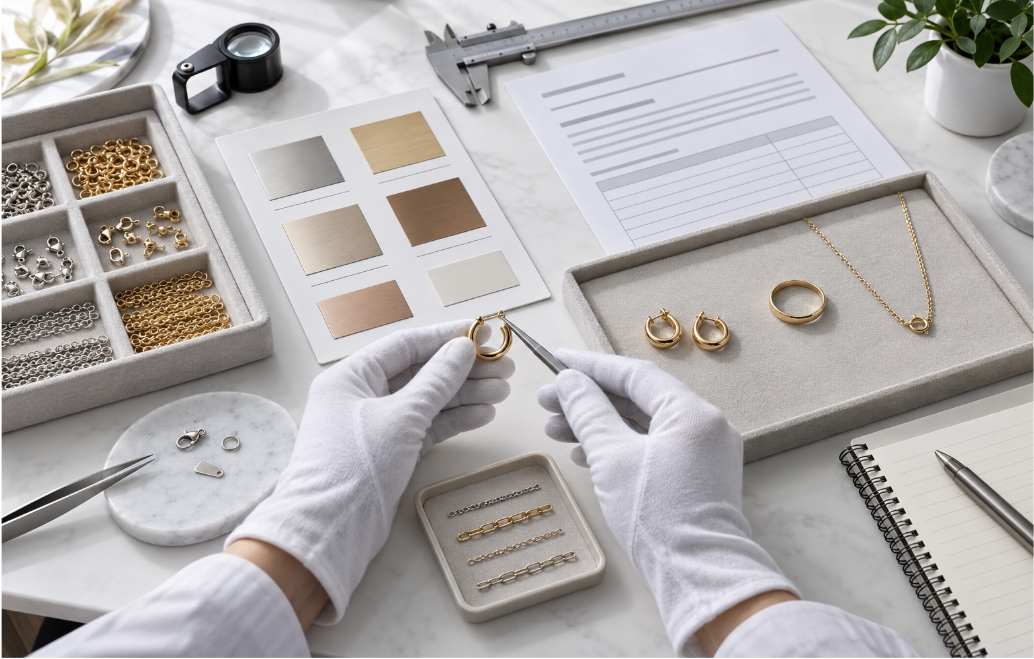
At MCGA Jewelry, material selection is considered together with the product design and manufacturing process.
For a custom jewelry manufacturing project, brands can provide their design, target material, finish, product category, and destination market. Our team can then evaluate the production requirements during the development and sampling stages.
Depending on the product, MCGA supports materials including:
316L stainless steel
925 sterling silver
Brass
Gold-related materials and finishes
Other materials based on project requirements
Our manufacturing capabilities cover processes such as casting, CNC machining, welding, polishing, plating, PVD finishing, gemstone setting, enamel, and laser marking.
This allows material selection, surface treatment, component structure, and final appearance to be considered as part of one manufacturing process.
What Should Jewelry Brands Ask a Manufacturer?
When developing sensitive skin jewelry, brands can ask their manufacturer for:
Exact material grade or fineness
Component material information
Surface treatment details
Plating or PVD specifications
Relevant material declarations
Applicable test reports
Target-market requirements
Sample approval before bulk production
Quality inspection criteria
A strong manufacturing brief should also clearly separate verified product information from marketing language.
For example, instead of automatically describing a product as “hypoallergenic,” a brand can first determine what material, component, and testing evidence supports the intended product description.
Conclusion
Choosing jewelry for sensitive skin requires more than selecting a material name.
For consumers, understanding the material and contact conditions can help reduce uncertainty. For jewelry brands, the process should go further by defining the base material, skin-contact components, surface treatment, target market, testing requirements, and product claims before production.
With the right specifications and manufacturing process, brands can develop jewelry collections with clearer material information and more consistent product requirements.
MCGA Jewelry supports brands with custom jewelry development, OEM/ODM manufacturing, surface finishing, quality control, and production solutions for global markets.

Developing Sensitive-Skin Jewelry for Your Brand?
From 316L stainless steel and 925 sterling silver to PVD finishes and custom components, MCGA Jewelry supports brands with OEM/ODM jewelry manufacturing from product development and sampling to production and quality control.
Send us your design, reference images, material requirements, or product specifications.
📩Let’s discuss your next custom jewelry project.
FAQ
Is stainless steel or titanium better for sensitive ears?
The exact specification matters more than the generic material name. Appropriate implant-grade titanium is commonly selected for piercing applications. 316L stainless steel can work for many jewelry products, but it can contain nickel and should be evaluated according to the intended application and applicable requirements.
Does 18K gold always work for sensitive skin?
Not necessarily. 18K gold contains a high proportion of gold, but the remaining alloying metals, solder, plating, and other components can still affect the finished product.
Is PVD gold jewelry hypoallergenic?
PVD is a coating process, not a universal hypoallergenic certification. The finished product depends on the base metal, surface preparation, coating, wear conditions, and other skin-contact components.
How can I know whether jewelry contains nickel?
Appearance cannot confirm the composition of jewelry. Ask the manufacturer or supplier for material information and, where appropriate, relevant nickel-release or other finished-product test documentation.
Can 925 sterling silver be used for sensitive-skin jewelry?
925 sterling silver is a widely used jewelry material, but individual reactions can vary. Brands should consider the silver alloy, solder, plating, and other components that may contact the skin.
What should a jewelry brand provide to a manufacturer?
A useful development brief can include:
Product drawings or reference images
Jewelry category
Target material
Finish or color
Target quantity
Destination market
Packaging requirements
Skin-contact component requirements
Testing or documentation requirements