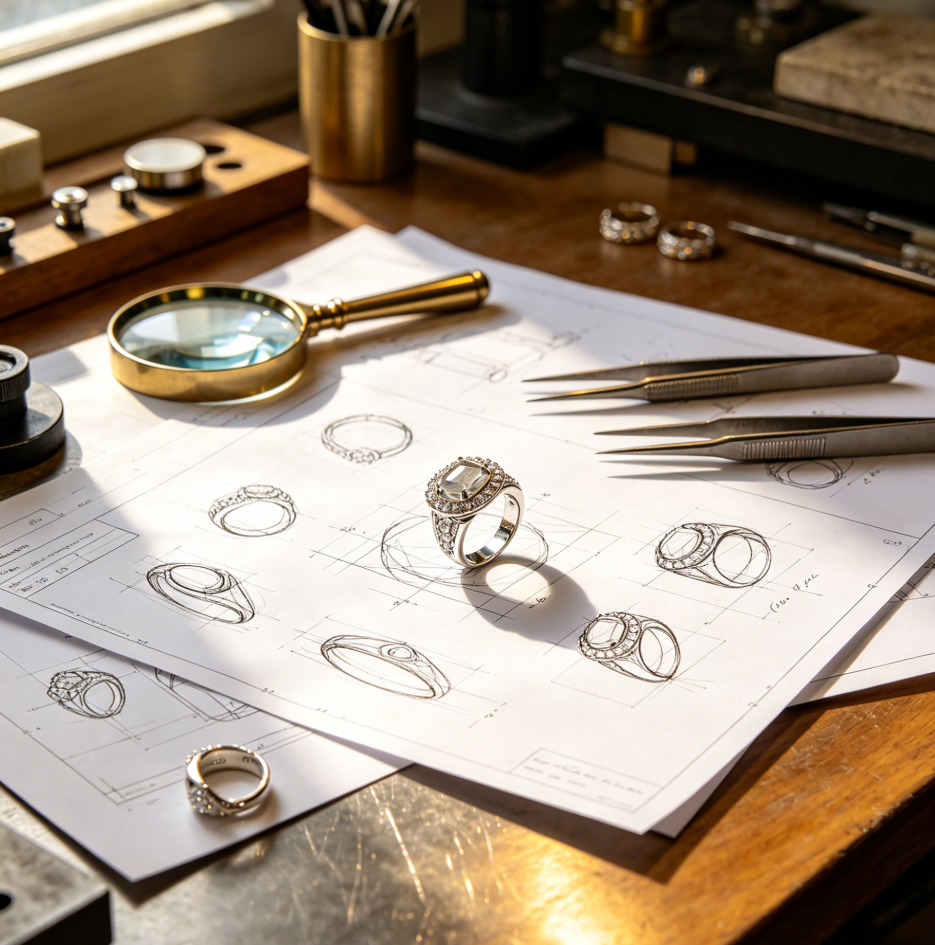
For independent jewelry designers and premium jewelry brands, a design sketch is far more than a drawing.
It represents months of inspiration, market research, trend forecasting, technical development, and creative investment.
Yet every year, countless designers unknowingly send their jewelry concepts to factories without any legal protection. Some discover their designs appearing on wholesale marketplaces months later. Others find nearly identical products being sold by competitors before their own collection even launches.
The harsh reality is simple:
Your jewelry design is intellectual property.
And if you share it without proper protection, you may lose control of it forever.
This is where an NDA (Non-Disclosure Agreement) becomes one of the most important documents in the jewelry manufacturing process.
In this article, we'll explain what an NDA is, why every serious jewelry designer should use one, and how to identify manufacturers that genuinely respect your intellectual property.
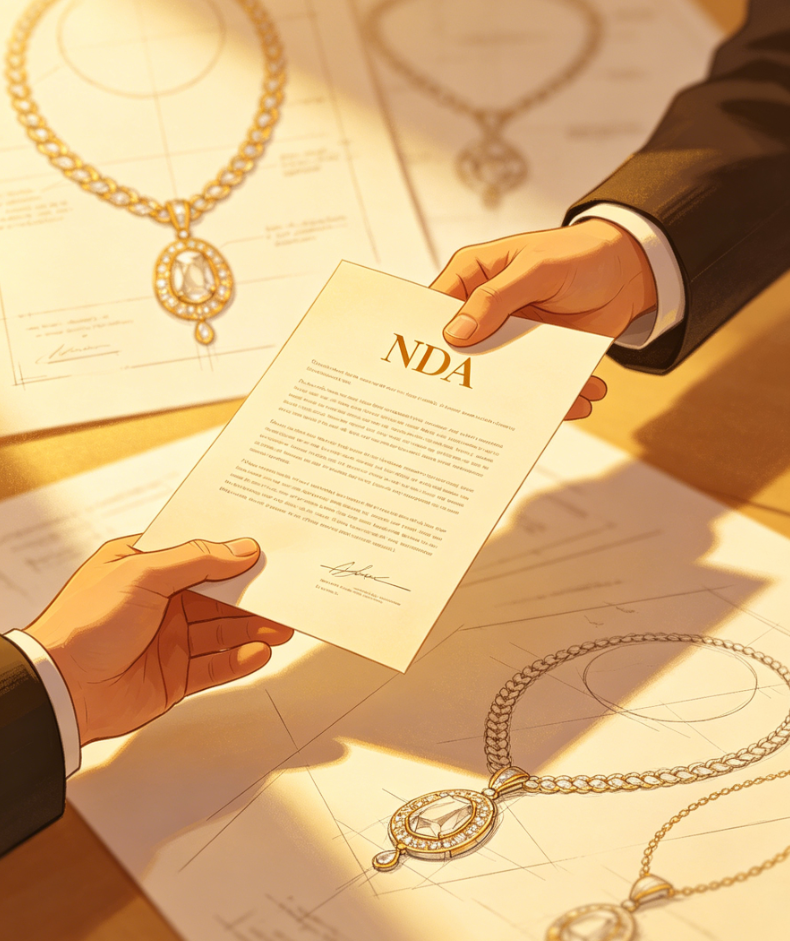
What Is an NDA?
An NDA (Non-Disclosure Agreement) is a legally binding contract that prevents one party from sharing confidential information with unauthorized third parties.
In jewelry manufacturing, confidential information may include:
Hand-drawn sketches
CAD files
3D renderings
Technical specifications
Custom logo designs
Stone settings
Production methods
Product development plans
Pricing structures
Customer information
Once signed, the manufacturer agrees that these materials cannot be disclosed, copied, sold, or used for any purpose other than producing your products.
Simply put:
An NDA transforms trust into legal accountability.
Why Jewelry Designers Are Especially Vulnerable

Unlike many industries, jewelry manufacturing often involves sharing highly detailed design files before production begins.
These files can be copied instantly.
A CAD file that took months to perfect can be duplicated in seconds.
Unfortunately, some factories operate on a volume-first business model:
Receive customer designs
Produce samples
Copy successful designs
Sell them to multiple buyers
Upload them to wholesale platforms
This practice is far more common than many designers realize.
The result?
Lost exclusivity
Reduced profit margins
Brand dilution
Damaged customer trust
Competitive disadvantage
For luxury and designer brands, this can be devastating.
Common Red Flags of Copycat Jewelry Factories
Not every manufacturer deserves access to your designs.
Watch for these warning signs:
1. They Refuse to Sign an NDA
This is often the biggest red flag.
Professional manufacturers understand intellectual property concerns and generally have NDA procedures already in place.
If a factory avoids signing one or insists it is unnecessary, proceed carefully.
2. They Publicly Showcase Client Designs Without Permission
Check their website and social media.
Do they constantly post highly customized products that obviously belong to specific brands?
If they freely display other clients' proprietary products, they may eventually do the same with yours.
3. They Cannot Explain Their IP Protection Process
Reliable manufacturers should clearly explain:
File storage procedures
Access restrictions
Employee confidentiality policies
Design ownership rights
Data protection measures
Vague answers often indicate weak internal controls.
4. Prices That Seem Too Good to Be True
Factories that survive solely through low prices often seek alternative profit sources.
Selling copied designs can become one of them.
Protecting your intellectual property is often worth far more than saving a few cents per piece.
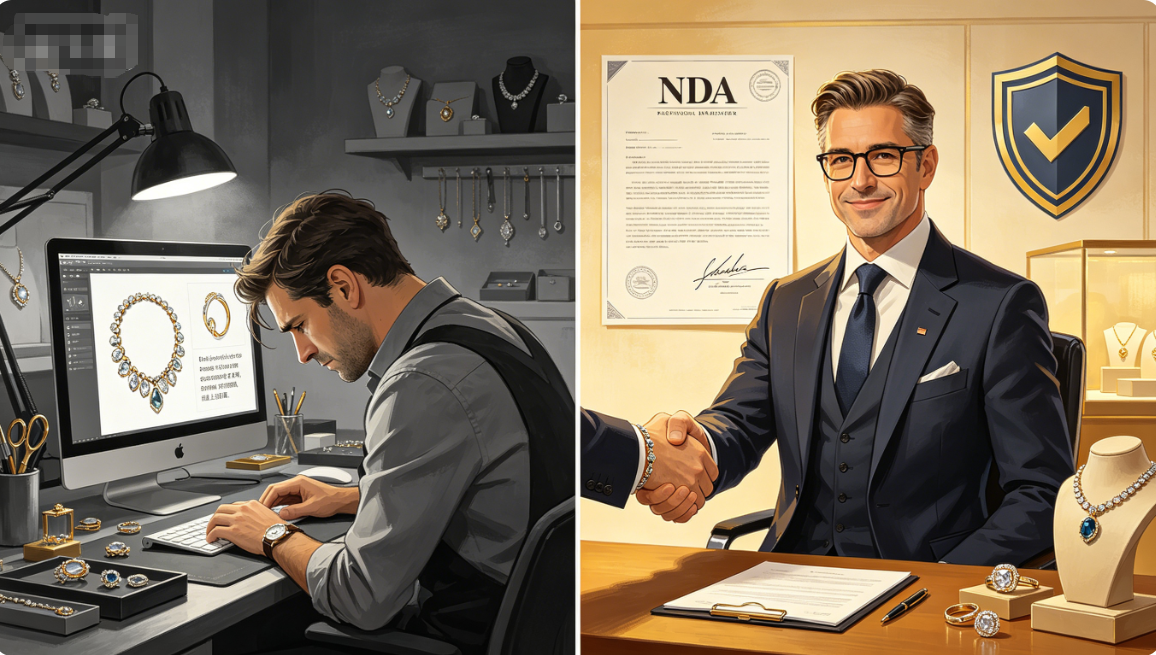
PROTECT YOUR DESIGNS BEFORE SHARING THEM
🔒 Free NDA Protection for Every MCGA Client
Before reviewing sketches, CAD files, or proprietary concepts, MCGA Jewelry is willing to sign a legally binding NDA to ensure your intellectual property remains fully protected.
✔ Design Ownership Remains Yours
✔ No Unauthorized Sharing
✔ No Reselling of Client Designs
✔ Secure Internal File Management
✔ Long-Term Confidentiality Commitment
Your ideas stay your ideas.
Contact our team before sending any design files and receive NDA protection from day one.
What a Professional Jewelry Manufacturer Should Do
A trustworthy jewelry manufacturer should view confidentiality as a standard business practice—not an optional service.
Professional factories typically provide:
Secure Design Management
Design files should be stored in controlled systems with limited access.
Restricted Production Access
Only authorized personnel should have access to customer projects.
Internal Confidentiality Agreements
Employees involved in development should operate under confidentiality obligations.
Clear Ownership Terms
Your design should remain your intellectual property.
The factory manufactures the product—it does not own the design.
Long-Term Data Protection
Even after production ends, customer files should remain protected.
Why NDA Protection Matters More for Luxury and Designer Brands
Mass-market jewelry often competes on price.
Luxury jewelry competes on originality.
When customers purchase premium jewelry, they expect:
Exclusivity
Unique design language
Brand identity
Limited availability
If copied products flood the market, those advantages disappear.
A single leaked design can damage years of brand-building efforts.
This is why many successful jewelry brands treat NDAs as mandatory before discussing any custom project.
The Real Cost of Not Using an NDA
Some designers hesitate because they believe NDAs create unnecessary paperwork.
But consider the alternative.
Without legal protection, you may face:
| Potential Risk | Business Impact |
|---|---|
| Design copied by factory | Loss of exclusivity |
| Competitor receives design | Reduced sales |
| Product appears online before launch | Failed collection release |
| Unauthorized resale | Brand reputation damage |
| Customer confusion | Lower brand value |
Compared with these risks, signing an NDA takes only minutes.
YOUR NEXT COLLECTION DESERVES REAL PROTECTION