UV printing on jewelry has completely changed how custom brands create colorful, high-detail designs. However, many retailers and customers worry that these vibrant colors will disappear after a few months of wear. Because jewelry is a high-contact item, it faces constant friction, sweat, and sunlight. Actually, the technical answer to “will it fade” depends entirely on the ink chemistry and the surface preparation of the metal. Instead of relying on traditional surface paints, modern industrial systems use light-triggered polymers to create an unbreakable bond. Consequently, when executed correctly, these designs can maintain their original brilliance for over a decade.
The Microscopic Mechanics of UV-Cured Inks
Understanding why these designs stay bright requires a look at the chemistry of the ink. Unlike solvent-based inks that dry through evaporation, UV curable ink undergoes a process called photopolymerization. Specifically, the liquid ink contains photoinitiators that react to ultraviolet light. When the printer’s LED lamp passes over the droplets, these photoinitiators trigger monomers and oligomers to cross-link into a solid plastic. Therefore, the ink does not simply sit on the surface; it transforms into a hard, durable polymer shield instantly.
Actually, the layering process is critical for achieving professional results. Because stainless steel is naturally reflective or dark, colors can appear muddy if printed directly. To solve this, experts apply a white ink layer first. This white base acts as a flat canvas, allowing the CMYK pigments to pop with photo-quality accuracy. Because the curing happens in microseconds, there is no chance for the dots to bleed or smudge. Instead, you get a crisp, high-resolution image that resists the “spreading” common in older printing methods.
Specifically, we look at the density of the ink deposit. High-end inkjet printing for jewelry uses ultra-fine nozzles. These nozzles create a rich texture that you can actually feel. Consequently, the image has depth. Because the ink is 100% solid, it does not release harmful fumes. Instead of waiting days for a lacquer to dry, the jewelry is ready to be handled the moment it leaves the machine. This efficiency makes UV printing on jewelry a top choice for modern custom brands.
| Step | Action | Benefit | |
|---|---|---|---|
| Prime | Apply Promoter | Maximum Grip | |
| Base | Lay White Ink | Color Pop | |
| Color | CMYK Pigment | Photo Detail | |
| Cure | LED UV Light | Instant Solid |

Adhesion Science: Bonding to Non-Porous Surfaces
Because metal is a non-porous substrate, achieving a permanent bond is the biggest technical challenge. Instead of soaking into the material like paper, the ink must find a way to “grab” the smooth surface of the steel. Actually, we achieve this through a combination of mechanical and chemical forces. Specifically, we focus on increasing the surface energy of the metal so the ink “wets” the surface instead of beading up like water.
To ensure the bond is successful, technicians often perform a water break test. If water stays flat on the steel, the surface is chemically clean. However, if it beads, there are still manufacturing oils present. These oils will cause the print to lift over time. Once cleaned, an adhesion promoter is often wiped onto the piece. These promoters create covalent bonds between the inorganic metal and the organic ink. Because of this molecular bridge, the ink becomes physically integrated with the jewelry surface.
Instead of just relying on chemistry, some shops also use light surface abrasion. This creates tiny microscopic valleys for the ink to flow into. We call this mechanical interlocking. When you combine this with the chemical bond, the result is a print that can pass a professional cross-hatch tape test. In this test, an adhesive tape is pressed onto a grid of cuts in the ink. If the ink stays put when the tape is ripped off, the adhesion is verified. Consequently, you know the print will not chip during daily wear.
| Method | Description | Primary Role | |
|---|---|---|---|
| Mechanical | Micro-Scratches | Physical Grip | |
| Chemical | Covalent Bonds | Atomic Link | |
| Polar | Surface Tension | Ink Wetting | |
| Thermal | Flame Prep | Energy Boost |

UV Printing vs. Laser Engraving: A Durability Showdown
Choosing the right decoration method is a major decision for any jewelry brand. Most people believe they must choose between color and permanence. However, the trade-offs are more nuanced than they appear in 2026. Because laser engraving removes metal, it is technically more permanent than any topical ink. Instead, UV printing adds a specialized polymer layer that offers incredible color retention. Laser marks are usually limited to black, grey, or brown tones.
Actually, the real deciding factor is often the type of artwork you want. If you want a colorful logo or a full-color photo, UV printing is the clear winner. To protect these colorful designs, many modern manufacturers now use both methods together. Specifically, they use a laser to create a deep outline and then fill it with UV ink. This gives you the depth of an engraving with the beauty of a color print. Consequently, the design is shielded by the surrounding metal walls.
Instead of comparing them as “better or worse,” we look at the specific use case. Because a ring hits many surfaces, laser engraving might be safer for high-friction areas. But for a pendant or a charm, UV printing offers a superior visual experience. Because the ink is UV-stable, it will not yellow or peel like older sublimation methods. Specifically, the durability of stainless steel jewelry complements the tough nature of UV inks.
| Feature | UV Printing | Laser Marking | |
|---|---|---|---|
| Life Span | 5-10 Years | Lifetime | |
| Palette | Full CMYK | Monochrome | |
| Surface | Raised Print | Recessed Mark | |
| Resolution | High Photo | Vector Line |
Why 316L Stainless Steel is the Ultimate Canvas
Finding a metal that holds ink reliably is a difficult challenge for manufacturers. Many cheap metals like zinc or brass react with the atmosphere. Because they oxidize, the layer of metal directly under the ink starts to rot. This causes the design to lift or peel within weeks. However, 316L grade stainless steel—often called “surgical steel”—solves this problem entirely. Because it has a high chromium content, it forms a “passive layer” that protects the metal.
Actually, using this grade of steel is the industry standard for high-quality fashion pieces. Because 316L is stable, the ink stays flat and secure for years. Instead of attacking the metal, the ink bonds directly to the chromium oxide layer. This creates a superior ink-to-substrate connection. Consequently, the jewelry can withstand daily showers and sweating without the metal corroding underneath the print.
Specifically, we recommend 316L for all photo pendants. Because the surface is so smooth, it allows the ink droplets to land with perfect precision. Instead of a grainy image, you get a sharp, professional finish. Actually, this metal is also hypoallergenic. Because it does not contain high levels of nickel, it won’t irritate your skin. Consequently, your customers can wear their custom pieces every day with peace of mind.
Expert Recommendation for Jewelry Brands: Finding a supplier that uses genuine 316L steel is the first step toward a durable product. We provide high-grade blanks that ensure your prints never peel or react with the metal. Explore the Stainless Steel Jewelry Collection Here
Factors That Cause Fading and How to Prevent Them
Will the sun’s rays dull your jewelry over time? Actually, the answer is generally no. Because UV ink is cured with high-intensity light, it is naturally resistant to the sun. Most industrial inks carry high lightfastness ratings. However, there are environmental factors that can cause a “slow fade” if you are not careful. Specifically, these factors are physical abrasion and chemical attack.
Because the ink sits slightly above the metal, it can be scratched by harder materials. If you “stack” a printed ring against a diamond band, the diamond will eventually wear away the ink. Instead, we recommend using a varnish finish or a clear UV coating . This clear layer acts as a sacrificial shield. It takes the scratches so the color layer underneath stays untouched. Consequently, your image stays crisp even with heavy use.
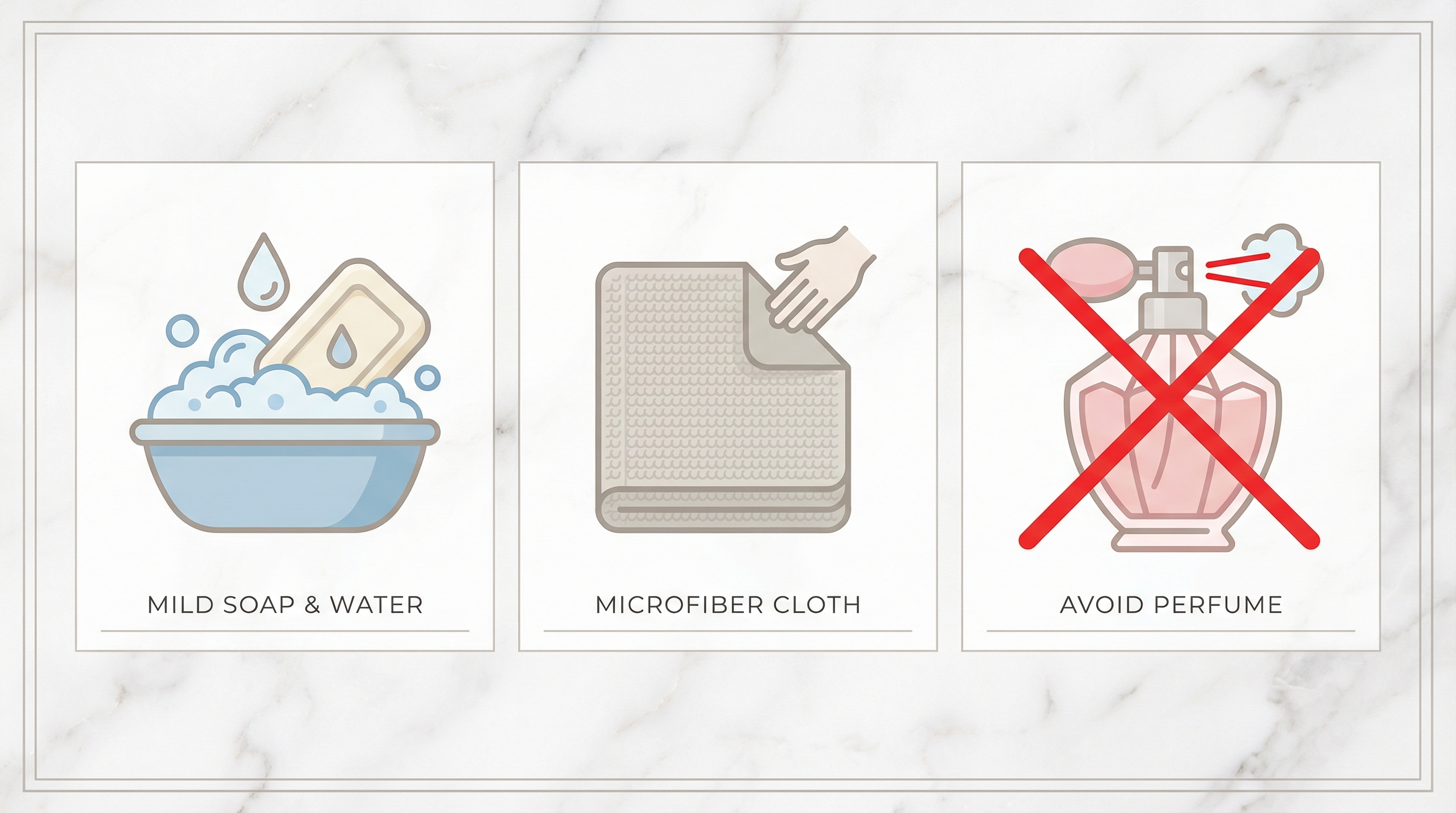
Specifically, chemical exposure is the second biggest threat. Because things like nail polish remover, heavy perfumes, and pool chlorine contain harsh solvents, they can soften the ink. Instead of rubbing your jewelry with alcohol, you should use only mild soap and water. This preserves the solvent resistance of the ink. Actually, following these simple rules can double the life of your jewelry. Because you care for the bond, the bond cares for your design.
| Threat | Impact | Best Solution | |
|---|---|---|---|
| Scratches | Physical Wear | Varnish Coat | |
| Solvents | Chemical Peel | Mild Soap | |
| Stacking | Friction Loss | Wear Alone | |
| Moisture | Bond Weakness | Dry Thoroughly |

The Role of Primers and Surface Energy
Specifically, the secret to long-lasting prints lies in the “Dyne level” of the metal. Surface energy is measured in Dynes per centimeter. Because stainless steel has a naturally low surface energy, ink often wants to bead up. Instead of sticking, it rolls off. Actually, we use plasma or flame treatment to change this. Specifically, these treatments break the molecular bonds on the very top layer of the steel. Consequently, the surface energy spikes, and the ink can “wet out” perfectly.
Instead of just cleaning the metal, we apply a primer. Because these primers are formulated for non-porous surfaces, they act like a double-sided tape. One side of the molecule grabs the metal. The other side grabs the ink. Actually, this is the most technical part of the process. Because if the primer is too thick, it can become a weak point. If it is too thin, it won’t hold. Specifically, we use a wipe-on method to ensure a perfectly even layer every time.
Consequently, the adhesion becomes a permanent part of the piece. Because the ink is now chemically locked, it can survive the “boil test.” In this test, we boil the printed piece in water for thirty minutes. Instead of peeling, the ink remains perfectly attached. Actually, very few printing methods can pass this extreme test. Specifically, this level of quality is what differentiates high-end custom jewelry from cheap souvenirs.
| Prep Step | Tool Used | Result | |
|---|---|---|---|
| Degrease | Isopropyl Alcohol | No Oils | |
| Activate | Flame/Plasma | High Energy | |
| Prime | Silane Wipe | Atomic Bond | |
| UV Inkjet | Sharp Detail |
Why Varnish is Your Best Friend in 2026
Actually, adding a varnish layer is no longer optional for premium jewelry. Because the varnish is also a UV-cured polymer, it bonds perfectly to the color layer. Instead of a matte finish, it can give the piece a high-gloss, glass-like appearance. Consequently, the colors look even more vibrant. Specifically, the varnish provides a barrier against oxygen and moisture. This prevents the pigments from shifting over very long periods.
Instead of just one type of varnish, we now have “flexible” and “hard” options. Because jewelry can sometimes be dropped or bent, a flexible varnish prevents the ink from cracking. Specifically, we use a high-build varnish for stainless steel charm necklaces . This creates a domed effect that protects the edges of the print. Because the edges are the most likely place for a peel to start, this dome is a major durability upgrade.
Consequently, you get a piece that feels like a luxury item. Because the varnish is scratch-resistant, it keeps that “new” look for years. Instead of seeing tiny micro-scratches on your photo, you see a smooth surface. Actually, the varnish also makes the jewelry easier to clean. Because dirt cannot get trapped in the texture of the ink, a simple wipe keeps it glowing. Specifically, this is the gold standard for durability in 2026.
| Varnish Type | Benefit | Best Use | |
|---|---|---|---|
| Gloss | High Shine | Photo Pendants | |
| Matte | No Reflection | Modern Logos | |
| High-Build | 3D Texture | Tactile Art | |
| Anti-Scratch | Hard Shield | Rings/Bands |
Professional Refinement: The Tape Test Standards
Because we are professionals, we do not guess about durability. Instead, we use standardized tests to prove our quality. Actually, the most famous is the ASTM D3359 cross-hatch tape test. Specifically, we use a special blade to cut a grid into the ink. Then, we apply a standardized adhesive tape and pull it off quickly. Because the ink must stay on the metal, any loss of “squares” means the batch is rejected.
Consequently, this ensures that every piece leaving the shop is perfect. Because we test our primers every day, we catch mistakes before they reach you. Instead of worrying about a customer returning a faded piece, you can sell with confidence. Actually, we also perform a “fingernail scratch test.” Specifically, we try to peel the ink from the corner with a sharp edge. Because the bond is so strong, the ink should only come off if you use a metal tool.
Instead of just testing new pieces, we also test “aged” pieces. We put them in a machine that mimics years of sunlight and salt spray. Because the UV inks are high-grade, they pass these tests with flying colors. Specifically, the benefits of 316L stainless steel are proven in these salt-spray chambers. Consequently, we know the metal will not corrode even in coastal environments.
| Test Name | Process | Pass Criteria | |
|---|---|---|---|
| Tape Test | Grid + Rip | No Ink Removal | |
| Boil Test | 30 Min Boil | No Peeling | |
| Scratch | Sharp Edge | High Resistance | |
| Salt Spray | Mimic Ocean | No Corrosion |

Best Practices for Long-Lasting Jewelry Maintenance
Preventing damage is much easier than fixing it. Because jewelry is a small item, it faces a lot of daily stress. But you can make your pieces last much longer with the right care. Actually, we have developed a set of simple rules to keep your items looking brand new for a decade. Specifically, these rules focus on avoiding the “three big enemies”: chemicals, friction, and moisture.
First, always put your jewelry on last. Because hairspray and perfume contain chemicals that can attack the ink, you want them to dry on your skin first. Then, the ink faces fewer chemical attacks during the day. Second, avoid “ultrasonic cleaners” for printed items. Because the vibrations are so fast, they can sometimes rattle the ink bond loose. Instead, use a soft microfiber cloth to wipe away oils at the end of the day.
Finally, teach your customers how to store their pieces. Because direct sunlight for months in a shop window can eventually affect some pigments, a dark jewelry box is the best home. But for daily wear, the sun is not a threat. Actually, a high-quality UV coating is designed to handle the rigors of the modern world. Specifically, following the stainless steel jewelry care guide ensures your piece stays beautiful.
| Daily Rule | Why? | How to Do It | |
|---|---|---|---|
| Last On | Chemicals | After Perfume | |
| First Off | Friction | Before Bed | |
| Dry Wipe | Oils | Microfiber | |
| Separation | Scratches | Individual Bag |