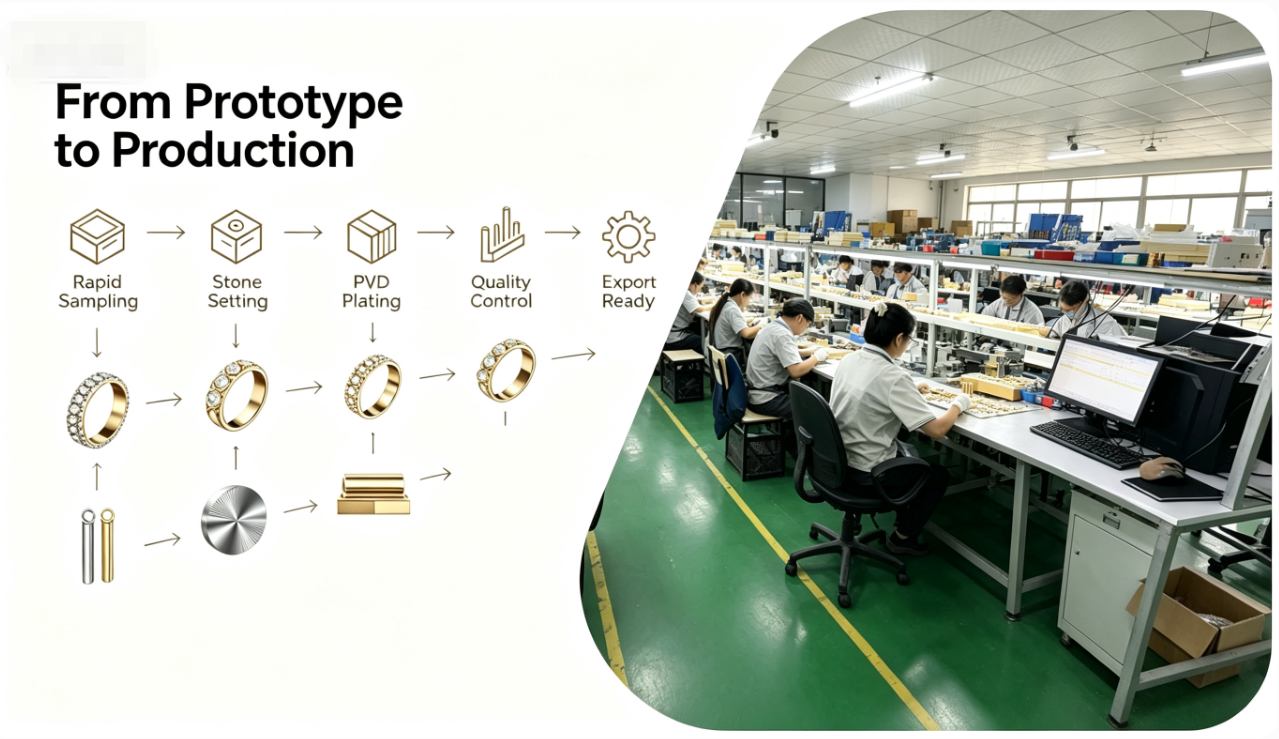
The right surface finish can make a significant difference in the appearance, durability, and perceived value of a jewelry collection. For brands sourcing custom stainless steel jewelry, understanding the plating process is essential to maintaining consistent quality and meeting customer expectations.
Two widely used finishing methods are Physical Vapor Deposition (PVD) and traditional electroplating. Both can create attractive gold, silver, rose gold, and other decorative finishes, but they differ in their processing methods, coating characteristics, costs, and suitable applications.
Stainless steel presents a particular challenge because its natural chromium oxide layer helps protect it from corrosion but can also make coating adhesion more difficult without proper surface preparation.
At MCGA Jewelry, we support B2B customers with OEM/ODM jewelry manufacturing in Vietnam, including stainless steel, brass, and 925 sterling silver jewelry. Understanding the relationship between materials, plating methods, and quality control helps our customers make better decisions when developing their collections.
In this guide, we explain how PVD and electroplating work, what buyers should consider when specifying a finish, and how to evaluate a jewelry manufacturer's plating capabilities.
1. Why Is Stainless Steel Jewelry Plating Different?
Stainless steel is popular in jewelry manufacturing because it offers good corrosion resistance, strength, and suitability for everyday designs.
Grades such as 316L stainless steel are commonly used for rings, necklaces, bracelets, earrings, and pendants. However, stainless steel's protective surface layer also makes it more challenging to plate than materials such as brass or copper.
Before a coating can adhere reliably, the surface must be properly cleaned and prepared. Residual polishing compounds, oils, or contamination can reduce adhesion and lead to premature peeling or discoloration.
A professional stainless steel jewelry manufacturer should pay attention to several factors:
Base material and material consistency
Surface polishing and cleaning
Pretreatment and coating adhesion
Plating method and specified coating thickness
Color consistency between production batches
Final inspection and durability testing
A beautiful finish is only the beginning. Consistent production quality depends on controlling the entire process.
2. What Is PVD Plating for Stainless Steel Jewelry?
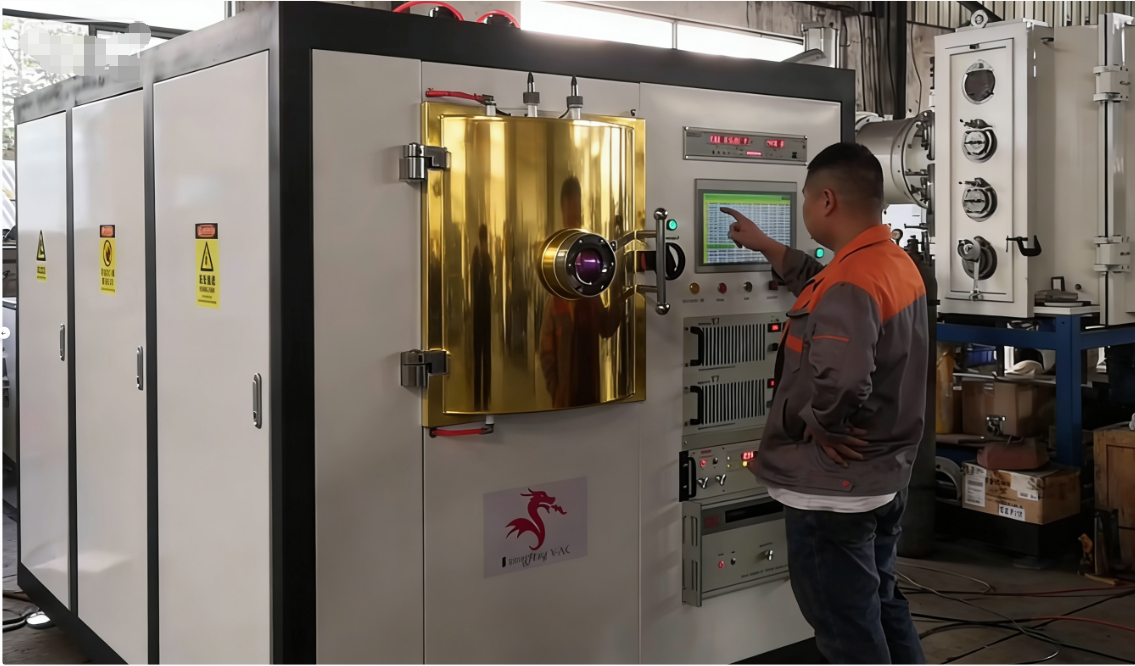
PVD plating, short for Physical Vapor Deposition, is a vacuum-based coating technology widely used to create durable decorative finishes on stainless steel jewelry.
During the process, coating materials are converted into a vapor and deposited onto prepared jewelry surfaces inside a vacuum chamber. Depending on the coating composition and process conditions, manufacturers can produce different colors and surface characteristics.
Common finishes include gold, rose gold, champagne, black, and other metallic tones.
Key Advantages of PVD Coating
1. Good wear resistance
PVD coatings can provide strong resistance to everyday wear when the coating composition, thickness, and process are properly controlled.
2. Consistent decorative finishes
Controlled production conditions help manufacturers achieve repeatable colors across matching products and bulk orders.
3. Suitable for stainless steel collections
PVD is widely used for stainless steel rings, chains, bracelets, earrings, and pendants.
4. Multiple color options
Different coating materials and process settings allow brands to develop finishes that match their product positioning and design requirements.
What Should Buyers Know About PVD Thickness?
PVD coating thickness varies according to the product, coating system, and intended application. It should be specified and verified rather than assumed from the color alone.
When working with a supplier, ask for:
The target coating thickness in microns (µm)
The coating specification for each finish
The method used to verify coating thickness
Available adhesion and corrosion test results
Expected performance under the intended conditions of use
Important: PVD is not automatically scratch-proof or guaranteed to retain its original color indefinitely. Product performance depends on the complete coating system, manufacturing quality, and actual wear conditions.
3. What Is Electroplating in Jewelry Manufacturing?
Electroplating uses an electrical current to deposit metal onto a prepared surface from a plating solution. It remains an important finishing method across the jewelry industry, particularly for brass and other suitable base materials.
Depending on the material and plating system, electroplating can produce gold, silver, rhodium, and other decorative finishes.
However, plating stainless steel requires careful pretreatment because its passive surface layer can interfere with coating adhesion.
The Importance of Surface Preparation
A controlled preparation process generally includes:
Cleaning: Removing oils, polishing compounds, and surface contaminants.
Surface activation: Preparing the stainless steel so the subsequent coating can adhere.
Appropriate intermediate layers: Applying a suitable strike or underlayer when required by the plating system.
Final coating: Depositing the specified decorative metal finish.
Inspection: Checking appearance, adhesion, thickness, and other agreed quality requirements.
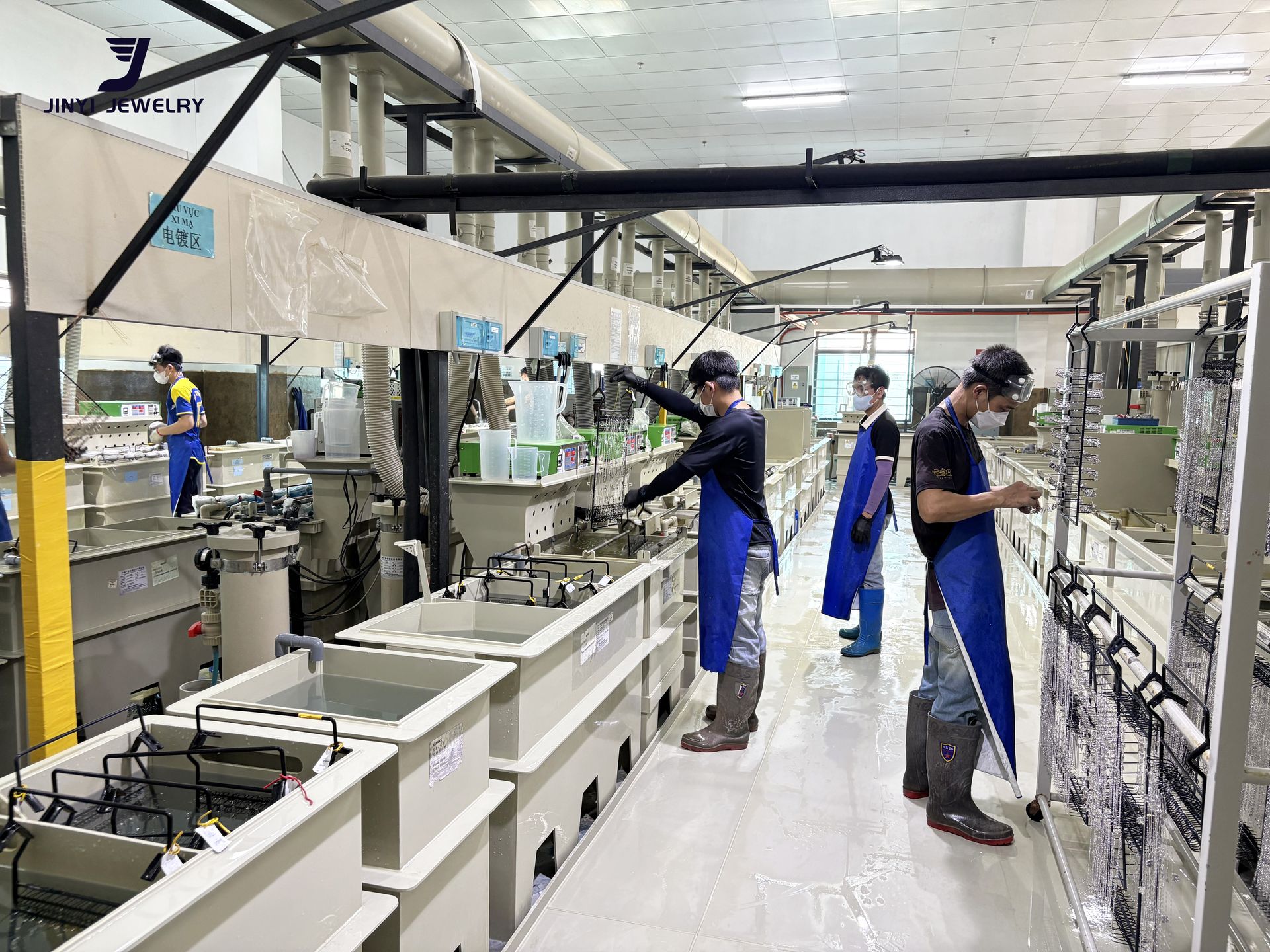
The exact sequence depends on the base material and the selected process. A qualified manufacturer should be able to explain the procedure used for your product.
Advantages of Electroplating
Flexible decorative finishing options
Suitable for a wide range of jewelry materials
Potentially cost-effective for appropriate designs and production volumes
Established processes for gold-tone and silver-tone finishes
Potential Limitations
Electroplated finishes can wear through, tarnish, or discolor if the coating system is unsuitable or poorly controlled. Results depend on the preparation process, underlayer composition, final coating thickness, and any protective topcoat.
For brands targeting the EU or other regulated markets, it is also important to consider nickel release and applicable chemical safety requirements. A gold-colored finish alone does not establish compliance.
4. PVD vs. Electroplating: Which Is Better for Your Jewelry Brand?
Neither process is universally better for every jewelry product. The right choice depends on the base material, target market, desired finish, budget, and expected product lifespan.
| Comparison | PVD Coating | Electroplating |
|---|---|---|
| Process | Vacuum-based deposition | Electrical deposition from a solution |
| Common applications | Stainless steel jewelry and durable decorative finishes | Brass, silver, and other suitable jewelry materials |
| Wear resistance | Often strong when properly specified and applied | Depends on the complete plating system and thickness |
| Color options | Gold, rose gold, black, champagne, and more | Gold, silver, rhodium, and other available finishes |
| Cost considerations | Depends on equipment, coating, and production volume | Depends on material, process, coating thickness, and volume |
| Surface preparation | Requires suitable cleaning and surface preparation | Requires suitable cleaning and, for stainless steel, careful activation |
| Quality verification | Coating specification, adhesion, thickness, and durability tests | Coating specification, adhesion, thickness, and durability tests |
| Best selection criteria | Product requirements, appearance, and wear expectations | Base material, design requirements, finish, and target price |
How Should You Choose?
Choose PVD when:
You are developing a stainless steel jewelry collection.
Wear resistance is an important product requirement.
You need consistent metallic finishes for repeat orders.
Your brand prioritizes durability alongside appearance.
Consider electroplating when:
You are developing brass or other compatible metal jewelry.
You require a specific decorative finish or coating system.
Your target retail price requires careful cost management.
The proposed finish can meet your quality and compliance specifications.
For many brands, the best approach is to evaluate the complete manufacturing solution instead of selecting a process based on its name alone.
5. Why Plating Thickness and Quality Control Matter
Plating thickness is an important part of jewelry specifications, but thicker does not automatically mean better. Coating composition, adhesion, surface preparation, and the geometry of the product also influence performance.
A reliable supplier should clearly communicate the coating specification before bulk production begins.
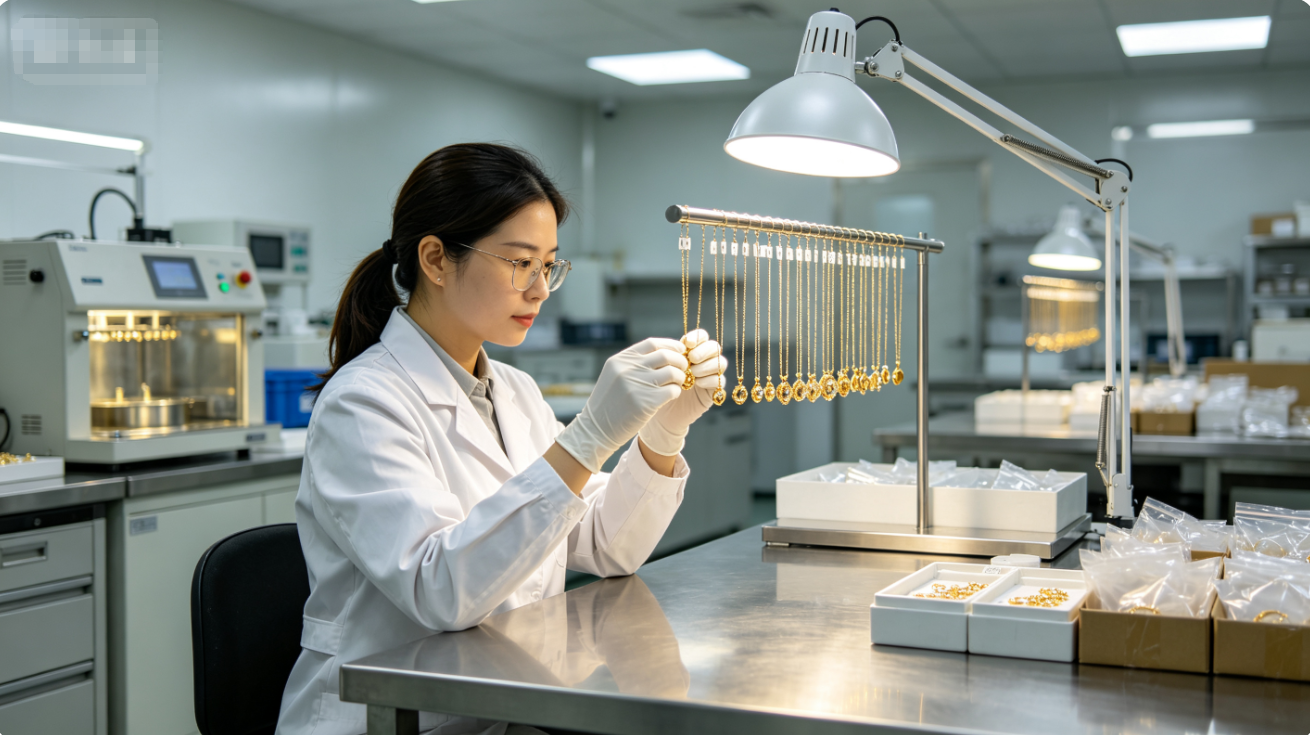
Important Quality Control Checks
Coating thickness
Specify the required thickness and agree on the appropriate verification method. X-ray fluorescence (XRF) can be used to measure many metallic coatings, depending on the coating system and measurement conditions.
Adhesion
Check whether the coating remains securely attached to the base material. Testing should follow an appropriate method for the product and coating system.
Color consistency
Compare samples and production batches under consistent lighting conditions. Gold and rose gold finishes can vary depending on the coating composition and process parameters.
Corrosion resistance
Salt spray testing may help assess corrosion performance under defined test conditions. Results should be interpreted according to the agreed test method and acceptance criteria.
Appearance and finishing
Inspect polishing, edges, recesses, chain links, stone settings, and other areas where uneven coating or visible defects may occur.
For OEM jewelry manufacturing, these requirements should be confirmed during sample development rather than introduced only after mass production has started.
6. How to Evaluate a Stainless Steel Jewelry Manufacturer
A supplier's website may advertise advanced plating technology, but buyers should verify the capabilities that matter to their specific products.
Before placing an order, consider asking the following questions.
1. Which Base Material Will Be Used?
Confirm whether the product will be manufactured using 316L stainless steel, another stainless steel grade, brass, or a different material.
The material should match the approved sample and product specification.
2. Which Plating Method Is Suitable for My Design?
Ask the manufacturer to explain why the proposed PVD or electroplating system is appropriate for the base material, design, and expected use.
3. What Is the Specified Coating Thickness?
Request a clear specification in microns where applicable. Confirm whether thickness measurements or other verification records can be provided.
4. How Do You Maintain Color Consistency?
Ask how the factory controls color standards, sample approval, production batches, and final inspection.
5. Can You Provide Relevant Test Reports?
Depending on your target market, discuss applicable requirements such as REACH restrictions, nickel release testing, and lead or cadmium limits.
Request relevant test reports and confirm that they apply to the actual material, coating, and product being supplied. Do not assume that a factory or product is certified simply because a supplier mentions a standard.
6. Can You Support Custom Designs and Bulk Production?
For a growing jewelry brand, the supplier should be able to coordinate product development, sampling, material selection, finishing, quality control, and packaging.
An integrated manufacturing partner can make communication and specification management easier throughout the product lifecycle.
7. Why Work with MCGA Jewelry?
MCGA Jewelry is a Vietnam-based jewelry manufacturer providing OEM/ODM manufacturing solutions for brands, retailers, designers, and wholesale businesses.
With approximately 20 years of jewelry industry experience developed in China and a manufacturing facility in Vietnam that began official production in 2024, MCGA supports customers looking for a flexible, long-term manufacturing partner.
Our manufacturing solutions cover:
316L stainless steel jewelry
Brass jewelry
925 sterling silver jewelry
Custom jewelry development and sampling
PVD and water-plating finishing options
Polishing, stone setting, and other finishing processes
Quality inspection and packaging coordination
From initial design concepts to approved samples and bulk production, our team works with customers to align materials, finishes, product specifications, and manufacturing requirements.
Whether you are developing a new collection or expanding an established jewelry brand, choosing the right combination of materials and finishing processes can help you build products that meet your business goals.
Comparison Summary: Make the Right Plating Decision
The most suitable jewelry finish is the one that meets your product requirements, quality standards, and target price.
PVD coating is an important option for stainless steel jewelry that requires durable decorative finishes. Electroplating remains valuable for many jewelry materials and product applications, provided that the plating system is correctly designed and controlled.
Before committing to bulk production, confirm the base material, coating specification, sample appearance, testing requirements, and quality acceptance criteria with your manufacturer.
Working with an experienced jewelry manufacturer in Vietnam can help simplify this process and support more consistent results from development through production.
Develop Your Next Jewelry Collection with MCGA
Looking for a reliable partner for custom stainless steel jewelry, brass jewelry, or 925 sterling silver designs?
MCGA Jewelry supports brands and businesses with OEM/ODM development, material selection, plating options, and manufacturing coordination in Vietnam.
Share your design, reference images, material preferences, target finish, and estimated order quantity with our team.
Let's discuss your next jewelry project.
Request a Custom Jewelry Quote