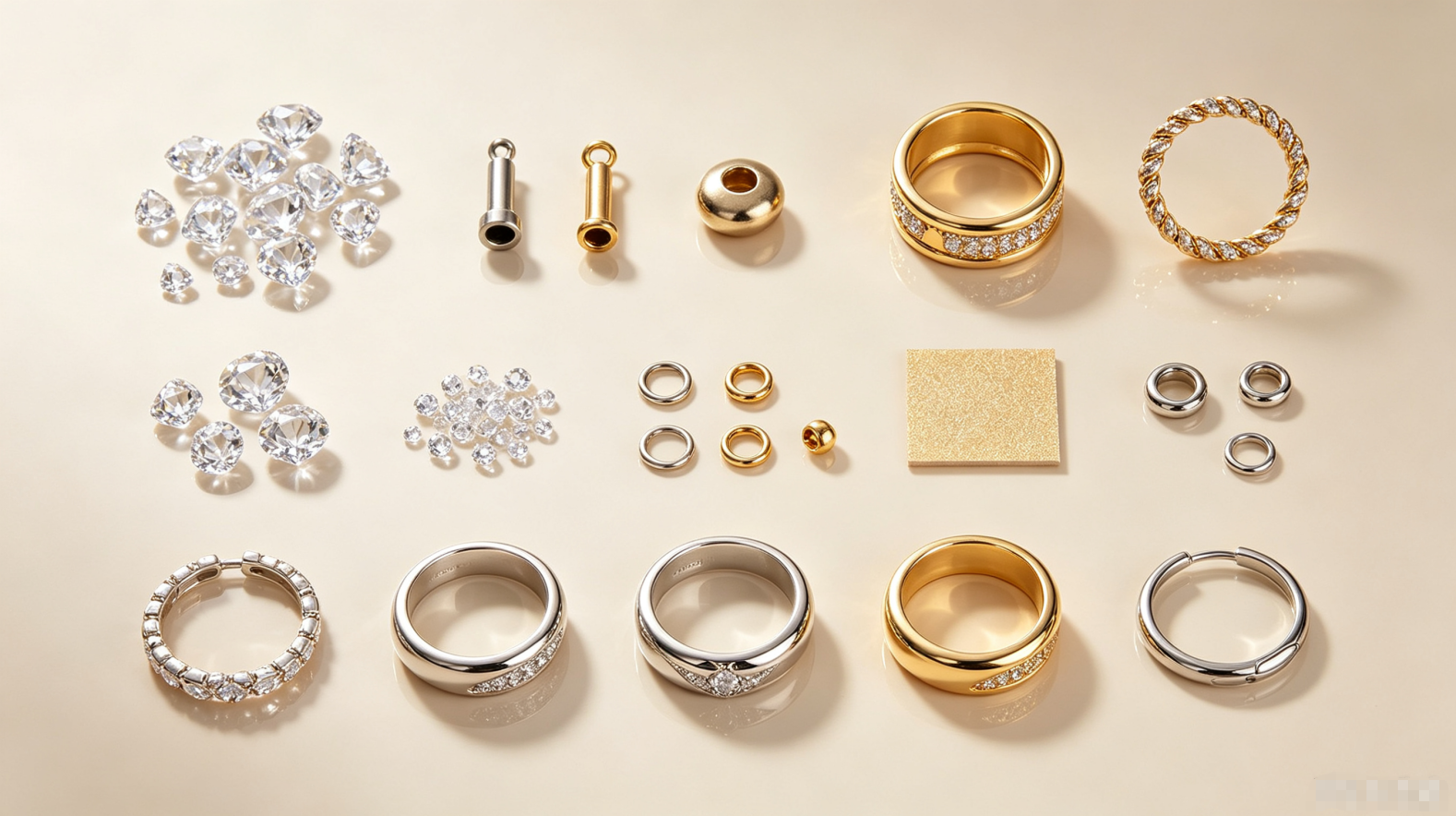
Cubic zirconia is a popular choice for jewelry brands because it offers brilliant sparkle, versatile designs, and an affordable alternative to diamonds. From rings and earrings to necklaces and bracelets, cubic zirconia jewelry allows brands to create attractive collections for different markets and price points.
However, one common question from jewelry buyers is: Does cubic zirconia tarnish?
The short answer is no. Cubic zirconia (CZ) itself does not tarnish or oxidize like certain metals. When a CZ ring turns dull, a necklace loses its shine, or a piece of jewelry appears discolored, the cause is usually surface buildup, changes in the metal setting, or wear to the plating.
For jewelry brands, retailers, and product developers, understanding these factors is essential when choosing a reliable jewelry manufacturer.
At MCGA Jewelry, we understand that the quality of a finished jewelry piece depends on more than its gemstones. Material selection, stone setting, surface finishing, plating quality, and jewelry quality control all influence the final product's appearance and performance.
In this guide, we explain why cubic zirconia jewelry may lose its brilliance, how to care for it, and what to consider when sourcing CZ jewelry for your brand.
1. What Is Cubic Zirconia Made Of?
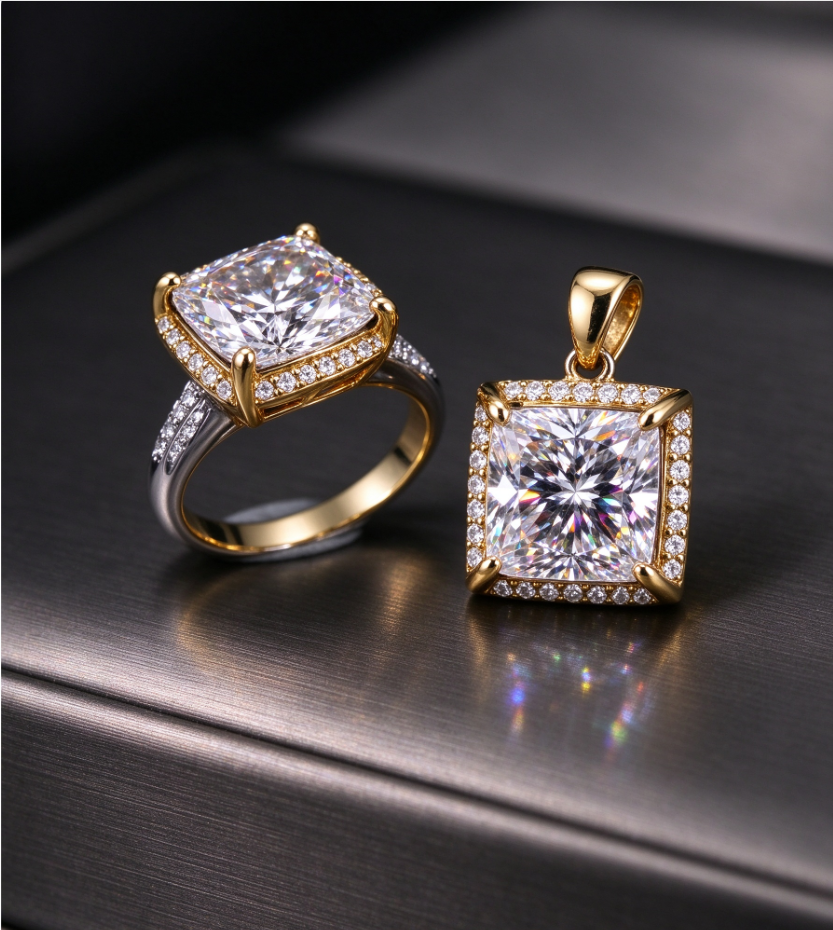
Cubic zirconia (CZ) is a laboratory-created crystalline material made primarily from zirconium dioxide (ZrO₂). It is widely used in jewelry because of its clarity, brilliance, and ability to imitate the appearance of diamonds.
Although cubic zirconia and diamonds can look similar, they have different chemical compositions and physical properties.
| Feature | Cubic Zirconia (CZ) | Diamond |
|---|---|---|
| Composition | Zirconium dioxide | Carbon |
| Origin | Typically lab-created for jewelry | Natural or laboratory-grown |
| Mohs hardness | Approximately 8–8.5 | 10 |
| Appearance | Bright sparkle and colorful light dispersion | Distinctive brilliance and fire |
| Relative cost | Generally more affordable | Generally more expensive |
| Common jewelry applications | Fashion jewelry, bridal-inspired designs, everyday accessories | Fine jewelry, engagement rings, and luxury collections |
Cubic zirconia is relatively hard and chemically stable, making it suitable for many jewelry applications. However, it is not as hard as diamond and can become scratched or damaged under certain conditions.
It is also important to distinguish between the stone and the metal surrounding it. While CZ itself does not normally tarnish, the metal setting can oxidize, and its surface finish can deteriorate over time.
For brands developing custom collections, choosing the right combination of gemstones, base metals, and surface treatments is an important part of custom jewelry manufacturing.
2. Does Cubic Zirconia Tarnish or Change Color Over Time?
The cubic zirconia stone itself does not normally tarnish. However, cubic zirconia jewelry can appear dull, cloudy, or discolored after repeated wear.
There are three common reasons.
Oil, Dust, and Everyday Residue
Skin oils, lotions, cosmetics, and dust can accumulate on the stone's surface. This buildup reduces the amount of light passing through the stone, making it appear less brilliant.
Residue can also collect underneath the stone and around prongs, bezels, and other setting details.
In many cases, gentle cleaning is enough to restore the stone's sparkle.
Tarnishing or Wear of the Metal Setting
The metal used to hold a CZ stone can affect the appearance and durability of the entire piece.
For example, 925 sterling silver can tarnish when exposed to sulfur-containing substances and certain environmental conditions. Brass and copper alloys can also oxidize, while the appearance of plated jewelry may change as its coating wears.
When the metal beneath or around a stone becomes discolored, the entire piece may look less attractive even though the CZ stone remains unchanged.
For jewelry brands, this is why base metal selection, plating specifications, and finishing quality should be considered together rather than evaluating the gemstone alone.
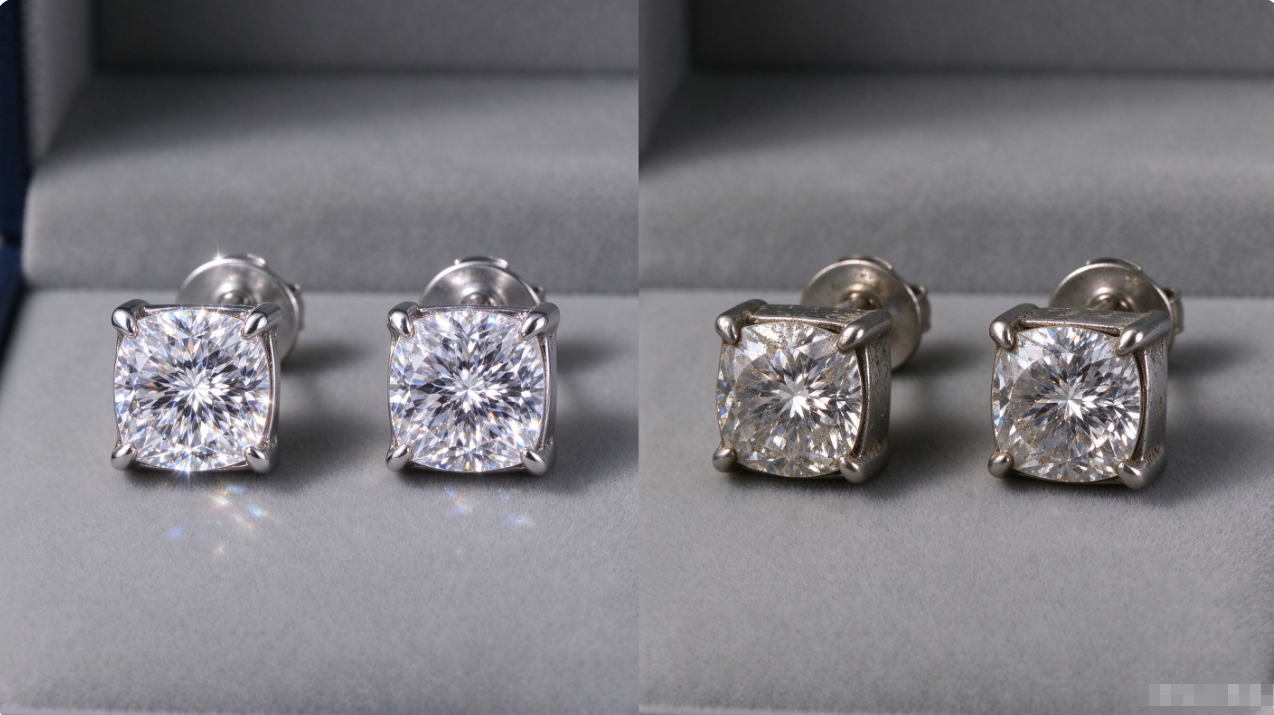
Wear of the Gold or Rhodium Plating
Many CZ jewelry designs use gold-colored or rhodium-plated surfaces to achieve a particular appearance.
Over time, friction, sweat, cosmetics, cleaning products, and frequent exposure to moisture can contribute to plating wear, depending on the materials and coating process.
Once the plating becomes thin or uneven, the underlying metal may become visible or begin to tarnish.
A professional jewelry manufacturer should consider the base material, coating method, required color, expected usage, and quality-testing requirements when developing a plated jewelry product.
3. How to Prevent Tarnishing and Keep CZ Jewelry Sparkling
Proper care helps preserve both the gemstone's appearance and the condition of its metal setting.
Put Jewelry on After Applying Cosmetics
Apply perfume, lotion, sunscreen, and makeup before putting on your jewelry. This reduces the amount of residue that accumulates on the stone and limits unnecessary contact between chemicals and plated surfaces.
Remove jewelry before swimming, exercising heavily, showering, or performing household cleaning whenever practical.
Keep Jewelry Clean and Dry
After wearing your jewelry, gently wipe it with a clean, soft cloth to remove oils and moisture.
Avoid abrasive materials, aggressive polishing compounds, and harsh chemical cleaners, especially when the piece has a delicate plating finish or glued components.
Store Each Piece Separately
Store CZ jewelry in a clean, dry jewelry box or soft pouch. Separate storage helps reduce scratches caused by contact with other jewelry and limits unnecessary friction between pieces.
For wholesale brands and retailers, suitable packaging can also help protect jewelry during storage, handling, and shipping.
Clean Gently and Regularly
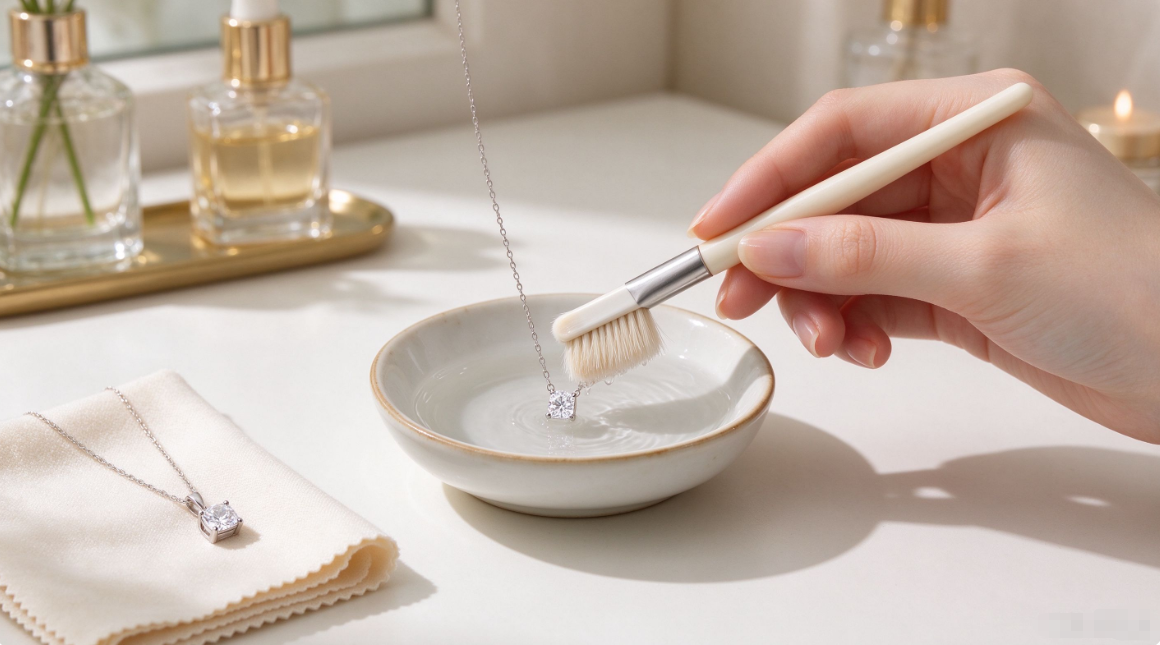
For many CZ pieces, lukewarm water and a small amount of mild soap are sufficient for routine cleaning.
Check whether the jewelry has any delicate components or special care instructions.
Gently clean the stone and surrounding setting with a soft brush.
Rinse carefully with clean water.
Dry completely with a soft, lint-free cloth.
Avoid soaking pieces with water-sensitive components, adhesives, or finishes that may be damaged by moisture. When in doubt, follow the manufacturer's care instructions.
Consistent cleaning is a simple way to maintain the brilliance of cubic zirconia jewelry without using unnecessarily aggressive treatments.
4. Can You Restore Dull or Tarnished CZ Jewelry?
In many cases, yes. However, the right solution depends on whether the problem comes from surface residue, scratches, or deterioration of the metal finish.
When the Stone Looks Cloudy
If the CZ stone looks greasy or dull, begin with gentle cleaning.
Removing oils and dirt can improve its appearance significantly. Check the underside of the setting as well, because accumulated residue can reduce the stone's brilliance.
If the stone remains cloudy after cleaning, it may have surface scratches, damage, or other issues that require professional assessment.
When the Metal Has Changed Color
If the metal setting has turned dark, greenish, or uneven in color, the issue may involve oxidation of the base metal or wear of the plating.
Cleaning may remove surface dirt, but it will not necessarily restore a worn coating.
Depending on the jewelry construction, a professional jeweler may be able to clean, polish, or replate the piece. However, some designs, stones, adhesives, and finishes may not be suitable for every repair method.
For jewelry brands, preventing these problems begins with clear product specifications and appropriate manufacturing processes.
A reliable OEM/ODM jewelry manufacturer can help evaluate the base metal, surface treatment, stone-setting method, and intended use before mass production begins.
5. How Long Does Cubic Zirconia Jewelry Last?
There is no single lifespan that applies to all cubic zirconia jewelry.
The stone itself can remain attractive for many years when protected from scratches and damage. The overall lifespan of the jewelry depends on several factors:
Stone quality: Cut, clarity, surface condition, and overall consistency influence the stone's appearance.
Base material: Sterling silver, brass, and stainless steel have different properties and care requirements.
Plating quality: Coating composition, thickness, adhesion, and surface preparation influence wear resistance.
Stone setting: Properly designed and executed settings help keep stones secure during normal use.
Daily wear: Friction, impacts, sweat, chemicals, and storage conditions can affect the product over time.
Quality control: Consistent inspection helps identify defects before products reach customers.
A piece worn occasionally and stored carefully may maintain its appearance longer than a similar piece worn every day under demanding conditions.
For brands sourcing jewelry in bulk, product durability should be evaluated through appropriate specifications and testing rather than relying on a general lifespan promise.
At MCGA Jewelry, our manufacturing approach covers material selection, product development, surface finishing, stone setting, and quality inspection to help B2B customers develop jewelry that meets their product requirements.
6. How to Choose High-Quality Cubic Zirconia Jewelry
For jewelry brands, choosing high-quality CZ products means evaluating the entire piece, not just the stone.
Check Stone Consistency
Look for consistent stone color, clarity, cutting, and dimensions across the batch. Stones should suit the design and meet the agreed specifications.
A numerical grading label alone does not guarantee consistent quality, so physical inspection and clearly defined acceptance criteria remain important.
Choose the Right Base Metal
The best base material depends on the design, target market, price point, and intended use.
316L stainless steel: Suitable for many durable fashion jewelry designs and compatible with various finishing options.
Brass: Offers flexibility for detailed designs, decorative finishes, and a wide range of jewelry styles.
925 sterling silver: Commonly used in fine and premium jewelry collections, including CZ-set designs.
Each material has different manufacturing characteristics, costs, and maintenance requirements. The right choice should be made according to the finished product's purpose.
Understand the Plating Specifications
If the jewelry uses gold or rhodium plating, ask about the coating process, specified thickness where applicable, color standard, adhesion, and testing requirements.
Plating performance depends on more than thickness alone. Surface preparation, coating composition, geometry, and wear conditions also matter.
For PVD-coated jewelry, the manufacturing process and performance requirements differ from conventional electroplating. The most suitable option depends on the base material and product design.
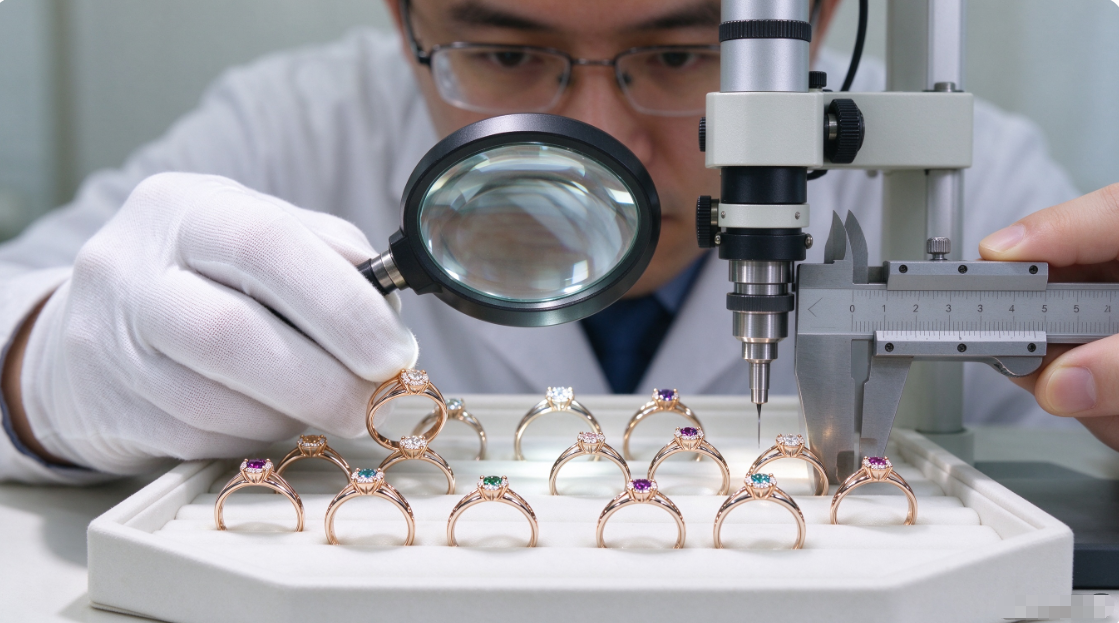
Inspect Stone-Setting Quality
CZ stones should be securely fitted into their settings, with consistent alignment and clean finishing.
Depending on the design, common setting methods include prong, bezel, pavé, channel, and flush settings.
A well-executed setting helps reduce the risk of loose stones during normal wear. Inspection should pay particular attention to prongs, edges, and areas where stones may be vulnerable to impact.
Evaluate the Manufacturer's Quality Control
A professional jewelry manufacturer should be able to explain its inspection process and the quality criteria used for the product.
For CZ jewelry, relevant checkpoints may include:
Base material and component verification
Stone size, appearance, and consistency
Stone-setting security
Surface polishing and finishing
Plating appearance and applicable coating tests
Final product inspection and packaging
For B2B buyers, agreeing on samples, specifications, and acceptance criteria before mass production can help reduce inconsistencies between approved samples and finished orders.
7. Why Manufacturing Quality Matters for CZ Jewelry Brands
A beautiful design is only the beginning of a successful jewelry product. Brands also need consistent materials, reliable production, and clear quality requirements.
As a Vietnam-based jewelry manufacturer, MCGA Jewelry supports B2B customers developing custom jewelry collections across materials and product categories, including stainless steel, brass, and 925 sterling silver.
Our OEM/ODM jewelry manufacturing capabilities support product development from design and sampling to production, finishing, quality inspection, and packaging.
For CZ jewelry projects, important considerations can include:
Selecting suitable base metals for the design and target price.
Developing stone settings that meet product specifications.
Defining plating colors and surface-finishing requirements.
Establishing inspection criteria for samples and bulk production.
Coordinating packaging and branding requirements.
Whether you are launching a new jewelry brand, expanding an existing collection, or sourcing products for retail, working with an experienced manufacturing partner can help you manage product development and production more effectively.
Comparison Table
Cubic Zirconia Jewelry: Materials and Manufacturing Considerations
| Factor | Key Characteristics | What Jewelry Brands Should Check |
|---|---|---|
| Cubic zirconia | Lab-created stone with strong brilliance | Stone consistency, cutting, clarity, and dimensions |
| 316L stainless steel | Durable metal commonly used in fashion jewelry | Grade verification, finishing, and compatibility with the design |
| Brass | Versatile base material for detailed jewelry designs | Surface preparation, plating specifications, and finish consistency |
| 925 sterling silver | Precious-metal alloy used in fine jewelry | Silver content, tarnish-care requirements, and surface treatment |
| Gold or rhodium plating | Surface finish that influences appearance | Coating specifications, adhesion, color consistency, and applicable tests |
| Stone setting | Holds CZ stones securely in the jewelry | Alignment, setting security, workmanship, and inspection criteria |
| Quality control | Helps maintain consistency between samples and bulk orders | Material checks, visual inspection, and agreed acceptance standards |
The most suitable combination depends on the design, target market, budget, and intended use. For B2B buyers, clearly defined material and quality specifications are essential for achieving consistent results.
Looking for a Reliable Jewelry Manufacturer for Your Next Collection?
At MCGA Jewelry, we help jewelry brands, retailers, designers, and wholesalers develop custom jewelry products with flexible material options and integrated manufacturing support in Vietnam.
From product development and sampling to finishing, quality inspection, and packaging, our OEM/ODM jewelry manufacturing services help turn product concepts into production-ready collections.
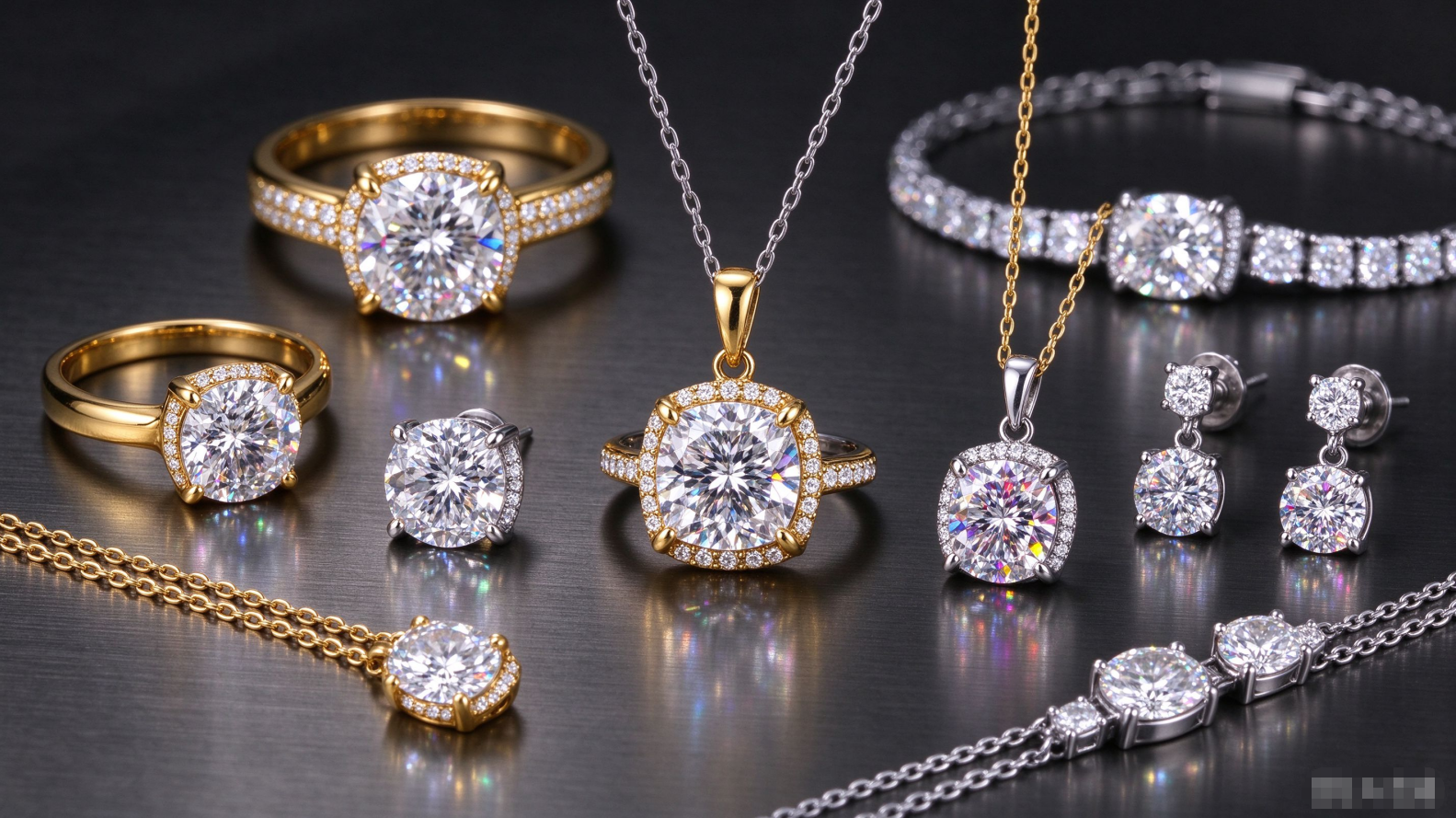
Whether you are developing CZ-set earrings, rings, pendants, or bracelets, our team can work with your requirements to explore suitable materials, finishes, and production solutions.
Ready to develop your next jewelry collection?
📩Contact MCGA Jewelry to discuss your designs, target materials, order quantities, and manufacturing requirements.
Explore Our OEM/ODM Services
Contact MCGA Jewelry